Choosing a Tote Bag Manufacturer: Materials, MOQs and Red Flags
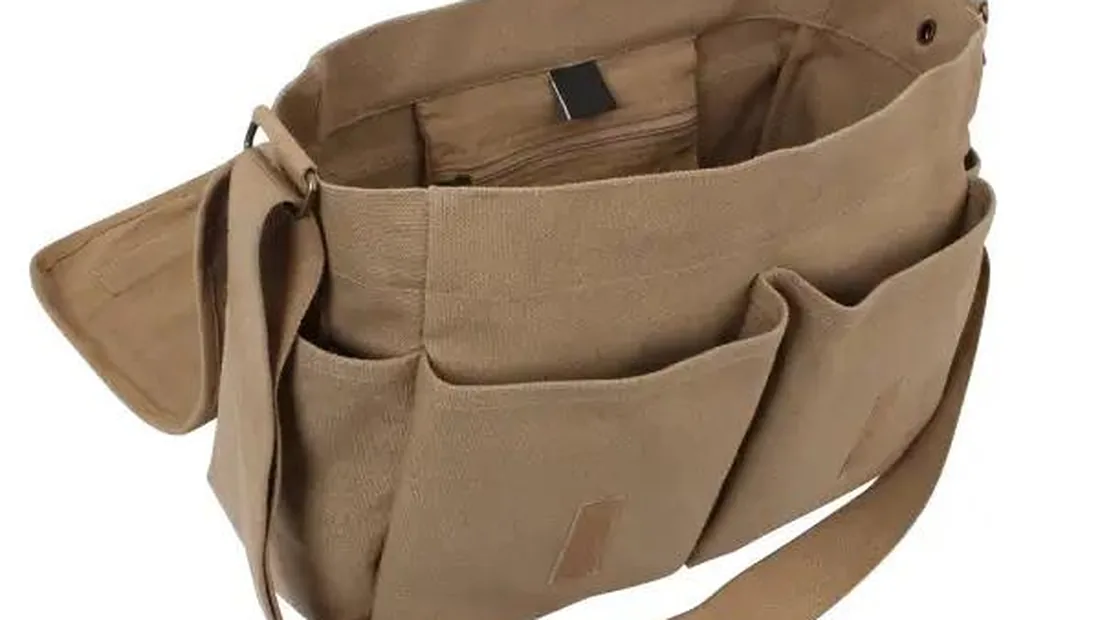
If you're sourcing a tote bag manufacturer, the first question isn't who. It's what. The material decides the factory, the price, the lead time, and the kind of branding you can do. A factory that runs 500 cotton canvas totes a day might not touch handwoven straw. A PP woven line is a different animal entirely. So this guide starts there.
Material First, Then Factory
Most sourcing mistakes come from shopping for a factory before locking down the material. You'll waste weeks getting quotes from suppliers who don't actually run your construction. A tote bag manufacturer doesn't make every tote. They make a few materials well.
Say a buyer wants a sturdy retail tote. She's comparing a 12 oz cotton canvas bag and a 100 gsm PP woven bag. The unit price gap looks huge. But the factories are not interchangeable. The canvas shop cuts and sews. The PP shop prints, folds, and welds. Different machines. Different labor. Different minimums.
Match the bag to the production line. That's the whole job.
Six Tote Materials and Who Should Buy Them
PP Woven Totes
PP woven is the workhorse of grocery and promotional bags. It's cheap, water-resistant, and takes flexo or gravure printing well. Buyers here are supermarkets, trade shows, and anyone who needs 5,000 to 50,000 units at a low landed cost.
Branding is usually a one- or two-color logo printed flat before the bag is folded and stitched. Full-coverage photo prints are possible but cost more and need a different coating. These bags are not luxury. They're utility.
Cotton Canvas by Ounce Weight
Canvas totes are priced by fabric weight. The ounce number tells you how thick and structured the bag will be. A 6 oz bag is soft and packs flat. A 15 oz bag stands on its own and carries heavy groceries.
Branding options are wide: screen printing, heat transfer, embroidery, and woven labels. The buyer profile is retail, bookstores, coffee roasters, and corporate gifts. MOQs are moderate because the fabric is stocked and the sewing is standard. The real cost driver is the print complexity, not the bag itself.
Jute and Natural Fiber Totes
Jute is rough, biodegradable, and has a short fiber that sheds. It suits wine shops, organic markets, and eco-branded events. But it's not a precision material. Stitching can look uneven. The fiber can stain light-colored linings. Buyers who accept that get a very natural look at a low material cost.
Printing on jute is limited. Screen printing works if the surface is flat enough. Embroidery is risky because the open weave pulls. Many buyers choose a cotton panel sewn onto the jute for a clean print area. That hybrid construction is common and keeps costs down.
Non-Woven Totes
Non-woven polypropylene is the thinnest and cheapest tote material. It's made by bonding fibers, not weaving them. The bags are lightweight, tear-prone at the handles, and usually used for one-season promotions. But at scale, nothing beats the price.
These bags are often ultrasonically welded instead of sewn. That matters. A sewing factory can't always switch to welding. If your design has welded seams, you need a non-woven specialist. A buyer ordering 10,000 simple promotional totes is the right fit. A buyer wanting a reusable retail bag should step up to canvas or PP woven.
Straw and Raffia Totes
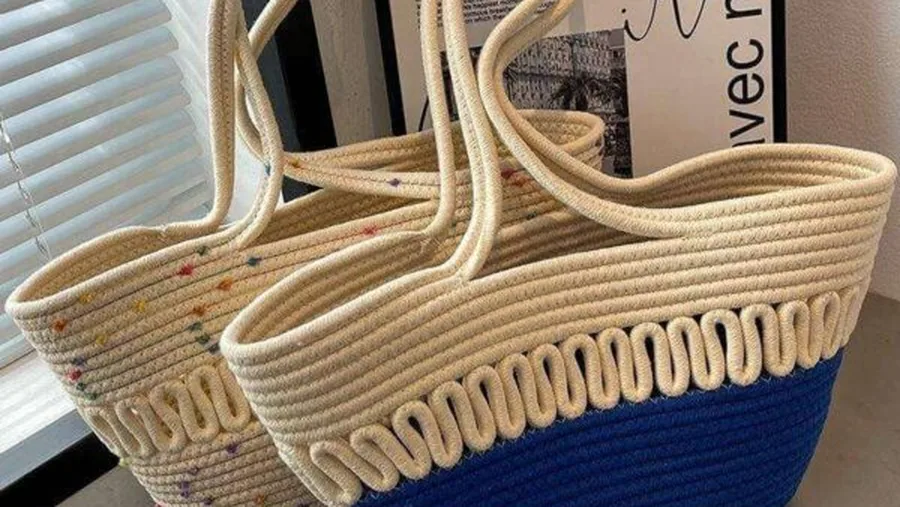
Straw and raffia totes are handwoven. That changes everything. The material is irregular. The weave varies. The lead time is longer, often six to ten weeks or more depending on the harvest and drying. A single weaver might make only a handful of bags a day. Imagine an order for 300 handwoven totes. That's not a production run. It's a season of work for a small group.
These bags suit boutiques, resort shops, and brands that want a craft story. Branding is usually a sewn label, a leather patch, or a hang tag. You don't screen print on straw. The surface won't take it. Buyers pay for labor, not material.
Leather-Accented Totes
Leather accents on canvas or straw add a premium feel. The accent could be handles, a bottom panel, or a trim piece. The tote bag manufacturer may not cut leather in-house. Many sub it out to a leather goods shop. That adds a step and a few days.
The buyer here is a brand that wants a $60 retail tote for $18 landed. The leather is usually split or bonded, not full-grain. You specify the thickness, finish, and attachment method. Rivets or heavy stitching are common. The handle is the most stressed part. If the leather is too thin, the bag fails at the attachment point.
MOQ Logic by Material
The MOQ is not a random number. It's the smallest order that keeps a production line busy for one shift without wasting material. A fabric that comes in stock rolls has a lower MOQ than a material that must be dyed or woven to order.
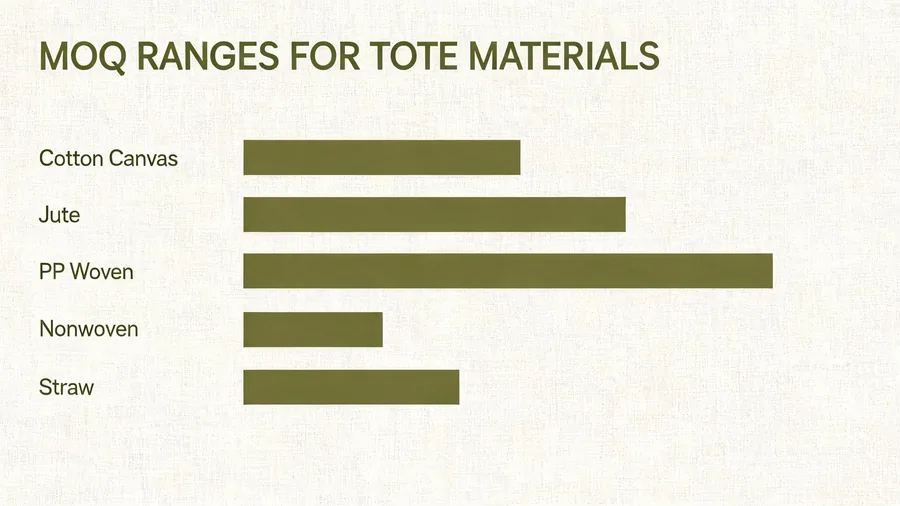
PP woven and non-woven totes often start at 1,000 to 5,000 pieces because the printing setup is the bottleneck. Cotton canvas can run 300 to 500 pieces if the print is simple. Handwoven straw is different. An order of a few hundred pieces is a serious commitment of time and skill. Leather-accented bags often have a low MOQ from the bag factory but a separate MOQ from the leather shop.
Ask the supplier to break down the MOQ by material, color, and print. A 500-piece order in one color is easy. The same order in five colors is five setups. That's why the MOQ jumps.
What a Low Unit Price Costs You
A low unit price is not a discount. It's a reallocation. The money you save on the bag shows up somewhere else. Maybe the handles are narrower. Maybe the stitching is six stitches per inch instead of eight. Maybe the fabric is a lighter GSM than the sample.
Here's a concrete example. A buyer gets two quotes for a 10 oz canvas tote. One is $1.10. The other is $1.45. The cheaper quote uses a lighter fabric, a smaller print area, and a thinner handle webbing. The buyer doesn't see that until the pre-production sample arrives. By then, two weeks are gone.
Ask for a bill of materials. It lists every component, the weight, the supplier, and the cost. A tote bag manufacturer who won't share a BOM is hiding something. That's not always bad. Sometimes they just don't want to reveal their fabric source. But you should still ask.
Five Red Flags When Vetting a Supplier
- The sample is great but the quote is vague. If the spec sheet says "canvas tote" without the ounce weight, the GSM, or the handle length, you'll get whatever fabric is cheapest that week. Demand a tech pack.
- They can't name their material source. A factory that runs canvas should know which mills they buy from. If they say "we have many suppliers," that's fine. If they can't name one, they're a trading company, not a factory.
- They claim every certification. A real factory has a few. They don't have twenty. If the list includes everything from GOTS to BSCI to ISO to SEDEX, ask for the certificate numbers. A factory audited under amfori BSCI or certified to ISO 9001 by an accredited registrar can share the certificate. If they can't, walk.
- The lead time is too good. A handwoven straw tote in seven days is a lie. A custom canvas tote in three days is a lie. Production has physical limits. If the quote ignores them, the factory is planning to substitute stock or cut corners.
- They go silent after you ask about rejects. Every production run has a defect rate. A good supplier talks about it openly: what's acceptable, what gets reworked, and who pays for the rejected pieces. If they dodge the question, they'll dodge the replacement order too.
Material Specs You Should Lock Down
Before you sign anything, put these numbers in writing. The fabric weight in GSM or ounces. The handle length and width. The stitch count per inch. The print method and ink type. The packaging: poly bag, hang tag, or both.
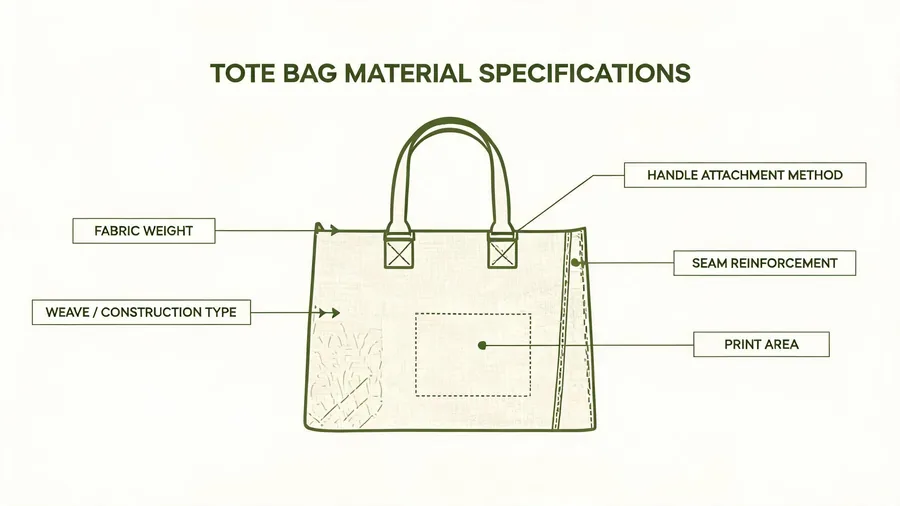
Here's a quick comparison of the six materials across the factors that actually matter.
| Material | Typical Buyer | Branding Method | MOQ Range | Price Signal |
|---|---|---|---|---|
| PP woven | Grocery, promo | Flexo print | 1,000, 5,000 | Lowest |
| Cotton canvas | Retail, corporate | Screen, embroidery | 300, 500 | Mid |
| Jute | Eco brands, wine | Cotton panel + print | 500, 1,000 | Low-mid |
| Non-woven | One-season promo | Screen or weld | 1,000+ | Lowest |
| Straw/raffia | Boutique, resort | Label, patch, tag | 200, 500 | High labor |
| Leather-accented | Premium retail | Deboss, patch, rivet | 100, 300 | Highest |
These MOQ ranges are typical starting points, not guarantees. Your exact number depends on the color, print, and component choices. Always confirm with the supplier in writing.
How to Start the Conversation
Don't open with "what's your best price?" That tells the factory you're shopping on price alone. Open with the material and the use case. "I need a 12 oz cotton canvas tote for a bookstore chain. Screen print on one side. 2,000 pieces." That's a quote a factory can actually answer.
If you're still exploring materials, look at our materials guide or browse the tote product range. We also have a sourcing blog with more detailed breakdowns. And if you want to talk through a specific design, send us the spec.
Frequently Asked Questions
Real buyer questions, answered plainly.
What is the minimum order for a custom tote bag?
It depends on the material. Cotton canvas often starts around 300 to 500 pieces. PP woven and non-woven usually start at 1,000 or more because of the print setup. Handwoven straw can start lower, around 200 pieces, but the lead time is longer. Always ask for one number per material and color combination.
How long does custom tote production take?
For standard cotton canvas or PP woven, expect three to five weeks after sample approval. Handwoven straw often takes six to ten weeks or more, depending on the harvest and drying. Leather accents add a few days for the leather shop. Rush orders are possible but usually cost more and reduce your quality buffer.
Can I print a full-color photo on a straw tote?
No. Straw and raffia have an irregular, open surface. The print will crack and look messy. Use a woven label, a leather patch, or a hang tag instead. If you need a full-color print, choose a flat material like cotton canvas or a coated PP woven.
Why are two quotes for the same canvas tote so different?
Because the fabric weight, handle spec, print size, and packaging are not the same. One quote might use 8 oz canvas and a small one-color print. The other might use 12 oz canvas with a full-size print and a hang tag. Ask both suppliers for a bill of materials and compare the line items, not the total.
Frequently Asked Questions
What is the minimum order for a custom tote bag?
It depends on the material. Cotton canvas often starts around 300 to 500 pieces. PP woven and non-woven usually start at 1,000 or more because of the print setup. Handwoven straw can start lower, around 200 pieces, but the lead time is longer. Always ask for one number per material and color combination.
How long does custom tote production take?
For standard cotton canvas or PP woven, expect three to five weeks after sample approval. Handwoven straw often takes six to ten weeks or more, depending on the harvest and drying. Leather accents add a few days for the leather shop. Rush orders are possible but usually cost more and reduce your quality buffer.
Can I print a full-color photo on a straw tote?
No. Straw and raffia have an irregular, open surface. The print will crack and look messy. Use a woven label, a leather patch, or a hang tag instead. If you need a full-color print, choose a flat material like cotton canvas or a coated PP woven.
Why are two quotes for the same canvas tote so different?
Because the fabric weight, handle spec, print size, and packaging are not the same. One quote might use 8 oz canvas and a small one-color print. The other might use 12 oz canvas with a full-size print and a hang tag. Ask both suppliers for a bill of materials and compare the line items, not the total.
Sourcing woven bags?
Send your questions to the factory directly. We reply within 24 hours.
Request a Quote