Raffia Bag Wholesale
Raffia bags wholesale sourcing rewards buyers who read fiber character closely. In industry reference terms, raffia comes from the underside fibers of young Raphia farinifera palm leaves, mainly from Madagascar, where strips are sun-dried and graded. The result is a soft, ribbon-like fiber that holds shape yet stays flexible enough for complex crochet work.
Crochet raffia construction is hand-labor intensive. Industry reference ranges put production at roughly 8-15 labor-hours per bag, which is why stitch quality and fiber selection strongly influence wholesale value. For raffia bags wholesale, grade matters. Natural raffia is the top tier, regenerated raffia is a wood-pulp and cotton blend, and synthetic raffia is plastic-based and generally not suited to high-end bags. Camytonc offers straw and rattan woven bags with a wholesale MOQ of 300 pcs, making the collection accessible for brands testing raffia and related natural textures. For a deeper material comparison, see raffia vs straw bag sourcing.
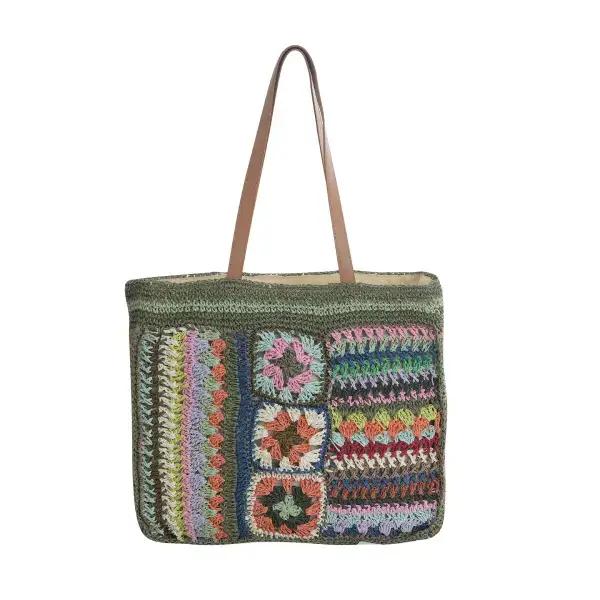
Straw-Woven and Crocheted Contrast-Color Shoulder Bag
Hand-crocheted straw shoulder bag with contrast-color granny-square panels and leather-tone straps.
HB-4815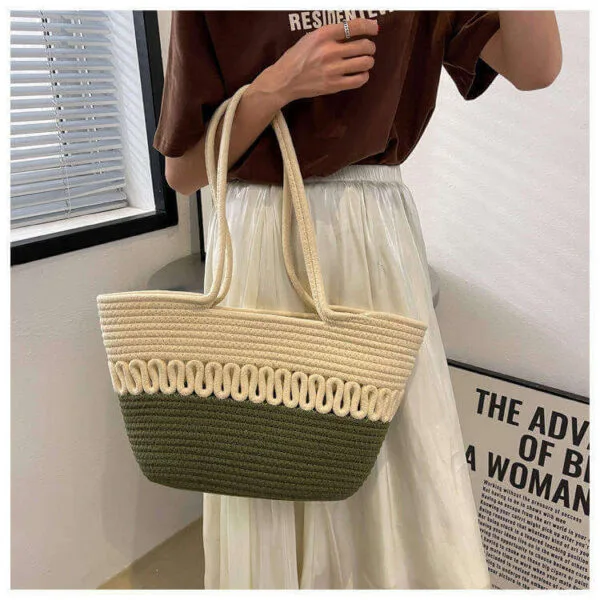
Hand-Woven Cotton Rope Tote Bag
Basket-style tote hand-woven from cotton rope, two-tone body with looped trim, colors made to order.
HB-6108Ordering details
- Straw and rattan MOQ: 300 pcs
- Pantone single-color matching from 200 pcs with Delta E <= 2.0
- Sampling: 1-10 days, paid samples, one revision round in 2-3 days
- Logo on in-stock styles: 3-7 days, ready-to-ship bestsellers dispatch in 24-48 hours
- Rush options: +20% fee cuts lead time 30%, +30% cuts 50%, +40% cuts 70%
- Shipping: sea, rail, air, or courier DHL/FedEx/UPS/TNT door-to-door in 5-7 business days, sea freight 40-45 days
- Payment: T/T, L/C, D/P and D/A, MoneyGram, credit card, PayPal, Western Union, cash, third-party platforms
- After-sales response: 24 hours
FAQ
Which raffia grade should wholesalers choose?
Grade selection depends on brand positioning. Natural raffia is the top tier material, with a soft, ribbon-like hand and a strong eco-farming story. Regenerated raffia is a wood-pulp and cotton blend that offers more consistency. Synthetic raffia is plastic-based and generally not suited to high-end bags. For premium crochet lines, natural or regenerated raffia tends to be the more common direction.
What durability should buyers expect from raffia bags?
As an industry reference range, natural raffia bags typically last about 3-5 years in everyday use, with medium moisture resistance. Natural straw is more fragile, and paper straw generally falls around 1-2 years. Industry return-rate references for natural raffia are commonly 2-4%, while uncoated paper straw can reach 8-12% in humid climates. These are general material reference ranges for sourcing decisions.
What are the MOQ and sampling timelines for raffia bags?
Camytonc straw and rattan woven bags have a wholesale MOQ of 300 pcs. Sampling takes 1-10 days with paid samples, and one revision round is typically completed in 2-3 days. Pantone single-color matching starts from 200 pcs with Delta E <= 2.0. Logo placement on in-stock styles takes 3-7 days.
From hand-crochet construction to consistent color matching, Camytonc supports raffia bags wholesale programs with a BSCI-certified factory, sampling discipline, and flexible shipping options. The team can help buyers align grade selection, artwork, and production planning with their market needs.
Start your raffia bag wholesale program
Send quantities and reference styles; we reply within 24 hours with MOQ confirmation and sampling next steps.
Request a QuoteMaterials and Construction Options for Raffia Bag Wholesale
Raffia bag wholesale buyers often start with a photo and assume the material is one thing. It is not. Raffia in the bag trade refers to a family of flat, ribbon-like fibers that can come from the raffia palm, from paper, or from synthetic film. The source changes how the bag feels, how it wears, and what it costs. A palm raffia bag and a polypropylene raffia-look bag may photograph nearly identically at arm's length. They do not age the same way.
The construction method matters as much as the fiber. Most raffia bags are either crocheted, woven on a loom, or stitched from pre-made raffia braid. Crochet gives an open, handmade texture and allows organic shaping. Loom weaving produces a tighter, more uniform surface and is faster to scale. Stitched braid sits somewhere between the two. Say a buyer wants a structured tote that holds a wine bottle upright. Crochet will sag unless the factory adds a stiffener. A loom-woven panel with a base board will hold the shape from day one.
Below is a comparison of the realistic material choices for this category. Treat the failure column as the part of the conversation most suppliers skip.
| Material | What it is good for | Where it fails |
|---|---|---|
| Natural palm raffia | Premium texture, strong eco story, soft hand feel, dyes well in earthy tones | Absorbs moisture, can mildew in humid transit, color varies between harvests, higher cost |
| Paper raffia | Lower cost than palm, uniform color, lightweight, good for seasonal or promotional bags | Tears when wet, low abrasion resistance, can look cheap if not finished well |
| Polypropylene raffia-look film | Water resistant, colorfast, very low cost, high tensile strength for the weight | Plastic feel, no natural texture, can crease permanently, not biodegradable |
| Cotton-blend raffia yarn | Softer drape, more comfortable against skin, takes pastel dyes well | Less structure, can pill, higher price than paper or PP, shrinks if washed |
| Viscose raffia | Silky sheen, good color saturation, drapes well for soft bags | Weak when wet, wrinkles easily, lower durability than polyester blends |
You can read more about the trade-offs between natural and synthetic options in our raffia vs straw comparison. The short version is that natural raffia sells on authenticity, while synthetic raffia sells on consistency. A buyer who promises a department store that every bag will match the Pantone swatch should not order natural palm raffia in August. The harvest varies.
How to Specify Raffia Bags for Different Buyer Situations
Specification is not one checklist. It is a set of decisions that change depending on who your customer is and where the bag will be sold. Three situations cover most raffia bag wholesale orders.
The boutique buyer who sells on texture
This buyer cares about how the bag feels in a customer's hand before they read the price tag. They should specify the raffia source by name, not just the color. Natural palm raffia from a specific region will have a different stiffness than paper raffia. They should also specify the crochet gauge or weave density. An open crochet with large holes looks artisanal but snags on rings and keys. A tighter weave reads more finished but costs more in labor. This buyer should ask for a physical pre-production sample, not a photo. The hand feel cannot be emailed.
If the bag uses a leather or fabric handle, the attachment method needs to be written down. A sewn-on handle with a reinforcement patch is different from a glued handle that peels in a hot car. For a boutique, the failure mode is a return. Specify the attachment method and the number of bar tacks or stitches per attachment point.
The promotional buyer who needs volume and speed
This buyer is ordering 5,000 bags for a summer campaign. They care about unit cost, lead time, and whether the bags arrive before the event. They should specify paper raffia or polypropylene raffia-look film. Both are cheaper and more color-consistent than natural palm. They should also specify the logo application method up front. Heat transfer on a rough raffia surface is unreliable. A woven label or a screen print on a smooth inner pocket works better. If the buyer waits until after sampling to decide, the lead time stretches by two weeks.
This buyer should also specify the packaging. A poly bag per unit is standard, but if the bags are going into gift boxes at the event, the factory needs to know before the quote. Boxed packaging changes the carton dimensions and the freight cost. Our straw bag MOQ sourcing guide covers the packaging and freight math in more detail.
The private-label buyer who needs a repeatable product
This buyer is building a brand. They need the same bag in six months, and it has to match the first order. They should specify the exact raffia material code, the dye lot tolerance, and the construction method. They should also request a sealed approval sample that the factory keeps on file. Without a sealed sample, the second order will drift. A different crochet worker, a different raffia batch, a different dye house. The buyer who skips this step gets a surprise in month seven.
This buyer should also specify the inner lining. Many raffia bags are unlined, which is fine for a beach tote. But if the bag holds a phone and keys, an unlined raffia interior lets small items poke through the weave. A cotton or polyester lining adds cost and changes the drape. Decide before production, not after the first customer review mentions lost earrings.
Customization That Changes Tooling, Cost, or Lead Time
Not all customization is equal. Some changes are free. Some require new tooling and a longer lead time. Buyers who understand the difference negotiate better and avoid surprise invoices.
Color changes on synthetic raffia are usually low-cost. The film is extruded in the chosen color, and the factory may have a minimum order per color. If the buyer wants a custom Pantone match on paper raffia, the factory dyes the fiber before weaving. This adds a dye lot charge and a few days. If the quote jumps dramatically, say 30 to 40 percent, for a different color, the factory is either padding the quote or does not want the order. Ask for a breakdown.
Logo application is where tooling enters the conversation. A woven label requires a loom setup and has a setup fee. A metal plate requires a mold. A heat transfer requires a plate or a digital print setup. The setup fee is usually amortized across the order quantity. On a 500-piece raffia bag wholesale order, a metal logo plate might add a dollar per bag. On a 5,000-piece order, the same plate adds pennies. The buyer should ask for the tooling fee as a separate line item, not buried in the unit price.
Shape changes are the expensive ones. Adding a zipper closure to a crochet tote means the factory has to design a new top edge and possibly a new reinforcement panel. Changing the handle length by two inches is cheap if the handle is a separate braid. Changing the handle attachment point is not, because the stress pattern changes and the factory may need to add a reinforcement patch or adjust the stitch pattern. A buyer who asks for a new shape after the sample is approved has reset the clock. The lead time starts over.
What to Check Before Approving Production for Raffia Bags
Approving production is not the same as approving a sample. A sample shows what the bag can look like. Production shows what the factory can repeat. The checks below are drawn from standard bag-industry inspection practice. None of them require a lab.
First, check the weave density against the approved sample. Measure the stitches per inch or the gaps between strips. A factory that loosens the weave to save material will produce a bag that sags and snags. The difference is visible if you lay the production piece next to the sealed sample and count. Do not rely on memory. A buyer who checks weave density on the first production run trains the factory for every run after that.
Second, check the color under the same light source used for the Pantone approval. Natural raffia shifts color between batches. Synthetic raffia should not, but it can if the factory switches film suppliers. Compare the production piece to the approved color swatch under daylight and under store lighting. If the buyer sells online, the bag will be photographed under studio light. A color that matches in daylight but not under LED is a return waiting to happen.
Third, check the handle attachment. Ask the factory for their handle-attachment pull test and compare it against your own spec. A market tote has a lower requirement than a laptop bag, but the test method should be the same: a controlled pull at the attachment point, held for a set time, with the failure mode recorded. Does the handle rip out of the raffia? Does the raffia tear before the stitching fails? The answer tells you whether the reinforcement patch is doing its job. If the factory cannot describe their test method, that is a red flag.
Fourth, check the moisture behavior if the bag will be sold as a beach or pool product. Natural raffia absorbs water and can stain or mildew if packed wet. A buyer who markets the bag as water-resistant is making a claim the material may not support. The factory should be asked to state the water resistance honestly. If the bag is synthetic raffia, a quick splash test on a production sample confirms the film is doing its job. If the bag is natural raffia, the honest answer is that it is not water-resistant, and the marketing should say so. Claim control matters. A buyer who overpromises on performance inherits the returns.
Finally, check the packaging against the spec. A raffia bag that is folded for shipping will have creases. If the buyer wants the bag to arrive retail-ready, the factory needs to use a box or a stiff insert. The carton dimensions and the packing count should match the approved packing list. A factory that crams an extra ten bags into a carton to save freight has just guaranteed crushed handles and bent corners. The buyer who checks a single carton before the container leaves the factory has saved the whole order.
For buyers who want to compare raffia with other woven materials, our wholesale straw bags page covers the adjacent category. The inspection points overlap more than most people expect.