Raffia Bag Manufacturer: Straw, Wicker and Raffia Explained
Straw, wicker and raffia: a sourcing vocabulary
In woven bag sourcing these terms are often used interchangeably, but they refer to different things. A clear vocabulary helps wholesale buyers specify materials, set quality expectations, and brief suppliers accurately.
Raffia origin and character
Industry reference data describes raffia as coming from the underside fibers of young Raphia farinifera palm leaves, mainly from Madagascar. The strips are sun-dried and graded. The result is soft, ribbon-like, and highly flexible, which suits complex crochet work.
Raffia has a strong eco-farming story and is fully biodegradable. Those points make it useful for fashion brands and gift companies that want a natural material narrative.
Straw is an umbrella term
Straw is not one material. In fashion bags, the term commonly covers wheat straw, paper straw, seagrass, and rush. Paper straw is an engineered paper-pulp material, while wheat straw, seagrass, and rush are plant-based materials with different textures and workability.
Wicker is a technique, not a material
Wicker names a weaving technique. Wicker pieces can be woven from rattan, willow, bamboo, or grasses. This is why the phrase wicker bag is not a material specification. Wholesale buyers who need a consistent fiber story should name the fiber, whether that is rattan, willow, bamboo, or a grass.
For a deeper comparison, see our guide to rattan, wicker, and straw.
Three raffia grades
- Natural raffia: top tier, plant-based, soft and flexible.
- Regenerated raffia: wood-pulp and cotton blend, more uniform in supply.
- Synthetic raffia: plastic-based, not suited to high-end bags.
Natural raffia is the top tier because it is plant-based and biodegradable. Synthetic raffia looks similar but carries a different value story.
Durability, moisture, and lifespan reference ranges
The figures below are industry reference ranges, not Camytonc guarantees. They help buyers compare common woven materials.
| Material | Typical lifespan | Moisture resistance | Return-rate reference |
|---|---|---|---|
| Natural raffia | 3-5 years | Medium | 2-4% |
| Paper straw | 1-2 years | Coated: medium-high | Uncoated: 8-12% in humid climates |
| Natural straw | Most fragile | Poor | Not specified |
Moisture resistance matters most in humid shipping and storage conditions. Uncoated paper straw shows higher return-rate risk in those climates.
Crochet labor and production benchmarks
Crochet raffia production commonly takes about 8-15 labor-hours per bag as an industry reference range. Industry MOQs commonly start around 300-500 pcs for crochet raffia. Paper straw programs commonly sit at 500-2,000+ pcs. Sample cycles often run 3-7 days, with bulk production around 45-60 days.
For ready-to-order straw bags and efficient wholesale options, browse our wholesale straw bags range.
How Camytonc fits into straw and rattan sourcing
Camytonc is a bag brand developed by Wingtu. Since 2013, the company has supported woven bag sourcing from Yiwu, Zhejiang, China. For straw and rattan woven bags, the Camytonc MOQ is 300 pcs. That sits near the lower end of the common crochet raffia range of 300-500 pcs.
The factory is BSCI-certified and operates 50+ automated production lines, while 100+ designers support material and style development. Paid samples run in 1-10 days, which helps buyers evaluate fiber, weave, and finishing before bulk commitment.
For buyers evaluating natural materials, the practical question is not only look and price. Moisture risk, production time, and the difference between a true natural fiber and a paper or synthetic substitute shape how a program performs in the market.
Styles in this material
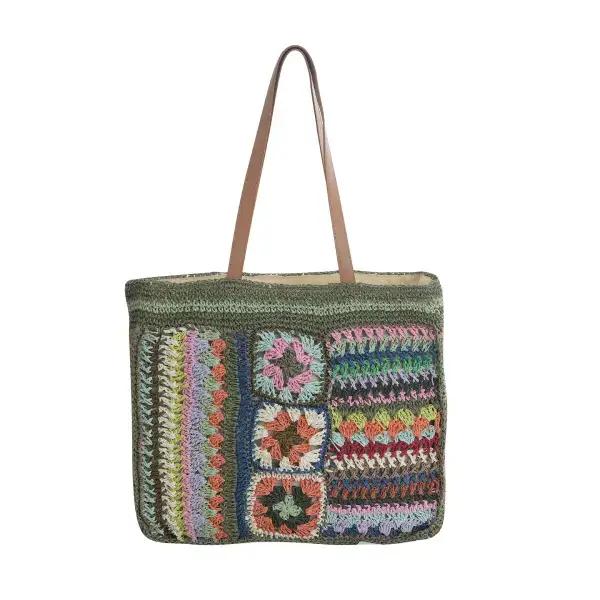
Straw-Woven and Crocheted Contrast-Color Shoulder Bag
Hand-crocheted straw shoulder bag with contrast-color granny-square panels and leather-tone straps.
HB-4815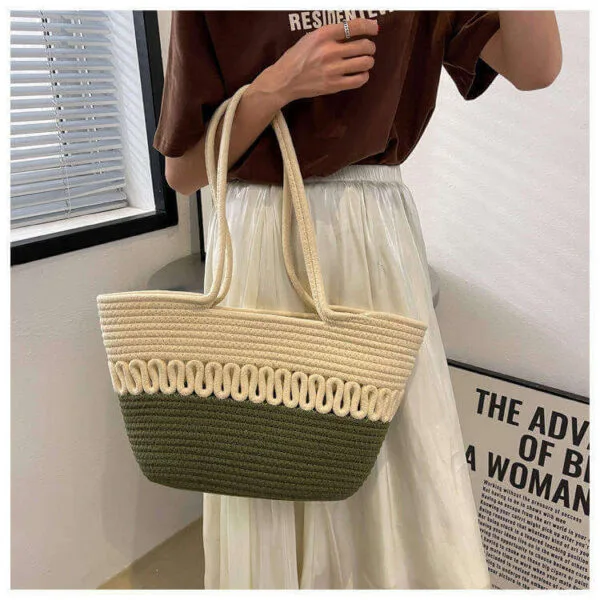
Hand-Woven Cotton Rope Tote Bag
Basket-style tote hand-woven from cotton rope, two-tone body with looped trim, colors made to order.
HB-6108Discuss raffia bag manufacturer: straw, wicker and raffia explained for your line
We answer material questions before you commit to sampling. Replies within 24 hours.
Request a QuoteMaterials and construction options
A raffia bag manufacturer works with materials that behave nothing like woven nylon or coated polyester. These fibers stretch, stain, and fail in their own ways. Straw, wicker, and raffia sit in a family buyers often treat as interchangeable. They are not. Each one changes how the bag is cut, sewn, reinforced, packed, and priced. The differences matter most when a buyer moves from a sample photo to a production order.
Straw is a harvested plant stem. It can be wheat, rye, or rice straw. It is light, cheap, and stiff. It breaks rather than bends. Wicker is not a material at all. It is a weaving method. A wicker bag can be made from rattan core, willow, bamboo, or synthetic fiber. Raffia comes from the raffia palm leaf. It is soft, pliable, and can be dyed in bright colors. It also frays at cut edges and absorbs moisture fast.
| Material | Good for | Where it fails |
|---|---|---|
| Wheat or rye straw | Structured totes, decorative panels, low-cost seasonal styles | Cracks when folded, poor colorfastness, limited stitch holding |
| Rattan core wicker | Firm baskets, structured handbags, high-abrasion corners | Heavy, stiff, difficult to pleat or gather, needs soaking before weaving |
| Raffia (palm leaf) | Soft slouchy shapes, crochet panels, dyed colorwork, foldable bodies | Frays at raw edges, absorbs humidity, loses shape without backing |
| Paper straw or viscose raffia | Uniform color, smooth hand, consistent roll widths | Lower tensile strength, can tear at stitch lines under load |
| Synthetic raffia (PP or PE) | Washable, colorfast, moisture resistant | Plastic sheen, less natural texture, harder to compost |
Construction options follow from the material choice. A stiff straw panel needs a different seam allowance than a soft raffia crochet panel. Woven bodies often need a backing layer. That backing can be cotton sheeting, nonwoven fabric, or a light polyester lining. The backing decides whether the bag holds its shape or sags after a week of use. It also changes the sewing speed and the reject rate.
Buyers who skip this conversation often approve a sample, then find the production run softer or stiffer than expected. That happens because the factory switched the backing or changed the weave density to hit a price. A clear spec prevents that. Say the buyer wants a raffia tote with a firm base. The spec should name the raffia width, the backing material, and the base insert. Without all three, the factory makes choices the buyer never sees.
How buyers in different situations should specify this product
Say a buyer runs a resort boutique. They order 300 raffia bags per season. Their customers care about texture and natural color variation. This buyer should specify a raffia grade with visible color variation, a soft cotton lining, and no stiff base insert. They should also accept that no two bags will look exactly alike. That variation is the selling point. They should not ask for tight Pantone matching across a natural fiber. The cost of sorting and dyeing to remove variation will eat the margin.
Now say a buyer works for a national retail chain. They need 5,000 units across three colors. Their stores expect consistent shelf presentation. This buyer should specify paper straw or viscose raffia, not natural raffia. The color will be uniform. The roll widths will be consistent. They should also specify a rigid base insert and a nonwoven backing. That keeps the bag standing on a shelf. The tradeoff is a less natural hand feel. The buyer accepts that because shelf consistency matters more than texture.
A third buyer sources for an eco-conscious brand. They want a bag that can be marketed as plant-based and biodegradable. This buyer should specify natural raffia with a cotton backing and cotton thread. No synthetic lining, no plastic base insert, no polybag packaging. They should also ask for a test report on fiber content. The risk is that a factory substitutes viscose raffia to lower cost. Viscose is regenerated cellulose. It is plant-derived but heavily processed. Some brands accept it. Others do not. The spec must say which is allowed.
Each of these buyers faces a different failure mode. The boutique buyer fails if the bags look too uniform. The retail chain buyer fails if the bags look sloppy on the shelf. The eco brand buyer fails if a lab test finds synthetic fiber. The same product category produces three different specs. A good raffia bag manufacturer asks which failure matters most before quoting.
There is a fourth situation worth naming. A buyer wants a woven bag that can be folded flat for shipping. This is common for e-commerce brands. Foldable bags reduce freight cost per unit. But foldable woven bags need a soft backing or no backing. They also need a raffia or paper straw that tolerates creasing. Stiff rattan wicker will not fold. It will crack. This buyer should specify the fold test in the QC plan. Fold the bag along the intended crease five times. Check for fiber breakage at the fold line. If the sample cracks, the material is wrong for the use case.
Customization that changes tooling, cost or lead time
Some changes are free. Others add days and dollars. Buyers need to know which is which before they negotiate. A woven strap pattern change is usually free if the buyer picks from existing weaves. A new weave structure means new loom setup. That is tooling. It adds cost and lead time. The same logic applies to dye lots. A standard color from the factory's existing raffia inventory ships fast. A custom Pantone match on natural raffia requires a dye trial. The trial adds three to seven days. It may also require a minimum order quantity to justify the dye bath.
Hardware is another dividing line. Swapping a metal zipper pull for a wooden bead is a low-cost change if the bead is already in stock. A custom-shaped metal logo plate is a new mold. The mold cost is real. So is the wait. Buyers often ask for a custom logo plate, then are surprised by the tooling charge. The charge is not a markup. It is the cost of cutting steel. A woven label, by contrast, is cheap and fast. That is why most woven bag brands start with a woven label and add metal hardware later.
Size changes are trickier than they look. A buyer who asks for a bag 10 percent larger assumes the factory just scales the pattern. Sometimes that works. Sometimes the weave density changes, the handle attachment point shifts, and the bag sags differently. A larger raffia tote may need a heavier backing or a wider strap to carry the extra load. That is not a simple scale-up. It is a partial redesign. The honest answer is that some size changes are free and some are not. The factory can only tell after seeing the base pattern and the new dimensions.
What does not change tooling? Lining color, pocket placement, strap length within a standard range, and the choice of closure type from existing options. These are pattern adjustments, not new tooling. They add a day or two to sampling. They do not add weeks to production. Buyers should ask for a written list of what counts as a pattern change versus a tooling change. A factory that cannot answer that question clearly is not ready for custom work.
Lead time shifts more from material availability than from sewing time. Natural raffia is seasonal. A factory that buys palm leaf raffia in bulk stores it for months. If a buyer orders in a month when the factory's raffia stock is low, the lead time stretches. Synthetic raffia is available year-round. So is paper straw. Buyers who need fast delivery should ask which materials are in stock before they pick a color. A custom color on a backordered material is the slowest possible combination. A stock color on an in-stock material is the fastest. That single question can save three weeks.
For more on how MOQs shift by material, see our straw bag MOQ sourcing guide. And if you're weighing raffia against straw for a wholesale program, this comparison breaks down the cost and durability tradeoffs.
What to check before approving production
A woven bag can look perfect in a photo and fail in a customer's hands. The checks that matter are physical, not visual. First, check the weave density. Count the warp and weft yarns per unit length at three points on the bag. A loose weave in the corner means the bag will stretch there. A tight weave at the center means the bag was pulled during weaving. Neither shows up in a flat lay photo. The buyer has to run a hand over the surface and feel for uneven tension.
Second, check the seam strength at the handle attachment. This is the highest-stress point on any bag. Grab the handle and pull hard. Not a gentle tug. A sharp pull that simulates a full bag being lifted from a car seat. The seam should not gap. The weave should not separate. If the factory uses a reinforcement patch behind the handle, confirm it is present on every unit, not just the sample. Some factories add the patch to the sample and skip it in production to save time.
Third, check colorfastness. Natural raffia and dyed straw bleed. Rub a white cotton cloth against the bag in a hidden spot. If color transfers, the bag will stain clothes. This is a common complaint for brightly colored woven bags. The fix is a dye fixative or a different dye class. The fixative adds cost. The buyer should decide before production whether the colorfastness requirement is worth the extra cost. A cheap bag that stains a customer's white linen dress is not cheap for the brand.
Fourth, check the moisture response. Raffia and straw absorb humidity. In a humid climate, a bag stored in a warehouse can grow mold or develop a musty smell. The buyer should ask the factory how they control moisture before packing. Some factories add a silica gel packet. Some use a ventilated polybag. Some do nothing. The answer tells you a lot about the factory's quality system. A factory that says "we never had a problem" is not doing the check. A factory that says "we dry the material before weaving and add a desiccant to each carton" is doing the check.
Fifth, if the buyer plans to make any performance claim, the claim needs a test. Say the brand wants to market the bag as "water-resistant." That claim requires a coating or lamination. Natural raffia is not water-resistant on its own. The buyer would need to specify a water-repellent treatment and test it. A spray test or a simple water-drop test can show whether water beads or soaks in. The result should be written into the spec. The same applies to "tear-resistant" or "colorfast" or "biodegradable." Every performance word on the hangtag needs a corresponding test in the QC plan. Without that, the claim is just marketing copy.
Finally, check the packing method. Woven bags are bulky. They do not fold flat unless designed to. If the buyer expects flat-pack shipping, the spec must say so before the pattern is cut. A factory that packs woven bags standing up uses more carton volume. The freight cost goes up. The buyer should ask for the carton dimensions and the units per carton before approving production. A small change in packing can save enough freight to cover the cost of a better backing material. For more on how these materials compare across the broader woven category, see our materials overview.