Wholesale Straw Bags
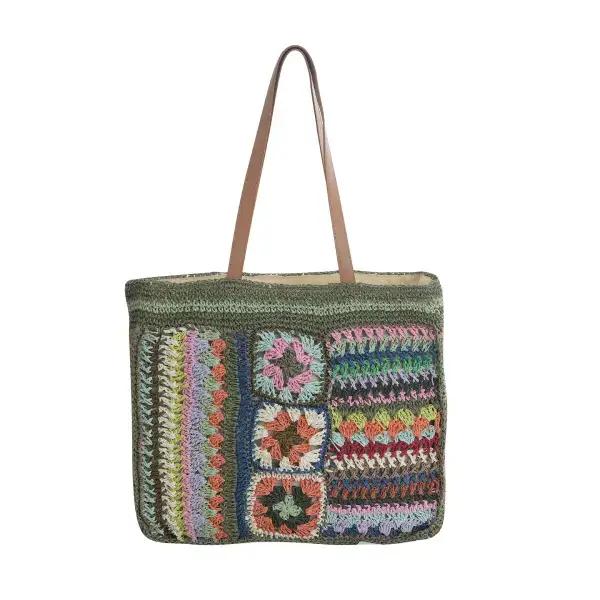
Straw-Woven and Crocheted Contrast-Color Shoulder Bag
Hand-crocheted straw shoulder bag with contrast-color granny-square panels and leather-tone straps.
HB-4815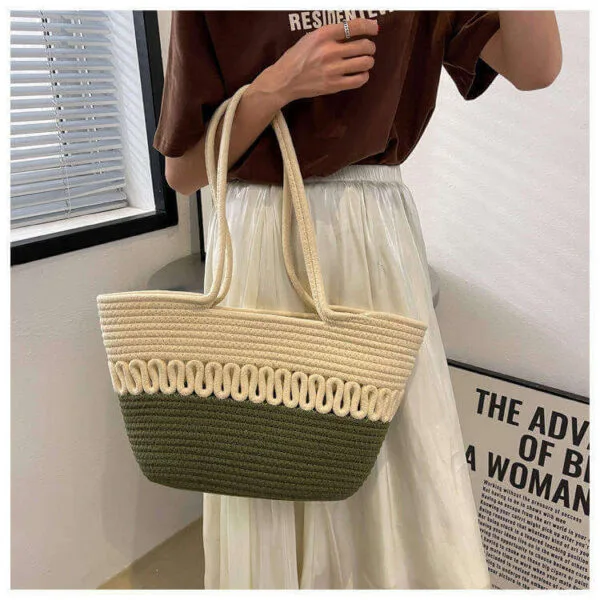
Hand-Woven Cotton Rope Tote Bag
Basket-style tote hand-woven from cotton rope, two-tone body with looped trim, colors made to order.
HB-6108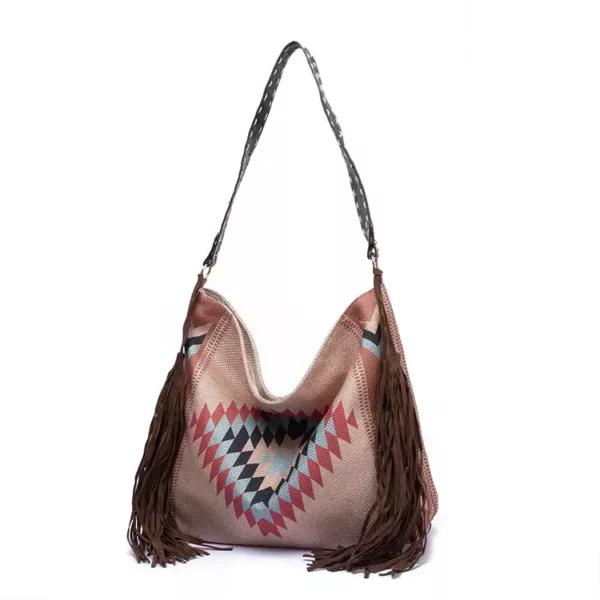
Handmade Woven Tassel Cotton and Linen Shoulder Bag
Bohemian jacquard-woven shoulder bag in cotton and linen with suede-touch tassels.
HB-4746Wholesale straw bags for brands that value handcrafted texture
This collection serves fashion brands, gift companies, and Amazon sellers who want straw and natural-look bags with a handcrafted character. It is built for buyers who need consistent wholesale supply, flexible customization, and a clear path from sample to bulk order.
Our straw and rattan bag MOQ is 300 pcs. Sampling takes 1 to 10 days and samples are paid. That gives you room to test shape, weave, handle style, and color before committing to a larger production run.
Ordering details
- MOQ: 300 pcs for straw and rattan bags.
- Sampling: 1 to 10 days, paid samples.
- Rush options: +20% fee cuts lead time 30%, +30% cuts 50%, +40% cuts 70%.
- Shipping: sea, rail, or air freight, with DHL, FedEx, UPS, or TNT door-to-door in 5 to 7 business days.
FAQ
What is the wholesale MOQ for straw bags?
The MOQ is 300 pcs for straw and rattan bags. This applies to the collection overall and allows us to support handcrafted production while keeping wholesale orders manageable.
How long do straw bag samples and bulk orders take?
Sampling takes 1 to 10 days and samples are paid. Bulk production timing depends on the order scope, but our standard OEM flow includes 15 to 20 days for bulk production after sampling and material sourcing are complete.
Can I customize straw bags with my own logo or colors?
Yes. We support Pantone single-color matching from 200 pcs, with color accuracy Delta E equal to or below 2.0. Logo work on in-stock styles takes 3 to 7 days, and our OEM process includes sampling, material sourcing, bulk production, QC, packing, and dispatch.
Start your wholesale straw bags program
Send quantities and reference styles; we reply within 24 hours with MOQ confirmation and sampling next steps.
Request a QuoteWholesale Straw Bags: Materials That Actually Hold Up
Wholesale straw bags look simple in a photo. The construction is not. A buyer who has handled enough returns starts asking about the fiber, the weave, the coating, and what happens when the bag gets wet. Those questions matter more than the color of the trim. Say a boutique owner orders five hundred beach totes and the handles stretch out by July. That failure traces back to a material decision made months earlier, often without anyone saying the word "straw" precisely.
Straw is a catch-all term. In bag manufacturing, it can mean natural raffia, paper straw, seagrass, water hyacinth, rattan, wicker, or a synthetic look-alike. Each behaves differently under load, moisture, and sunlight. The difference between raffia and straw is not a marketing detail. It changes the MOQ, the lead time, and the failure mode. A buyer who specifies "straw bag" without a fiber gets whatever the factory has in surplus that week.
| Material | Good for | Where it fails |
|---|---|---|
| Raffia (natural) | Soft hand feel, tight crochet or woven bodies, structured totes | Frays at cut edges, absorbs moisture, fades fast in direct sun |
| Paper straw | Rigid shapes, flat-weave panels, low cost | Creases permanently, weakens when wet, tears under point load |
| Seagrass | Textured rustic look, sturdy bases | Stiff, splinters at folds, color unevenness between batches |
| Water hyacinth | Open weave, lightweight, eco positioning | Loose fibers, inconsistent thickness, snags easily |
| Rattan core | Structural frames, handles, rigid bases | Hard to sew through, expensive, limited color options |
| Polypropylene raffia | Colorfastness, water resistance, repeatable shade matching | Feels plastic, lower perceived value for premium lines |
Most buyers land on a blend. A natural raffia body with a polypropylene binding tape at the seams is common. The binding hides the raw edge and stops fraying. It also adds a few cents per unit. Some factories skip it to hit a price. Ask where the raw edges are finished before you approve a sample. A bag that arrives beautiful and frays after two weekends is a chargeback waiting to happen.
Moisture is the quiet killer. Natural fibers swell and shrink. A bag woven tight in Yiwu humidity can loosen in Arizona. The fix is not always a coating. Sometimes the weave density does the work. A tighter weave with fewer gaps holds shape without adding a polyurethane film that makes the bag feel plastic. If you do want a coating, the industry reference covers polyurethane and polyvinyl chloride systems. Both add water resistance. Both change the hand feel. Neither is free.
How Different Buyers Should Specify Straw Bags
The same factory can build a $3 market tote and a $28 resort handbag. The difference is in the specification, not the machinery. A buyer who sends a photo and says "make this" has skipped the part that determines whether the product works.
Say you run a beach resort gift shop. You need five hundred bags by April. Your specification should lead with weight and packability. A flat-weave paper straw tote stacks dense for shipping. A stiff rattan frame does not. You also need to decide whether the bag can get wet. Beach buyers will set it on sand and spill sunscreen. A polypropylene raffia blend handles that. Natural raffia does not. Your spec should name the fiber, the weave count, and the handle attachment method. Handle attachment is where cheap bags fail first. A sewn-in handle with a reinforcement patch at the anchor point costs more than a glued tab. Specify the patch.
A fashion brand buying raffia bags wholesale has a different problem. The bag is part of a seasonal collection. Color matters. Natural raffia varies from batch to batch. If your lookbook shows a specific oat tone, you need a dye lot approval process. That means the factory sends a lab dip before production. It adds three to five days. Skipping it means your July delivery arrives in a shade that does not match the catalog. For this buyer, the specification should include a Pantone reference for any dyed fiber and a tolerance for natural variation in undyed sections.
A corporate gifting buyer has the tightest deadline and the least tolerance for defects. You need two thousand units with a logo. The logo placement is the specification that matters. Woven straw does not take embroidery well. The needle tears the fiber. Screen printing sits on the surface and cracks when the bag flexes. A woven label or a heat-pressed patch on a flat panel works better. The panel needs to be a plain weave section, not a crochet body. Specify the panel size and position in the tech pack. If the factory says they can embroider directly on natural raffia, ask for a pre-production sample. Then bend it. Then reject it.
Customization That Changes Cost Versus Customization That Does Not
Not every change costs money. Some changes are free because the factory is already doing them for every client. Others require new tooling, new dies, or a different production line. Knowing which is which lets you negotiate without looking naive.
Free or low-cost changes: thread color on the binding, size of a woven label, position of a hang tag, choice between a magnetic snap and a button closure if both are already in the factory's parts bin. These decisions ride along with existing production.
Changes that cost money: a new handle shape that needs a cutting die, a custom metal logo plate that needs a mold, a non-standard bag dimension that requires a new weaving pattern, or a coating that the factory does not already apply. Tooling for a metal plate can run into the hundreds of dollars. The cost amortizes over the order. At five hundred pieces, that plate adds a dollar per bag. At five thousand, it is ten cents. The math is not complicated. The mistake is not running it.
Lead time changes work the same way. A stock raffia body with a custom printed lining adds a few days. A custom weave pattern with a new colorway can add two weeks or more because the yarn has to be dyed and the loom reset. The MOQ for straw bags also shifts with material. Natural raffia often has a lower minimum because the raw material is available in small lots. A custom-dyed polypropylene raffia needs a larger run to justify the dye setup. Ask the factory which side of that line your order sits on.
One honest note: some "customization" is really just assembly. Adding a tassel, a charm, or a printed dust bag does not change the bag itself. It changes the packaging line. Those add-ons are cheap and fast. They are also where factories pad quotes when they think the buyer does not know the difference. Ask for the cost breakdown. A factory that refuses to separate material, labor, and trim costs is telling you something.
What to Check Before You Approve Production
Approving a straw bag sample is not the same as approving a nylon backpack. The failure modes are different. Your pre-production checklist should reflect that.
First, check the weave density. Hold the bag up to a light source. If you can see daylight through the body, small items will fall out. That is fine for a market tote. It is not fine for a handbag that holds a phone and keys. The weave density is set on the loom. Changing it after sampling means a new sample. Do not approve a loose weave and then complain later that the bag is see-through.
Second, test the handle attachment. Pull on it. Hard. Then pull it wet. Natural fiber handles weaken when damp. A handle that holds twenty pounds dry can fail at ten pounds after a rain shower. The industry reference calls this a reinforcement patch at high-stress attachment points. For straw bags, the patch is often a strip of webbing sewn inside the bag behind the handle anchor. Check that it exists. Check that the stitching goes through the patch, not just the straw.
Third, check colorfastness. Rub a white cloth against the bag. If color transfers, the bag will stain a customer's white linen dress. This is a known issue with dyed natural fibers. The factory should have a colorfastness test result or be willing to run one. The industry reference lists colorfastness as resistance to color change during rubbing, washing, light exposure, or contact with moisture. For straw bags, rubbing and moisture are the two that matter.
Fourth, control your performance claims. If you plan to market the bag as "water-resistant," the factory needs to tell you what coating was applied and at what weight. If you plan to say "eco-friendly," you need to know whether the fiber is natural, recycled, or just colored to look natural. The industry reference is clear that coatings and laminations change barrier performance. A bag with a polyvinyl chloride coating is not biodegradable. Saying it is will get you in trouble. Keep the marketing language tied to what the specification actually says.
Finally, check the packing. Straw bags crush. If they ship flat-packed without internal support, the weave deforms. A simple poly bag is not enough. The factory should insert tissue or a cardboard form inside each bag before packing. This adds pennies. It prevents a container full of bags that look like they were sat on. Ask for a packing photo before the cartons leave the factory. A buyer who skips this step learns about it when the returns start.