Wholesale Beach Bags
Summer beach bag planning rewards buyers who secure flexible material options early. Camytonc supports retail and wholesale programs across straw, cotton rope, canvas and fringe styles, with material-based MOQs that keep test orders accessible. Cotton canvas starts at 200 pcs and straw and rattan starts at 300 pcs, so you can shape a balanced warm-weather range without overcommitting.
For peak-season replenishment, ready-to-ship bestsellers dispatch in 24-48 hours. Logo on in-stock styles takes 3-7 days, which helps Amazon sellers and boutique buyers respond to fast trends. Sampling is available in 1-10 days as a paid step, with one revision round in 2-3 days.
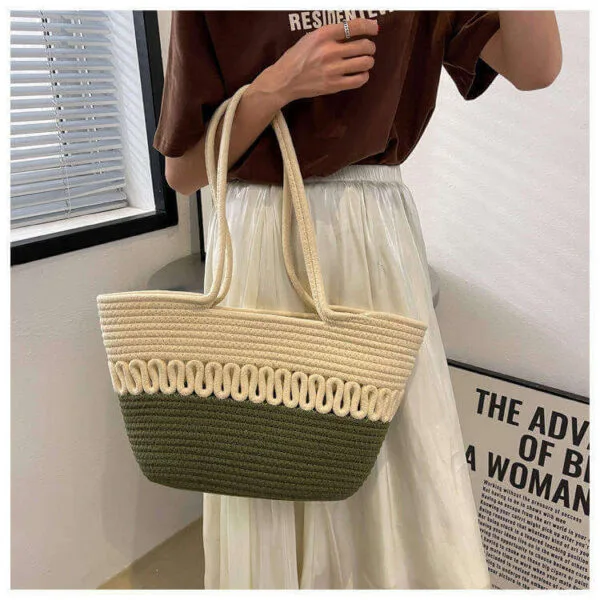
Hand-Woven Cotton Rope Tote Bag
Basket-style tote hand-woven from cotton rope, two-tone body with looped trim, colors made to order.
HB-6108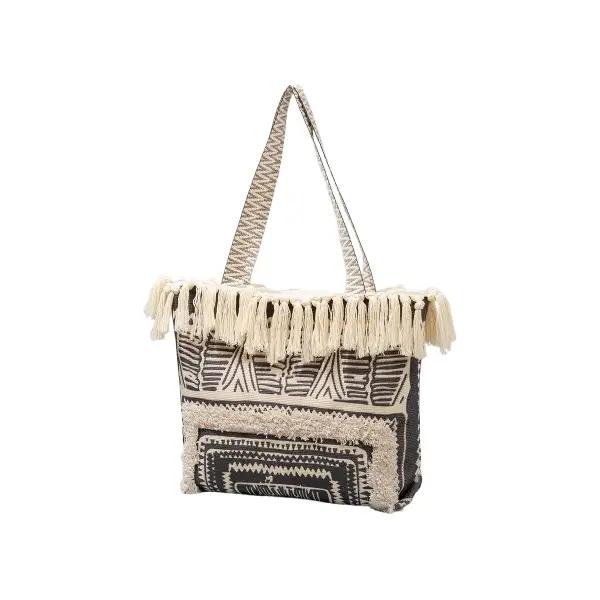
Bohemian Tassel Canvas Tote
Holiday tote in polyester cotton with woven jacquard pattern, tufting and a full tassel fringe.
HB-4786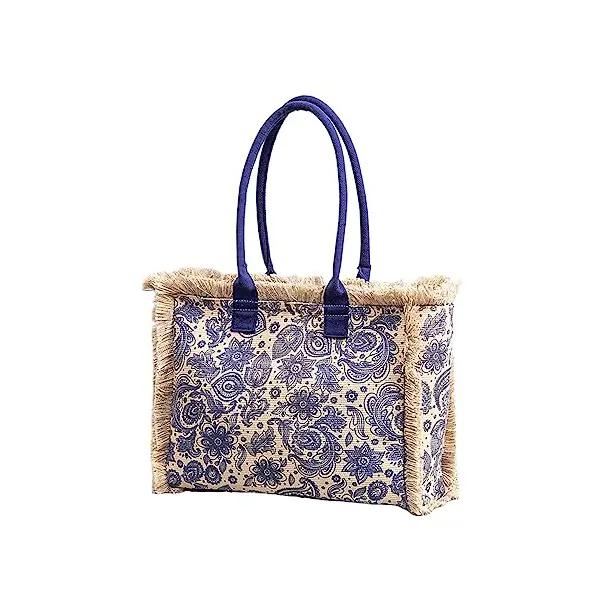
Fringed Canvas Shoulder Bag
Large-capacity zippered canvas shoulder bag with printed pattern and natural fringe trim.
HB-4777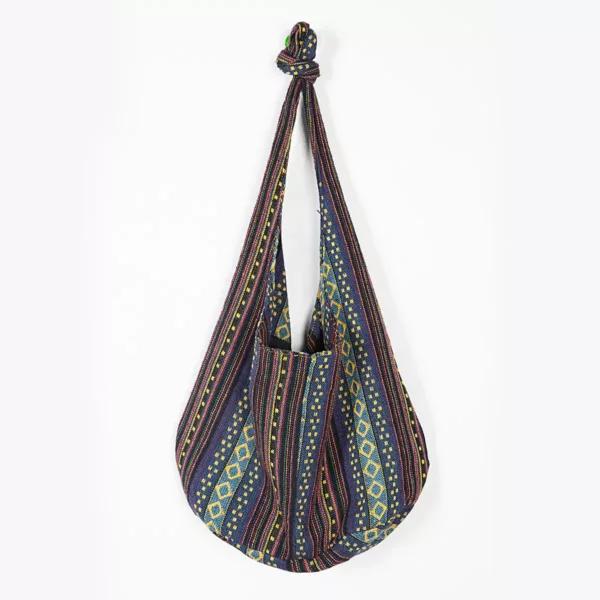
Aztec Cotton and Linen Canvas Jacquard Bag
Woven jacquard hobo bag in cotton and linen with retro geometric stripes and a knotted strap.
HB-4730Ordering details
- MOQ tiers: PP woven 100 pcs, cotton canvas 200 pcs, straw and rattan 300 pcs, leather-accented 50 pcs, special functional materials 500 pcs.
- Pantone single-color matching from 200 pcs, color accuracy Delta E <= 2.0.
- Sampling: 1-10 days, paid samples. One revision round: 2-3 days.
- Logo on in-stock styles: 3-7 days. Ready-to-ship bestsellers: dispatch in 24-48 hours.
- Rush options: +20% fee cuts lead time 30%, +30% cuts 50%, +40% cuts 70%.
- Payment: T/T, L/C, D/P and D/A, MoneyGram, Credit Card, PayPal, Western Union, Cash, third-party platforms.
- Shipping: sea, rail, air. Courier DHL/FedEx/UPS/TNT door-to-door 5-7 business days, sea freight 40-45 days.
- After-sales: 24-hour response.
FAQ
What are the seasonal lead times for beach bag orders?
OEM flow has eight steps: inquiry confirmation 1-3 days, quote and contract 1-2 days, sampling 5-7 days, material sourcing 3-5 days, bulk production 15-20 days, QC 2-3 days, packing 2-3 days, dispatch. Ready-to-ship bestsellers dispatch in 24-48 hours. Logo on in-stock styles takes 3-7 days. Rush options can reduce lead time by 30%, 50% or 70% with fees of +20%, +30% or +40%.
Can I mix styles in one order?
Yes. Each material category carries its own MOQ tier. Cotton canvas starts at 200 pcs, straw and rattan starts at 300 pcs, PP woven starts at 100 pcs, leather-accented starts at 50 pcs and special functional materials start at 500 pcs. Use those material tiers to structure a mixed summer order.
What packaging options are available for wholesale beach bags?
Packaging options include poly bag, color box, gift box with handle bag, branded poly mailer, hang tag plus poly bag, and dust bag.
Camytonc has been a bag brand developed by Wingtu since 2013, based in Yiwu, Zhejiang, China. The BSCI-certified factory covers 30,000+ sqm, with 500+ workers, 100+ designers and 50+ automated production lines. Monthly output is 150,000 units, and warehouses hold 3,000,000+ items, supported by 220+ fabric suppliers.
For wholesale beach bag programs, early sample approval helps protect seasonal delivery windows. Contact Camytonc at [email protected].
Start your wholesale beach bags program
Send quantities and reference styles; we reply within 24 hours with MOQ confirmation and sampling next steps.
Request a QuoteMaterials That Actually Work for Wholesale Beach Bags
Wholesale beach bags look simple. They're not. The material choice decides whether a bag survives one season or five, whether it ships flat or costs a fortune in freight, and whether your customer posts a happy photo or a refund request. Say a buyer orders 3,000 totes for a resort chain. The fabric they pick changes the landed cost more than the logo does. So let's talk materials properly.
Most beach bags fall into four material families: woven plant fiber, woven synthetic, coated canvas, and mesh or open-weave synthetics. Each behaves differently when it meets sand, sunscreen, salt water, and a car trunk in August. A straw bag that looks gorgeous in a showroom can crack in dry heat. A polyester tote that shrugs off seawater can feel cheap in the hand. The trick is matching the material to the retail position and the end use.
| Material | Good for | Where it fails |
|---|---|---|
| Paper straw or raffia | Resort retail, gift shops, photo-ready texture, lightweight shipping | Weak when wet, can crack or split at fold lines, color fades fast in direct sun |
| Polypropylene woven ribbon | High durability, wet conditions, bright color retention, easy wipe-down | Stiff hand feel, less premium look, plastic-heavy brand story |
| Cotton canvas, waxed or coated | Structured totes, screen printing, long retail life, reusable-brand positioning | Heavy to ship, stains from sunscreen, waxed finishes mark and crease |
| Polyester mesh or open weave | Sand release, wet swimwear, compact packing, low cost per unit | Low perceived value, limited structure, zipper attachment needs reinforcement |
Raffia and paper straw deserve a note. They're the darlings of Instagram and the headache of quality control. A buyer who wants wholesale straw bags should know that natural fiber varies by harvest. One bale can be softer than the next. We specify a twist count and a moisture level before cutting. That's not optional. It's the difference between a bag that folds and one that snaps.
Polypropylene woven ribbon is the workhorse. It takes a beating. It doesn't rot. It prints acceptably with heat transfer. But it feels industrial. Some brands lean into that. Others line it with cotton and call it a hybrid. The lining adds cost and a second material to source. Buyers who want a premium hand feel often move to coated canvas instead. The coating adds water resistance and structure. It also adds weight. A full container of coated canvas totes weighs noticeably more than raffia. Freight math matters here.
Mesh is the sleeper. It's cheap, it drains, and it packs flat. The failure points are the seams and the zipper. A mesh beach bag with a zipper needs a binding tape or the zipper teeth will tear the open weave. We see this failure on samples from factories that don't do beach specifically. It's a construction issue, not a material issue. Specify a folded binding or a fabric gusset at the zipper line and the bag holds.
How Different Buyers Should Specify This Product
There is no one beach bag spec. A hotel amenity buyer, a boutique owner, and a promotional products distributor are solving three different problems. Their spec sheets should look nothing alike. Here's how each one should think.
The resort or hotel amenity buyer
This buyer orders volume. Maybe 5,000 units for a season. The bag sits in a room, gets used for a week, and ideally goes home as a souvenir. The spec decisions that matter: fiber type, fold point, and logo placement. A paper straw bag that arrives pre-folded will crack at the crease before the guest checks in. Specify a bag that ships flat with a soft fold or ships open with a removable insert. The logo should be woven in or printed on a fabric patch. A direct print on raffia looks fuzzy after three uses. The hotel buyer also needs a hang tag that says the bag is handmade or natural. That's a claim. It has to be true. We'll get to claims later.
The boutique or lifestyle brand owner
This buyer cares about hand feel and photography. The bag is the product, not a freebie. They need a material that looks premium in a flat lay and survives a customer's actual vacation. Coated canvas or a raffia-cotton blend works here. The spec decisions: lining, closure, and interior pocket. A boutique raffia bag without a lining sheds fibers onto sunglasses. A zipper adds cost and changes the silhouette. A magnetic snap is cheaper but fails on a stuffed bag. The boutique owner should spec a lining fabric with a tight weave and a zipper with a fabric pull, not a metal one. Metal pulls heat up in the sun. Small detail, big return rate difference.
The promotional products distributor
This buyer is buying against a budget and a deadline. The bag carries a corporate logo to a trade show or a summer event. The spec decisions: unit cost, print area, and lead time. A polyester mesh tote with a screen-printed logo is the safe play. It's cheap, it prints clean, and it ships fast. But the distributor who wants to stand out might spec a polypropylene woven bag with a full-color heat transfer. That costs more per unit and adds three to five days. The distributor should also ask about the print durability. A beach bag that goes to a pool party will get wet. A water-based screen print on uncoated polyester will run. Specify a heat-cured print or a woven label instead. The label costs less than a reprint.
These three buyers rarely want the same bag. That's the point. A good manufacturer asks which one you are before quoting. If a supplier quotes the same spec for all three, walk away.
Customization That Changes Tooling, Cost, or Lead Time
Some customizations are free. Some cost a fortune. Buyers who don't know the difference overpay or under-spec. Let's be honest about both.
What does not change tooling or lead time: thread color, lining color, drawstring cord color, and the size of an existing woven label. These are selections from a standard chart. A buyer can change a lining from beige to navy and the production line doesn't blink. Same with a zipper pull finish. These choices live inside the existing bill of materials.
What does change tooling: a custom woven pattern, a new handle shape, a molded zipper pull, or a metal plate with a brand name. A custom woven pattern means new loom setup. That's a one-time fee and a longer first-run lead time. A new handle shape might require a cutting die. A metal plate needs a mold. These are not small costs. A custom metal logo plate can cost more than the bag itself on a 500-unit order. On a 50,000-unit order, the amortized cost is pennies. Volume changes the math completely.
What changes lead time but not tooling: any material that isn't in stock. A buyer who wants a specific raffia twist or a coated canvas in a non-standard color will wait for the mill. That's not a factory delay. It's a supply chain reality. The factory can't weave raffia in the back room. The lead time for a custom material can be two to four weeks before cutting starts. Buyers who need bags for a June event should lock materials by March. We say this every year. Someone always calls in May.
What changes cost but not tooling: adding a lining, adding an interior zipper pocket, adding a reinforced base, or upgrading the handle from a single stitch to a box-X. These are labor and material costs. They're predictable. A reinforced base adds maybe thirty cents per unit. A lining adds a dollar or more depending on the fabric. These are worth specifying if the end user will carry a wet towel and a bottle of sunscreen. A bag that sags at the bottom looks cheap in photos. The reinforced base fixes that.
Personalization is its own category. A personalized beach bag with a customer's name or a monogram is a different production flow. Embroidery on raffia is slow and risks fiber pull. Heat transfer on polypropylene is fast but limited to flat areas. A woven name label sewn into the seam is the most durable option and the most expensive per unit. Buyers who offer personalization should spec one method and stick with it. Mixing methods on one production run creates chaos on the line.
What to Check Before Approving Production
This is where good buyers earn their margin. A beach bag can look perfect in a photo and fail in a customer's hand. Here's what to check before you sign off.
First, the fold and crease points. Paper straw and raffia bags crack where they fold. Ask for a sample that has been folded and unfolded ten times. If it shows white stress lines at the fold, the material is too dry or the twist is too tight. This is a material spec issue, not a sewing issue. The fix is a different fiber batch or a softer twist. Don't approve a sample that hasn't been folded.
Second, the seam strength at the handle attachment. A beach bag gets yanked. The handle is the failure point. Pull test the handle on a loaded sample. The webbing or rope should not slide through the stitch line. The fabric should not tear at the needle holes. A reinforcement patch behind the handle anchor is cheap insurance. Ask for it on any bag over 10 liters.
Third, colorfastness. A bag that sits in the sun all day will fade. That's expected. But a bag that transfers color onto a white towel is a defect. Rub a damp white cloth on the printed area and the dyed fabric. If color comes off, the dye isn't fixed. This is a wash test at its simplest. The industry reference calls this colorfastness. Buyers who skip this get chargebacks from angry customers.
Fourth, claim control. If the hang tag says "natural" or "handmade" or "eco-friendly," the bag has to earn those words. A polypropylene bag with a raffia trim is not a natural bag. A machine-woven straw bag is not handmade. These claims are regulated in many markets. A buyer who puts a false claim on a hang tag owns the liability. We'll print what you spec, but we'll also tell you when the material doesn't match the claim. That's not being difficult. It's keeping you out of trouble.
Fifth, the zipper if there is one. A beach bag zipper eats sand. Sand gets in the teeth and the slider jams. Specify a zipper with a wider tooth profile and a coated slider. Test it with a pinch of fine sand in the teeth. If it jams on the sample, it will jam on the customer's vacation. A zipper that fails turns a $30 bag into a $0 bag. The fix costs pennies at the factory and dollars after retail.
Finally, the packaging spec. Beach bags ship flat or folded. A bag that ships folded needs a fold card or tissue insert to hold its shape at retail. A bag that ships flat needs a poly bag that doesn't crush the handles. These are small decisions. They change the unboxing experience and the return rate. A buyer who specs the bag but not the packaging is buying a product that arrives wrinkled and sad. Your customer photographs the bag before they use it. Make sure it looks good in the photo.
Approving production is not a formality. It's a checklist. Fold it, load it, rub it, zip it, and read the hang tag. Then sign off. The buyers who do this sleep better. The ones who don't learn the hard way.