Cotton Canvas
Cotton Canvas for Woven Bag Collections
Camytonc stocks cotton canvas in 8, 10, 12, and 15 oz weights. This range supports lightweight totes, everyday shoppers, and heavier structured bags. The material has a natural matte handfeel that softens with use while keeping a clean, tailored look. For fashion brands, gift companies, and Amazon sellers, cotton canvas is a dependable base for seasonal and core lines.
Canvas Weight Guide
| Canvas Weight | Typical Use |
|---|---|
| 8 oz | Light totes and foldable shoppers |
| 10 oz | Everyday totes with a softer hand |
| 12 oz | Balanced daily shoppers and moderate loads |
| 15 oz | Heavy shoppers and structured styles |
These pairings are general starting points, not rigid rules. Lighter weights drape more, while heavier weights hold a sharper shape. A lined 12 oz tote can carry daily essentials, and an unlined 8 oz style can work as a foldaway market bag. A brand can also use 15 oz for a structured heavy shopper depending on silhouette, lining, and intended use.
Natural Handfeel and Printability
Cotton canvas offers a smooth but tactile surface that takes color well. The natural fibers give prints a soft matte finish instead of a glossy synthetic look. Flat-color prints, simple logo placements, and tonal designs tend to read cleanly on the weave. Camytonc supports Pantone single-color matching from 200 pcs, with color accuracy at Delta E <= 2.0. This keeps repeat orders visually consistent across production runs.
Pairing Canvas with Woven Straw for Summer Lines
Cotton canvas works well with woven straw, raffia, or wicker panels for summer collections. A canvas body with straw trim or a straw base adds texture and keeps the bag lighter in feel. This combination is common for beach bags, resort totes, and warm-weather gift lines. The matte canvas and natural straw surface give a balanced contrast without making the bag feel fragile. Canvas also provides a stronger structure for straw panels that might otherwise be too soft on their own.
Care Basics
- Spot clean with a damp cloth for surface marks and light dust.
- For deeper cleaning, hand wash cold and air dry away from direct heat.
- Reshape while damp to keep the silhouette even.
- Store in a dry, ventilated area to avoid mildew or stiffness.
- Allow bags to air out after use in humid conditions to keep the cotton fibers fresh.
Ordering, Color Matching, and Production Support
Camytonc's cotton canvas MOQ is 200 pcs. Pantone single-color matching is available from 200 pcs, with a color accuracy of Delta E <= 2.0. The team can advise on weight selection, lining, and finishing details before sampling. Samples are paid and ready in 1 to 10 days.
For custom canvas programs, the OEM process includes inquiry confirmation in 1 to 3 days, quote and contract in 1 to 2 days, sampling in 5 to 7 days, and bulk production in 15 to 20 days. With a BSCI-certified factory, 30,000+ sqm of factory area, and 50+ automated production lines, Camytonc is set up for repeat canvas bag programs. Monthly output reaches 150,000 units, and warehouses hold 3,000,000+ items. Ready-to-ship bestsellers dispatch in 24 to 48 hours.
Styles in this material
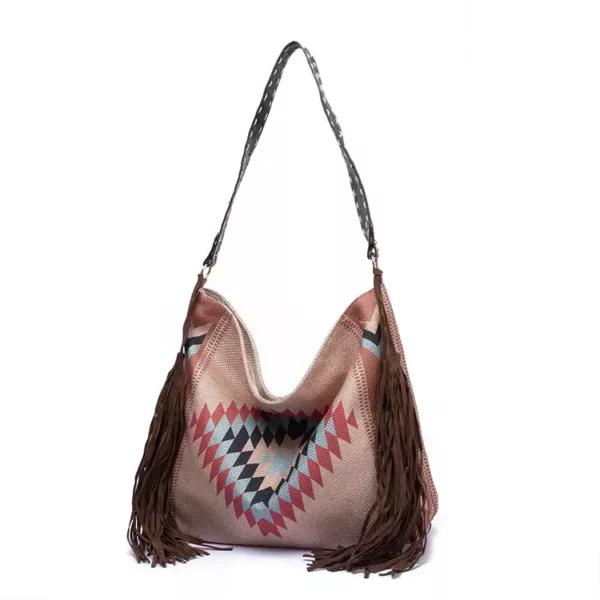
Handmade Woven Tassel Cotton and Linen Shoulder Bag
Bohemian jacquard-woven shoulder bag in cotton and linen with suede-touch tassels.
HB-4746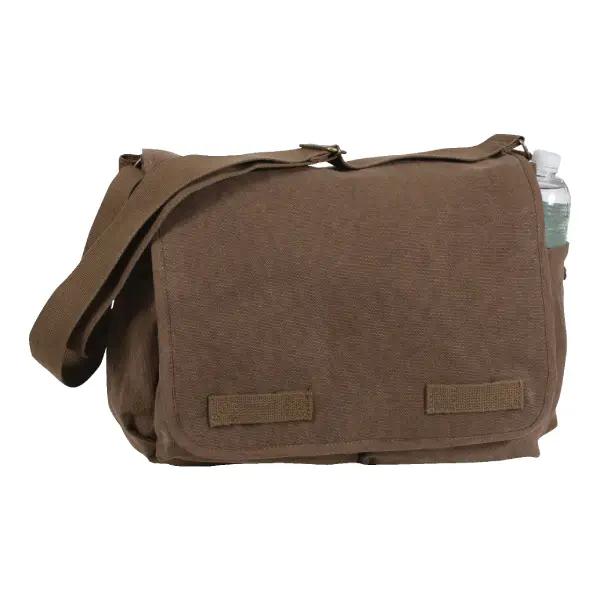
Canvas Messenger Crossbody Bag
Classic flap messenger in cotton canvas, waxed finish available, built for daily commuting lines.
HB-4067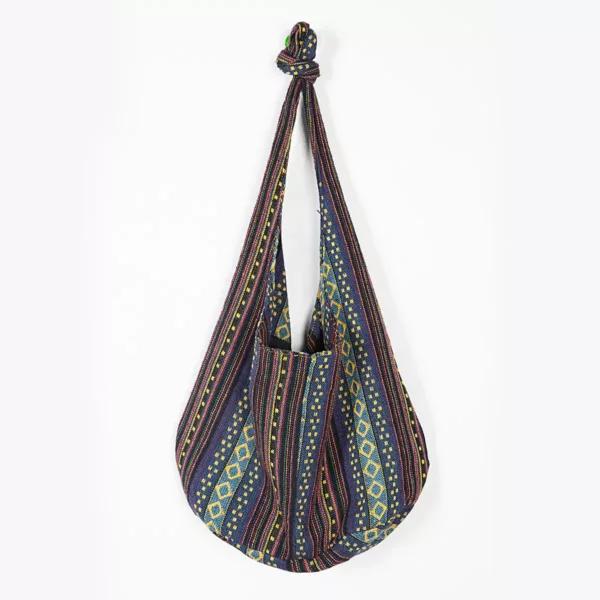
Aztec Cotton and Linen Canvas Jacquard Bag
Woven jacquard hobo bag in cotton and linen with retro geometric stripes and a knotted strap.
HB-4730Discuss cotton canvas for your line
We answer material questions before you commit to sampling. Replies within 24 hours.
Request a QuoteCanvas tote bags with logo: materials and construction choices
Buyers shopping for canvas tote bags with logo work from a short list of shell materials. Each one changes how the bag feels, how it prints, and how it holds up. The reference below covers the realistic options for woven and straw bag specialists. You won't find a single best fabric here. You'll find the trade-offs that decide which one fits your order.
| Material | What it's good for | Where it fails |
|---|---|---|
| Cotton canvas, 8 oz | Light grocery totes, event giveaways, one-season promo bags with simple screen printing | Loads stretch the weave and stress shoulder seams; edges curl after washing |
| Cotton canvas, 10 oz | Daily tote bags, book bags, moderate loads with a clean print surface | Heavy loads cause stretching and seam stress; wet contents bleed through unless lined |
| Cotton canvas, 12 oz | Structured totes, work bags, bags that need to stand open on a counter | Cost climbs; dense weave slows drying and makes dark prints feel stiff |
| Cotton duck, 8 or 10 oz | Firm, smooth-faced totes that need crisp logo placement and a tailored look | Heavy loads distort the tightly packed yarns; less forgiving on curved seams |
| Cotton-polyester blend canvas | Lower cost, faster drying, less shrinkage than full cotton | Feels less natural; some inks sit on the surface and crack over repeated washing |
| Waxed cotton canvas | Water-shedding totes, field bags, bags with a heritage look | Finish marks and creases; wax needs re-treatment; logo adhesion varies by wax type |
Lamination and coating change what a canvas tote can do. A polyurethane coating on the inside face adds water resistance without changing the outside look. A PVC coating adds stiffness and strong moisture protection, but the bag feels less like fabric. Thermoplastic polyurethane film works for welded seams and waterproof liners. Biaxially oriented polyester film shows up in reflective liners and barrier layers. None of these are free. Each one adds a step and a cost.
Padding and reinforcement matter more than most buyers expect. A plastic board in the base keeps a tote from sagging when set down. A reinforcement patch at the strap attachment stops the most common failure point on canvas messenger and crossbody bags. Closed-cell foam inserts give structure without the weight of a full board. Open-cell foam breathes but soaks up moisture unless protected. Say a buyer wants a tote that holds its shape on a shelf. That's a base board and a firmer canvas. Say a buyer wants a tote that folds flat for shipping. That's no board and a softer 8 oz canvas. Same category, opposite specs.
How to specify canvas tote bags with logo for your situation
Different buyers need different specs. The decisions that change the outcome are rarely about color. They're about load, print surface, and what happens after the bag leaves the store.
Say you're a coffee roaster selling a monthly subscription box. You want a custom logo canvas tote bag as a retention gift. The bag carries two 12 oz bags of beans plus a mug. That's a light load. An 8 oz cotton canvas works, and it keeps your unit cost low enough to give away. But the logo has to survive. Screen printing on 8 oz canvas can look washed out if the weave is loose. Ask for a tighter weave or move to 10 oz. You'll also want a gusset. Without one, the tote is a flat rectangle and the mug pokes the side seam. A bottom gusset adds fabric and a sewing step, but it's the difference between a bag that works and a bag that tears.
Now say you run a boutique clothing brand. Your tote is a paid product, not a freebie. It carries folded jeans, a sweater, maybe a pair of shoes. That's a heavy load. You need 12 oz canvas or cotton duck. The straps need a reinforcement patch where they meet the body. The base needs a plastic board or a double layer of canvas. Your logo is the point. On 12 oz canvas, embroidery holds up better than screen printing. Embroidery adds stitch time and changes your cost per unit. It also changes your minimum order. A woven label is cheaper than embroidery but reads smaller. Decide early, because the print method changes the fabric you choose.
A third situation. You're a corporate buyer ordering 2,000 totes for a conference. The bag carries a program, a water bottle, and a few brochures. Weight is low. But the order is big and the deadline is tight. You want cotton-polyester blend canvas. It dries fast after printing, so the printer can move faster. It shrinks less than full cotton, so the finished size is more predictable. The blend costs less per yard. The trade-off is feel. A blend doesn't have the soft hand of cotton. For a one-day event, that's fine. For a retail product, it's not.
Every one of these buyers specs the same category. But the fabric weight, the strap reinforcement, the base construction, and the logo method all move based on what the bag has to do. A good supplier asks about the load first. A buyer who answers with "just a tote bag" ends up with a bag that fails at the wrong moment.
Customization that changes tooling, cost, or lead time
Some changes cost money. Some don't. Knowing which is which saves you weeks and dollars.
Logo method is the biggest cost driver. Screen printing on canvas needs a screen per color. One-color logo, one screen. Four-color logo, four screens. Screens cost money and take time to make. Embroidery needs a digitized file. That's a one-time setup fee, but the stitch time per bag is higher than printing. A woven label is cheap per unit but the label itself has a tooling cost and a longer production lead. Heat transfer works for small runs but peels after repeated washing. Choose the method before you approve the sample, not after.
Fabric weight changes cost but not tooling. An 8 oz canvas and a 12 oz canvas use the same cutting patterns and the same sewing lines. The 12 oz costs more per yard and sews slower. That's it. No new dies, no new screens. If you're deciding between 10 oz and 12 oz, the switch is cheap. Decide it early anyway, because the sample you approve is the bag you get.
Adding a gusset changes the pattern. A flat tote is two panels and two straps. A gusseted tote is three panels or a single panel with folded corners. The sewing steps increase. The fabric yield drops because the gusset cuts across the grain. That's a real cost change and a real lead time change. Same for a zipper closure. A zipper needs a placket, a zipper tape, and two extra sewing passes. It adds a day or two to a production run. It doesn't need new tooling, but it does need more labor.
Changing the strap length does not change tooling. Changing the strap width does not change tooling. Changing the strap material from cotton webbing to nylon webbing changes the sourcing but not the cutting dies. These are spec changes you can make late without blowing up your timeline. Changing the bag's dimensions changes the cutting pattern. That's a new sample, a new approval, and a new quote. Don't do that after you've signed off.
For buyers exploring related woven constructions, PP woven material options and leather-accented canvas builds follow different rules. PP woven bags use heat-cutting and ultrasonic welding more than stitching. Leather accents need edge treatment and a different needle. Don't assume a canvas tote supplier automatically handles either one.
What to check before approving production
You can't inspect every bag. You can inspect the right things. For canvas tote bags with logo, the failure points are predictable.
Check the strap attachment first. This is where bags fail. The strap should be folded under and sewn with a box stitch or a box-X. A single line of stitching is not enough for anything but the lightest load. Pull on the strap. Hard. If the stitching puckers or the fabric shifts, reject the sample. Ask for a reinforcement patch at the attachment point. It costs pennies and prevents returns.
Check the logo placement against your approved proof. Measure from the top edge and the side edge. A logo that's off by half an inch looks wrong on a shelf. If you specified embroidery, check the stitch density. Loose stitches catch and pull. If you specified screen printing, check for ink bleed through the weave. On 8 oz canvas, a heavy ink deposit can show through to the inside. That's a defect for a retail product.
Check the seams. The side seams and the bottom seam carry the load. A French seam is stronger than a single needle seam. A bound seam hides raw edges and adds durability. Ask your supplier which seam they use and why. If they can't answer, that's a signal. The seam allowance should be consistent. A seam that wanders from 3 mm to 8 mm means the cutting was sloppy or the sewing operator was rushing.
Check the fabric itself. Canvas has a hand feel. It should feel consistent across the bag. A stiff patch next to a soft patch means the fabric came from different rolls. That's a color and texture mismatch waiting to happen. Check for slubs and knots. Cotton canvas has natural slubs. Too many, and the bag looks cheap. Too few, and you're probably looking at a blend when you ordered full cotton.
If you're claiming water resistance, check the coating. A polyurethane coating should be even, with no thin spots at the seams. Hold the bag up to a light. Thin spots show through. If you're claiming the bag holds a certain weight, test it. Load the bag with the weight you promised and lift it by one strap. Not two. One. That's how customers actually carry bags. If the strap stretches or the seam opens, your claim is wrong.
Colorfastness matters for any bag that gets washed. Rub a white cloth against the printed logo and the dyed canvas. If color transfers, the bag fails. This is a standard check for fringed canvas shoulder bags and any tote that sits against clothing. Don't skip it because the bag is cheap. A color-bleeding tote ruins a customer's shirt and your reputation in one wash cycle.
Finally, check the dimensions against the spec sheet. A bag that's 2 cm narrower than approved changes the volume. A strap that's 5 cm shorter changes the carry. These are not small errors. They're the difference between the bag you approved and the bag you receive. Measure the sample. Then measure the first production run. If the numbers drift, stop the line.