Woven Bag Materials Compared: Jute, Cotton and PP
Woven bag materials compared side by side usually comes down to three names: jute, cotton canvas, and PP woven. Each one behaves differently under load, in moisture, and on a retail shelf. A buyer ordering 800 units in three colors will feel that difference immediately. So will the customer who carries the bag home in the rain.
We make woven and straw bags in Yiwu. We've watched buyers pick the wrong material for the wrong program more times than we can count. This guide is the conversation we have with every new sourcing manager. No marketing fluff. Just what the materials do.
How the Three Materials Are Actually Made
Jute starts as a plant fiber. The stalks are retted, stripped, dried, and spun into coarse yarn. That yarn is woven on looms into a plain, open fabric. The result is stiff, fibrous, and full of natural slubs. Jute is not a precision material. It's agricultural.
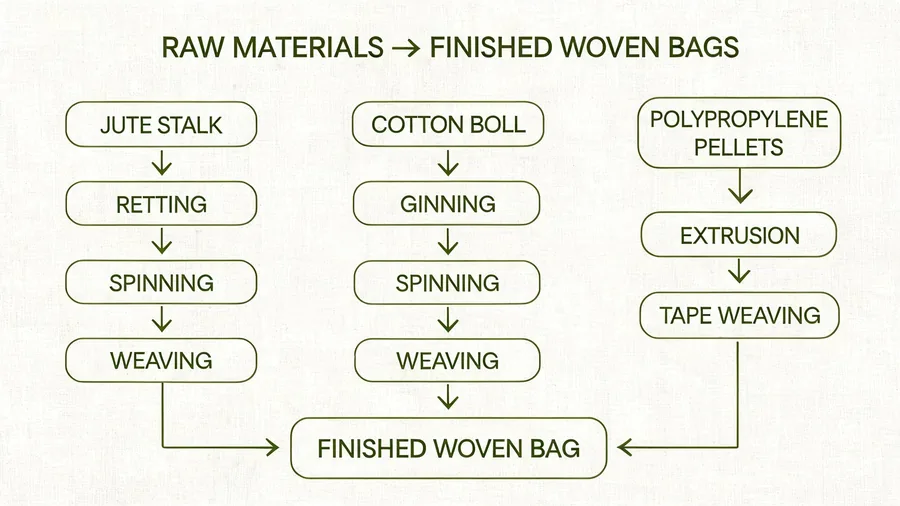
Cotton canvas is woven from spun cotton yarn, usually in a plain or twill weave. The yarn is finer and more consistent than jute. Canvas can be dyed, printed, coated, or left natural. It sews cleanly and holds a crease. That's why it has been the default tote fabric for decades.
PP woven is different. Polypropylene resin is melted and extruded into thin tapes, not round yarn. Those tapes are stretched for strength, then woven on circular or flat looms into a fabric that looks like a coarse grid. The tapes are wide and flat. That gives the fabric its characteristic stiffness and its slightly plastic sheen. A full breakdown of that process is on our PP woven material page.
Cost Position and What Actually Drives It
PP woven is the cheapest of the three in almost every volume. The raw material is inexpensive. The extrusion and weaving process is fast. The fabric comes off the loom ready to cut and sew. Printing is often done on the flat fabric before cutting. That keeps unit cost low on runs of a few thousand pieces.
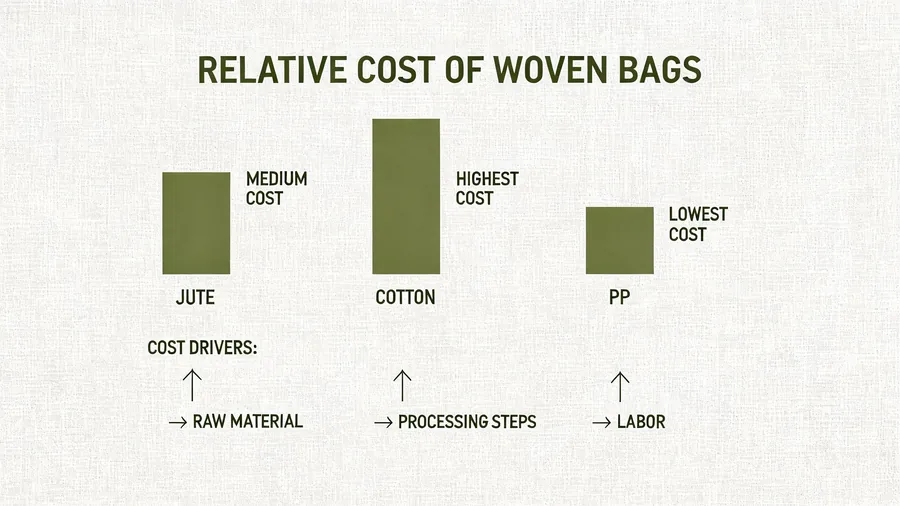
Jute sits in the middle. The fiber itself is cheap, but the processing is slow and labor-heavy. Yarn quality varies from lot to lot. Waste is higher. A jute bag with clean edges and straight seams costs more than a buyer expects. The factory spends time sorting and trimming.
Cotton canvas is usually the most expensive. Good canvas starts with good cotton, and cotton prices move. The fabric is heavier per square meter than jute or PP woven at a comparable hand feel. Dyeing and finishing add cost. If the program needs a soft, premium tote, canvas earns its price. If the program needs ten thousand giveaway bags, canvas is probably the wrong call. Our cotton canvas guide covers the weight and finish options in more detail.
Strength, Moisture and How They Age
PP woven is the strongest of the three in tensile terms. The stretched tapes resist tearing, and the woven grid distributes load well. A PP woven bag will carry a heavy grocery load without stretching out of shape. The weakness is puncture. A sharp corner can split a tape. Once one tape fails, the weave can ladder.
Cotton canvas is strong in a different way. It stretches slightly under load, then recovers. It resists puncture better than PP woven because the yarns are round and tightly packed. Canvas also handles abrasion well. That's why it survives years of daily use.
Jute is the weakest of the three. The fibers are short and brittle. Under repeated flexing, jute yarns break and shed. A jute bag looks beautiful on day one and tired after a season of hard use. Buyers should treat jute as a fashion or promotional material, not a workhorse.
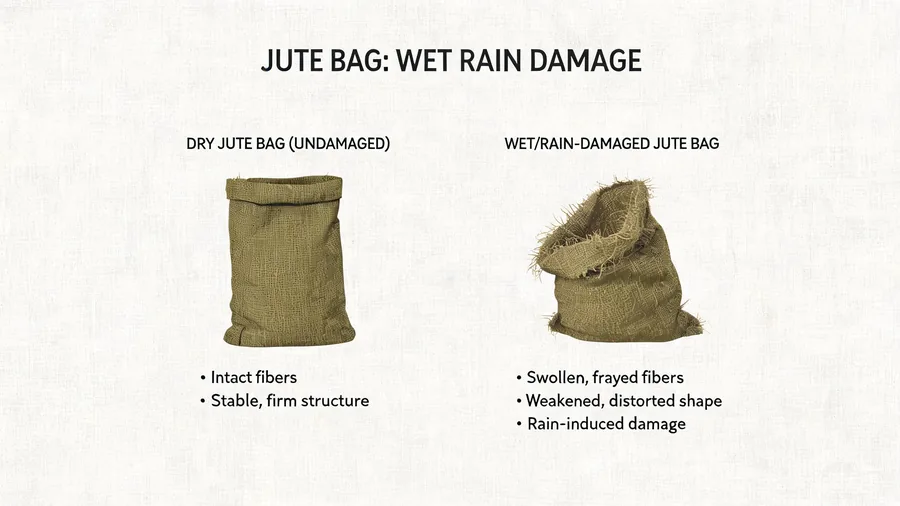
Moisture changes everything. Cotton canvas absorbs water, gets heavy, and dries slowly. It can mildew if stored damp. Jute absorbs even more and weakens when wet. PP woven barely absorbs water at all. It dries in minutes and doesn't support mildew. That's why PP woven dominates grocery and market bags. For a deeper look at that use case, see our PP woven shopping bag page.
Print Method and Print Quality
This is where the materials separate hardest.
PP woven
PP woven prints best with flexographic or rotogravure printing on the flat fabric before cutting. Large solid areas, bold logos, and simple graphics work well. Fine gradients and small text do not. The tape surface is slightly uneven. Fine lines break up. Lamination adds cost but improves print durability and makes the bag wipeable. Unlaminated PP woven prints can scuff off under heavy abrasion.
Cotton canvas
Canvas takes screen printing and digital printing beautifully. The surface is smooth and absorbent, so ink sits cleanly. Photographic detail, fine type, and multi-color designs all work. The print softens with washing but stays legible for years. This is the material for a retail brand that wants its logo to look expensive.
Jute
Jute is the hardest to print. The surface is rough and hairy. Screen printing works only with bold, simple artwork. Fine lines disappear into the fiber texture. Many jute programs use a sewn-on cotton label or a hang tag instead of direct printing. That's honest and it works.
Hand Feel and Brand Perception
Cotton canvas feels the most premium. It's soft, substantial, and familiar. A customer picks it up and thinks quality. Jute feels rustic and eco-conscious. It has texture and a natural smell. PP woven feels functional and industrial. It's not a luxury material. But it reads as practical and modern when laminated well.
Brand perception is a real cost. A fashion label launching a tote will choose canvas or jute. A grocery chain replacing single-use plastic will choose PP woven. A promotional buyer giving away bags at a trade show will choose whichever material fits the unit cost and looks acceptable in a crowd. None of these choices is wrong. They're different briefs.
Weight, Reusability and End of Life
PP woven bags are light. A standard shopping bag weighs a fraction of a comparable canvas tote. That matters for shipping cost and for the user who carries six bags at once. Canvas is heavier. Some buyers read that as quality and others read it as bulk. Jute falls between the two but feels denser than it is.
Reusability is strongest for cotton canvas. It washes, folds, and lasts for years. PP woven is reusable but eventually the tapes crack or the lamination peels. Jute is reusable in gentle use. It sheds fibers and loses shape faster than the other two.
End of life is complicated. Cotton canvas and jute are biodegradable in industrial composting conditions, though dyes and coatings complicate that picture. PP woven is recyclable in polypropylene waste streams, but it is not biodegradable. A buyer making environmental claims should check current guidance from the relevant authority in the destination market. A material is only as green as the system that collects it.
| Factor | Jute | Cotton canvas | PP woven |
|---|---|---|---|
| Cost position | Mid | Highest | Lowest |
| Tensile strength | Lowest | High | Highest |
| Puncture resistance | Low | High | Moderate |
| Moisture behavior | Absorbs, weakens | Absorbs, dries slowly | Repels, dries fast |
| Print quality ceiling | Low | High | Moderate |
| Hand feel | Rustic, fibrous | Soft, premium | Firm, smooth when laminated |
| Weight | Mid | Heaviest | Lightest |
| Reusability | Moderate | Best | Good |
| End of life | Biodegradable (natural) | Biodegradable (natural) | Recyclable (PP stream) |
Decision Framework by Scenario
If the program is a grocery or market bag that needs to be cheap, strong, and wipe-clean, choose PP woven. Laminate it if the budget allows. The bag will do its job and the unit cost will hold.
If the program is a retail tote for a fashion or lifestyle brand, choose cotton canvas. Screen print or digital print the artwork. The bag will carry the brand for years. The customer will keep it.
If the program is a promotional giveaway with a natural or eco story, choose jute. Keep the artwork bold and simple. Accept that the bag is a short-term ambassador, not a long-term tool.
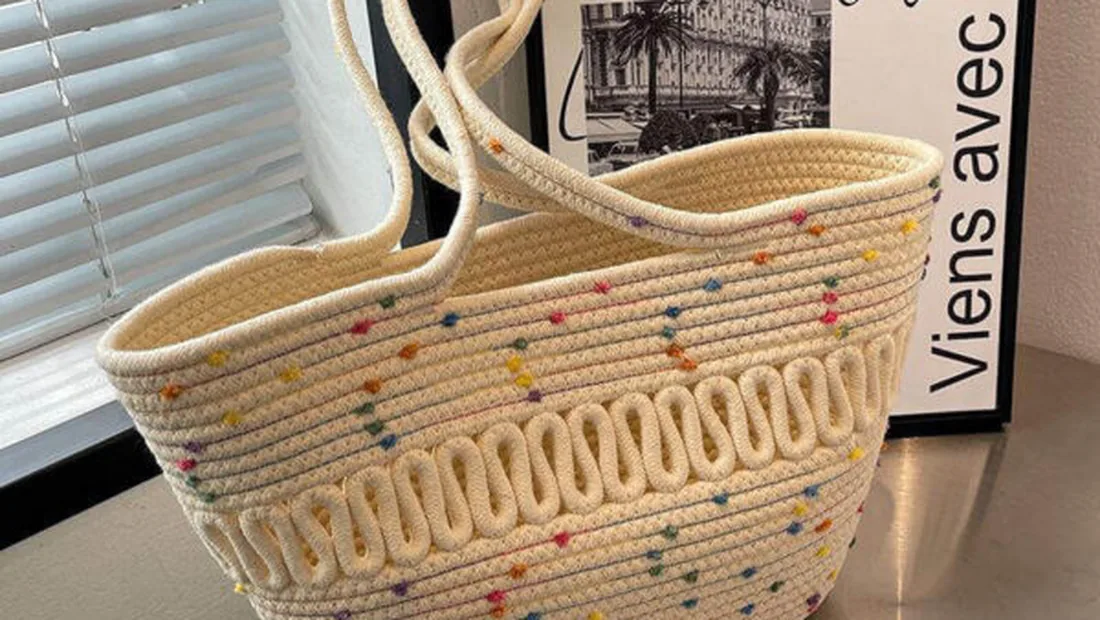
If the program needs a premium natural look with more durability than jute, consider a cotton canvas base with jute or raffia accents. Our hand-woven cotton rope tote is one example of that thinking. Mixed-material bags let you put the premium feel where the customer touches it and the cheap structure where they do not.
Where Each Material Disappoints
Jute disappoints on durability. It sheds, it weakens when wet, and it doesn't hold fine print. Buyers who expect a jute bag to survive daily grocery duty will get complaints.
Cotton canvas disappoints on cost and dry time. It's the most expensive option. A soaked canvas tote takes hours to dry. In a wet climate, that's a real usability problem.
PP woven disappoints on premium feel and fine print. It never looks expensive. It never prints like canvas. A brand that needs a luxury hand feel should not force PP woven into that role.
Certifications Commonly Requested
For jute and cotton canvas, buyers often request GOTS or OEKO-TEX documentation for the fiber and dye process. For PP woven, buyers commonly ask about food-contact compliance for grocery use and about recycled content claims. Our factory holds GRS certification for recycled material traceability. We can supply amfori BSCI and ISO 9001 documentation on request. We're not the certifier. We hold the certificates and share them for audit.
The right material is not the one with the best spec sheet. It's the one that matches the program's cost ceiling, use case, and brand story. Pick honestly and the bag does its job. Pick for the wrong reason and the returns department hears about it.
Need help choosing? Contact us with your volume, destination market, and artwork. We'll tell you which material we'd pick and why.
Frequently Asked Questions
Is PP woven stronger than cotton canvas?
In tensile strength, yes. PP woven tapes resist tearing under a heavy load. Cotton canvas resists puncture and abrasion better. The right choice depends on whether the bag will be overloaded or scraped.
Can you print fine detail on jute bags?
No. Jute has a rough, hairy surface that breaks up fine lines and small text. Bold, simple artwork works. For detailed logos, use a sewn-on cotton label or choose cotton canvas instead.
Which material is best for a grocery bag?
PP woven. It is light, strong, repels moisture, and dries fast. Lamination adds wipe-clean performance and print durability. Cotton canvas works but gets heavy when wet and takes hours to dry.
Are jute and cotton bags biodegradable?
The natural fibers are biodegradable in industrial composting conditions. Dyes, coatings, and laminations complicate that. Check current guidance from the relevant authority in your destination market before making a claim.
Sourcing woven bags?
Send your questions to the factory directly. We reply within 24 hours.
Request a Quote