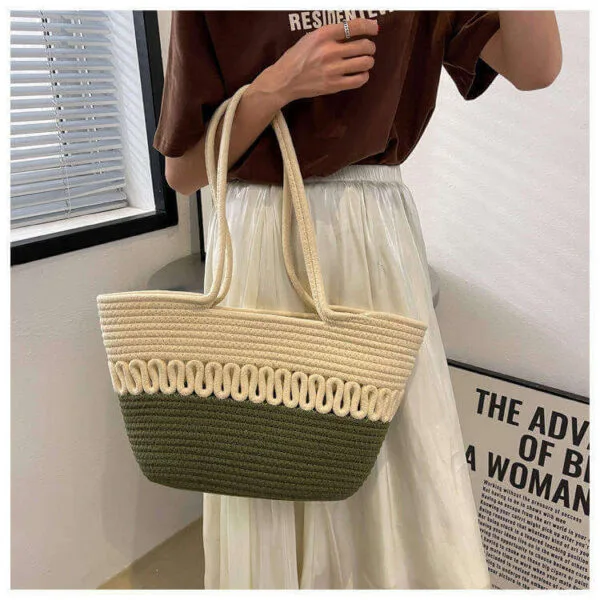
Hand-Woven Cotton Rope Tote Bag
| Material | Cotton |
|---|---|
| Dimensions | 28 x 24 x 9.5 cm; 0.46 kg |
| Color | (Customized Made) |
| Custom Logo | Accept Customized Logo |
Lead time
| 1-100 pieces | 15 days |
|---|---|
| 151-500 pieces | 25 days |
| > 500 pieces | To be negotiated |
Material guide: Raffia Bag Manufacturer: Straw, Wicker and Raffia Explained
Details
- Reinforced construction with double-stitched seams and a cotton liner.
- Fully customizable colors, logos, sizes and handles.
- Optional saltwater-resistant coating and UV-protected weaving technique for beach programs.
- Detachable inner pouch, PVC-free.
Samples are paid and ship in 1-10 days; one revision round takes 2-3 days. Logo application on in-stock styles takes 3-7 days.
Related styles
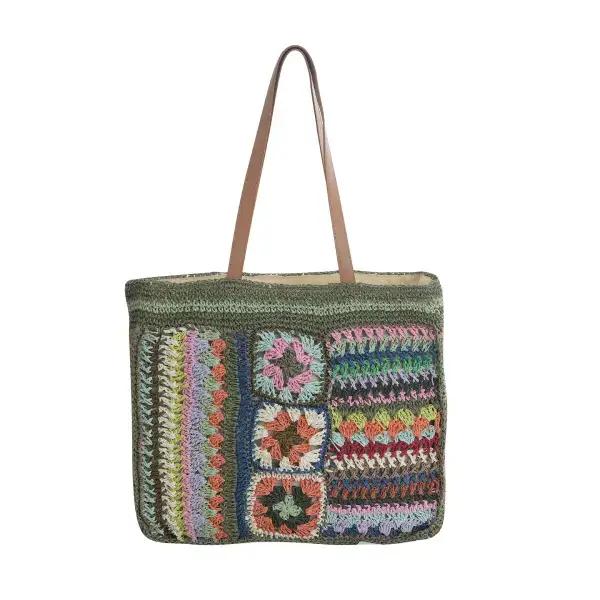
Straw-Woven and Crocheted Contrast-Color Shoulder Bag
Hand-crocheted straw shoulder bag with contrast-color granny-square panels and leather-tone straps.
HB-4815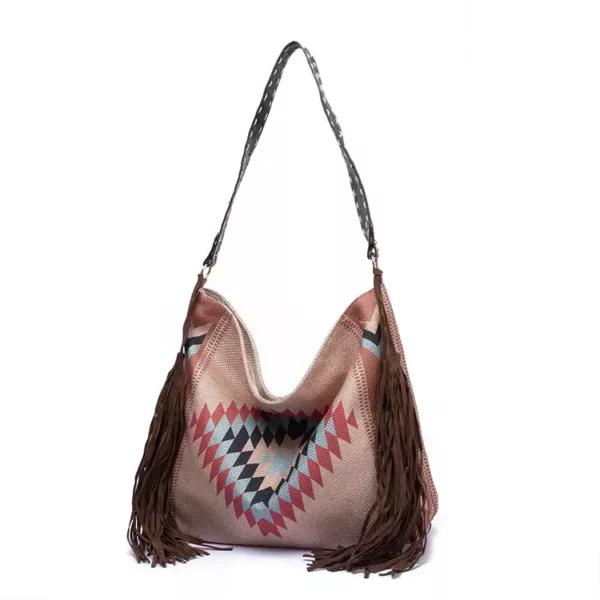
Handmade Woven Tassel Cotton and Linen Shoulder Bag
Bohemian jacquard-woven shoulder bag in cotton and linen with suede-touch tassels.
HB-4746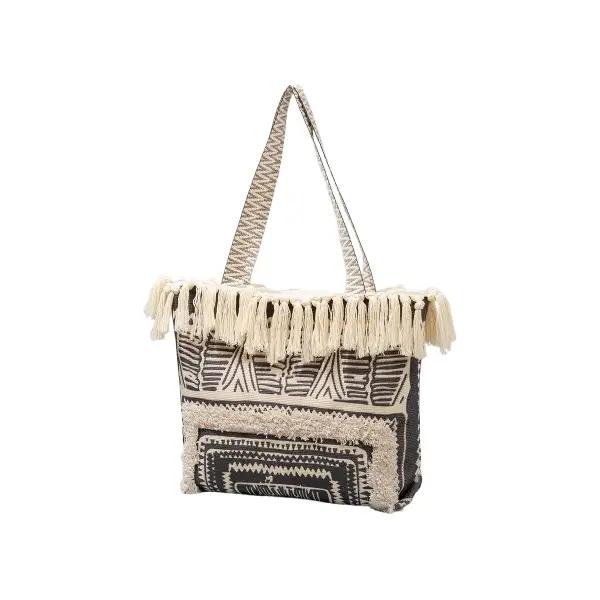
Bohemian Tassel Canvas Tote
Holiday tote in polyester cotton with woven jacquard pattern, tufting and a full tassel fringe.
HB-4786Why the hand-woven cotton rope tote bag works, and where it doesn’t
This is a hand-woven cotton rope tote bag built around a single material decision: cotton rope. That choice gives the bag its open, textured face and its soft collapse when empty. It also sets the limits of the product. Cotton rope is dimensionally stable but heavy for its carrying volume, and it drinks moisture unless the buyer specifies a coating. You’re not buying a technical pack here. You’re buying a beach, market, or resort program piece where look and hand feel carry the sale.
The published dimensions and weight tell you the rest of the story. A 28 x 24 x 9.5 cm body is a small tote, not a grocery hauler. At 0.46 kg the bag already has noticeable mass before a single item goes inside. That’s the trade-off of rope construction. A buyer who wants a featherweight foldaway should look at a different SPU. A buyer who wants a structured, giftable, premium-feel tote will understand why the weight is there.
| Published spec | What it means in use | What to watch for |
|---|---|---|
| Cotton | Soft hand feel, good print and dye acceptance, natural fiber look | Absorbs moisture; shrinkage and colorfastness must be controlled in the approved sample |
| 28 x 24 x 9.5 cm | Compact open-top tote for daily essentials | Base width limits what fits flat; rope thickness eats into interior space |
| 0.46 kg | Substantial feel that reads as quality | Shipping cost per unit rises with weight; check carton cube |
| Custom | Color can be matched to a buyer’s program | Pantone matching on dyed rope needs an approved lab dip before cutting |
| Accept Customized Logo | Branding can be applied, but method depends on surface | Woven or stitched logos suit rope; flat heat-transfer areas are limited |
How buyers customize this SPU
Most changes here are routine. Color is the easiest: the factory can dye the cotton rope to a Pantone reference, and the allowed color tolerance is a ΔE of 2.0 or less. That’s a visual match under standard lighting, not a perfect one. Say a buyer wants a terracotta rope for a summer drop. The lab dip comes first, then the buyer signs off, then production yarn is dyed. Changing the handle length or adding a detachable inner pouch is also routine, since the copy already lists a detachable inner pouch as an option. Those changes touch cutting and sewing only.
Some changes need a longer runway. A full size change, say stretching the body to 34 cm wide, means new cutting patterns and new rope consumption. That isn’t tooling in the plastic-injection sense, but it forces a new sample and a new cost calculation. Adding a saltwater-resistant coating or UV-protected weaving technique is a process change, not a trim change. The coating must be tested on the rope, and the UV protection changes how the yarn is treated before weaving. A buyer who wants both should expect the sample clock to reset. Logo method matters more on rope than on flat fabric. A woven label or stitched patch works with the surface. A heat-pressed PVC logo fights the texture and may not adhere evenly. Say a buyer asks for a metal plate. The surface behind it needs a stiffener or backing patch, or the plate will sag and pull at the weave.
Lead time shifts with quantity and complexity. The published table shows 15 days for 1 to 100 pieces and 25 days for 151 to 500 pieces. A buyer who adds a new coating or a size change should not expect those numbers to hold. The sample itself takes 1 to 10 days, and one revision round takes 2 to 3 days. That’s the time to lock the spec before production starts.
What to confirm before you approve sampling
Three points cause the most rework on this product. First, rope shrinkage. Cotton rope can shrink when it meets moisture or heat, and a buyer who skips the shrinkage check may approve a sample that fits and a production run that doesn’t. Write a shrinkage tolerance into the approved sample. Second, color matching on textured rope. A flat Pantone chip and a twisted rope surface reflect light differently. The lab dip should be viewed on the actual rope, not on paper. Third, the load point where the handle meets the body. On a hand-woven tote, that seam carries all the stress. Double-stitched seams are already in the spec, but the buyer should still ask for a bar-tack or reinforcement patch at the handle anchor. Say a buyer fills the tote with two wine bottles and a wet towel. That’s the moment the handle anchor either holds or fails.
Before sampling, confirm the liner. The spec lists a cotton liner. A buyer who wants a wipe-clean interior should say so now, because that changes the lining material and the sewing sequence. Also confirm the detachable inner pouch attachment. Does it clip, snap, or tie? That detail is easy to miss in a photo and expensive to change after cutting. If the bag is for a beach program, ask whether the optional saltwater-resistant coating is in scope. It affects cost and lead time, and it should be written into the sample request, not added later. For more on how woven and straw bag MOQs work across programs, see our straw bag MOQ sourcing guide. If this tote is part of a larger beach line, check our beach bags page. And if the cotton rope direction isn’t final, compare it with the structure of our cotton canvas options before you commit to sampling.