Screen Printing on Woven and Canvas Bags: What to Expect
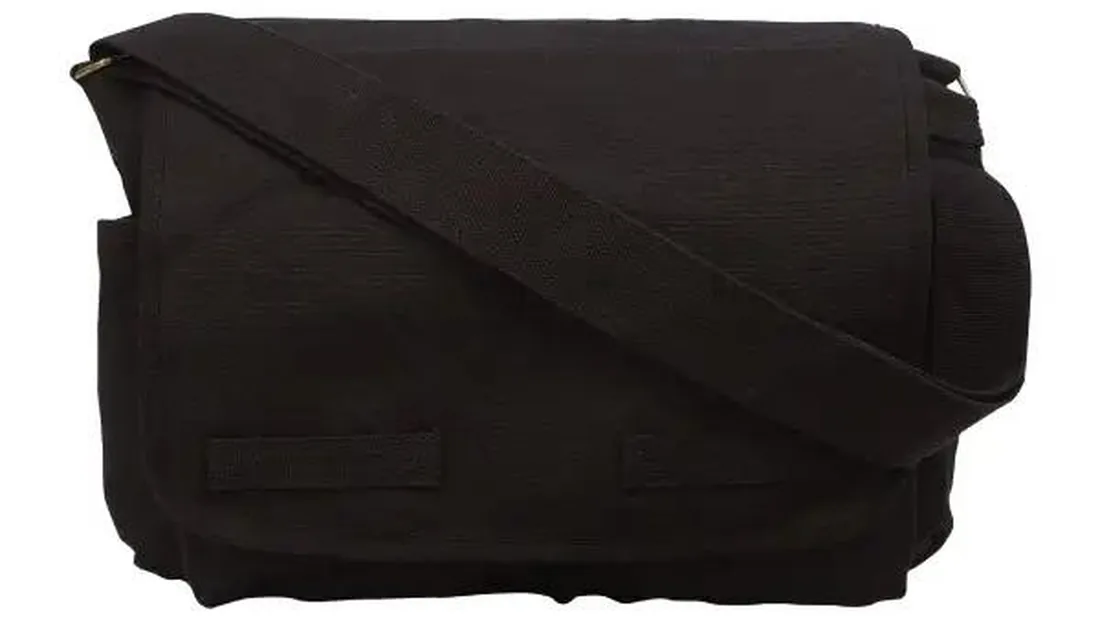
Screen printing on woven and canvas bags is a surface decoration method. Ink is forced through a prepared screen onto the material. It suits solid colors and repeat production when the substrate and ink system are compatible. That sentence sounds dry. It's also exactly what a sourcing manager needs to hear before committing a purchase order.
If you're specifying print on a PP woven tote, a cotton canvas bag, or a jute shopper, the first question isn't which ink to use. It's whether the weave will let the design hold. A tight canvas takes a crisp edge. A loose jute weave doesn't. A laminated PP woven surface behaves almost like a film. A raw PP weave drinks ink into the gaps. Same process, four different outcomes.
This guide walks through the mechanics, the substrate behavior, the artwork rules, and the wash performance. It also compares screen printing against digital textile printing, heat transfer, and embroidery for woven substrates. No fluff. Just the decisions you'll actually make.
How Screen Printing Actually Works on a Bag
The process is mechanical. A mesh screen carries a stencil of the artwork. Ink is pushed through the open areas with a squeegee. The screen contacts the bag panel, the ink deposits, and the panel moves to a curing station. That's the whole method.
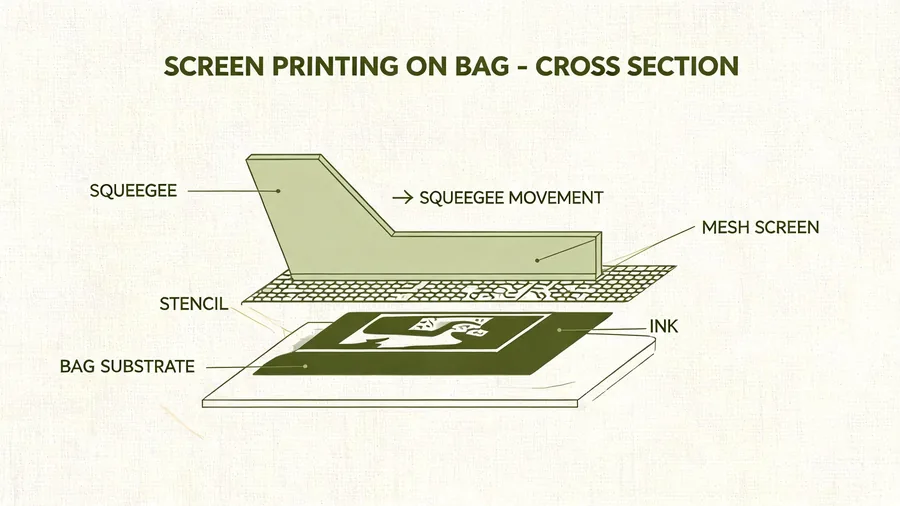
For bags, the screen is usually prepared per color. A one-color logo needs one screen. A four-color design needs four screens and four passes. Each pass must register to the previous one. On a flat woven panel, registration is manageable. On a bag with seams, darts, or a gusset, the panel is printed before assembly whenever possible. That's the standard practice.
Why does screen printing suit solid colors and repeat runs? Because the setup cost sits in the screen itself. Once the screen exists, the marginal cost per print drops. A buyer ordering 800 units in three colors gets a very different unit cost than a buyer ordering 80 units with a photographic design. The process rewards repetition.
Substrate Texture Changes Everything
Canvas is the easiest woven substrate to print. The face is relatively smooth, the yarns are tightly packed, and the ink sits on the surface. Cotton duck, a tightly woven cotton canvas with a smooth firm face, takes a clean edge. A 10 oz or 12 oz canvas tote will hold a bold solid logo without much ink bleeding into the weave.
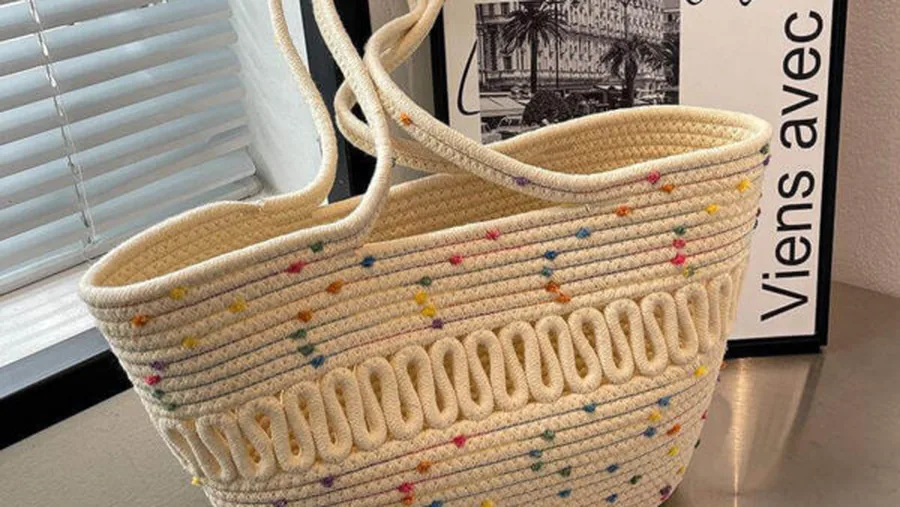
PP woven is different. The material is made from polypropylene tapes woven in a grid. The surface has texture. If the bag has a lamination layer, the print surface becomes smooth and the ink adhesion depends on the laminate chemistry. If the bag is uncoated, the ink can settle into the gaps between tapes. The result looks less like a printed graphic and more like a tinted weave. That's not always a defect. Some brands want that look.
Jute is the most difficult. The fibers are coarse, uneven, and absorbent. A fine line will break. A small serif typeface will fill in. Large solid areas are the safest choice. If your design has a thin outline, expect to open up the line weight before the first sample.
Raffia and straw bags follow the same rule. The looser the weave, the bolder the artwork needs to be. A raffia bag with a tight braid will hold more detail than a loose straw tote. The difference is visible at arm's length.
Artwork Preparation and Color Separation
Screen printing artwork starts as vector art. Each color in the design becomes a separate layer. The factory uses those layers to produce the screens. If your file is a flattened JPEG with a gradient, someone has to rebuild it as solid color areas. That adds time and can change the look.
Color separation on a textured weave is not the same as on paper. The ink spreads slightly as it hits the fibers. That spread, called dot gain in print terms, is worse on coarse weaves. A registration mark that works on canvas may disappear into a jute gap. The practical answer is to keep registration tolerances looser on jute and raw PP woven than on canvas.
Pantone matching is possible within a defined tolerance. The exact Delta E value depends on the approved specification and the substrate. Don't expect a Pantone match on raw jute to look identical to the same Pantone on coated canvas. The substrate color and texture shift the perceived color.
Minimum line weight and minimum font size are set in the artwork specification. They aren't universal numbers. A 6 point font on canvas may be readable. The same 6 point font on jute won't be. Ask for a strike-off on the actual substrate before approving bulk.
Cure, Wash, and Abrasion Behavior
After printing, the ink must cure. Curing is the process that crosslinks the ink film so it stays on the bag. The exact temperature and dwell time depend on the ink system and the substrate. A plastisol ink on canvas cures differently from a water-based ink on PP woven. The factory sets these values in the production specification.
Wash behavior matters for canvas and jute bags. A properly cured print on cotton canvas should survive multiple wash cycles without cracking or fading beyond the agreed tolerance. But washing a PP woven bag is less common. Many PP woven totes are wiped clean, not machine washed. That changes the testing protocol.
Abrasion is the hidden killer. A printed logo on the bottom panel of a tote will rub against tables, floors, and car trunks. A print on the side panel rubs against clothing. The abrasion resistance depends on the ink system, the cure, and the weave. A raised print on a coarse weave wears faster than a flat print on a tight weave. If the bag will be used daily, specify an abrasion test in the quality plan.
Print Area Limits from Bag Construction
The printable area is never the whole bag. Seams, handles, gussets, and zippers all limit where the screen can land. A screen printer needs a flat surface. A tote with a side gusset has a flat front panel and a flat back panel. The gusset itself is hard to print cleanly because it folds.
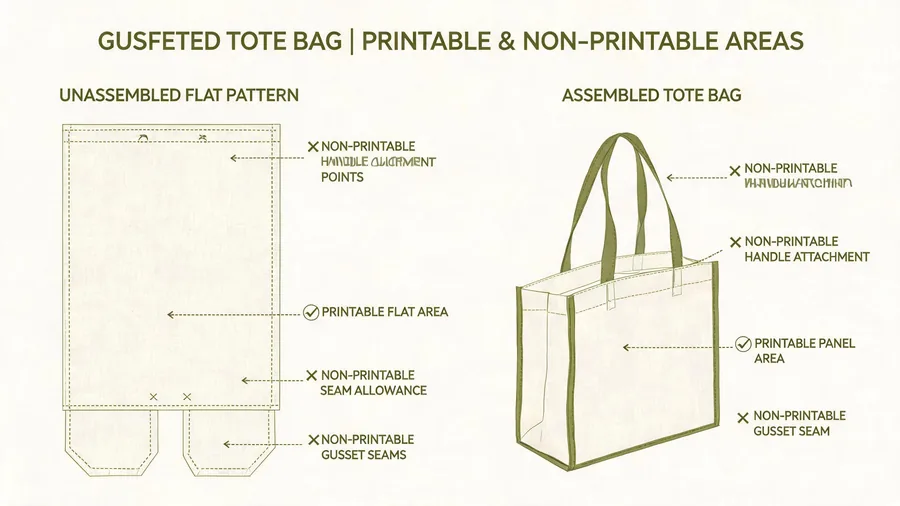
Handle attachment points create another limit. Printing under a handle is possible if the panel is printed before the handle is sewn. Printing over a handle is not. The screen can't conform to the raised webbing. If your design crosses the handle area, expect to move it or split it.
Bottom panels are usually avoided for screen printing. The panel is small, the bag sits on it, and the wear is highest. A woven label or a heat transfer is often a better choice for that location.
For PP woven shopping bags, the print area is typically the front and back panels only. The side gussets are printed less often because the fold line runs through the artwork. If you want a wraparound design, plan for the fold interruption.
Method Comparison for Woven Substrates
Screen printing isn't the only option. Digital textile printing, heat transfer, and embroidery all work on woven bags, but they solve different problems.
| Method | Best for | Woven substrate behavior | Typical trade-off |
|---|---|---|---|
| Screen printing | Solid colors, repeat runs, bold logos | Clean on canvas, textured on raw PP, rough on jute | Setup cost per color, less detail on coarse weaves |
| Digital textile printing | Detailed graphics, short runs, photographic images | Works best on smooth coated fabrics, struggles on deep texture | Higher unit cost, slower per print, no screen setup |
| Heat transfer | Full-color graphics, small logos, variable data | Adhesion depends on coating and texture, can bridge small gaps | Edge can lift on heavy wear, less breathable feel |
| Embroidery | Durable raised logos, premium look | Works on most woven substrates, but panel distortion needs control | Higher cost, limited detail, requires backing |
On canvas, screen printing and embroidery compete directly. A screen printed logo is flat and fast. An embroidered logo is raised and durable. The choice comes down to brand position and order size. On PP woven, screen printing and heat transfer compete. Heat transfer can hold a photographic image, but the edge is visible and can lift. Screen printing holds a solid color with no edge film.
Digital textile printing deserves a note. It supports detailed graphics and shorter runs. But it works best on smooth coated fabrics. On a raw jute or a loose straw weave, the inkjet head can't deposit a clean dot into the gaps. The result looks soft and faded. Some brands like that. Most don't.
What to Ask Your Factory Before Approving
You'll save time by asking five questions up front.
- Will the panel be printed before or after assembly? Pre-assembly printing gives a flatter surface and cleaner registration.
- What is the minimum line weight and font size on this exact substrate? Don't accept a number given for canvas if you're printing jute.
- Can you provide a strike-off on the actual production material? A paper proof tells you nothing about weave interaction.
- What cure and wash test will you run? The test should match the real use of the bag.
- Where are the print area limits on this specific bag? Ask for a template with the seams, handles, and gussets marked.
One more thing. If you're comparing quotes, make sure every factory is quoting the same substrate, the same ink system, and the same number of colors. A screen printed tote on 10 oz cotton canvas is not the same product as a screen printed tote on 80 gsm laminated PP woven. The price difference isn't a discount. It's a different bag.
For a hand woven cotton rope tote, the weave is part of the design. A heavy screen print can flatten the texture and ruin the look. In that case, a smaller print or a woven label may be the better call. The substrate always wins the argument.
Frequently Asked Questions
Can you screen print on a raw PP woven bag without lamination?
Yes, but the result is different from a laminated bag. The ink settles into the gaps between the woven tapes, so the print looks textured and slightly broken. Large solid areas work best. Fine lines and small text won't hold. If you need a crisp graphic, ask for a laminated PP woven panel instead.
Why does my screen printed logo look different on canvas than on jute?
The weave is the reason. Canvas has a tight, smooth face, so the ink sits on top and holds a clean edge. Jute is coarse and absorbent, so the ink spreads into the fibers and the edges look soft. The same artwork will always look sharper on canvas than on jute. Expect to simplify the design for jute.
How many colors can I screen print on a woven tote bag?
There is no fixed limit, but each color requires a separate screen and a separate pass. A one or two color design is common on woven bags. More colors increase setup cost and registration risk, especially on textured substrates. For photographic or multi-color designs, digital textile printing or heat transfer may be a better fit.
Will screen printed ink crack or fade after washing?
It depends on the ink system, the cure, and the substrate. A properly cured print on cotton canvas can survive multiple wash cycles within an agreed tolerance. A print on raw jute or PP woven is usually wiped clean rather than machine washed, so the test protocol should match the real use. Always ask for a wash test on the production material.
Sourcing woven bags?
Send your questions to the factory directly. We reply within 24 hours.
Request a Quote