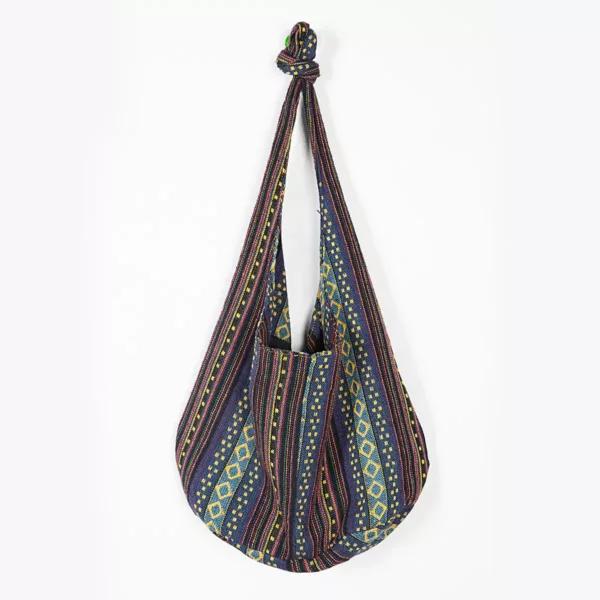
Aztec Cotton and Linen Canvas Jacquard Bag
| Material | Canvas, Terylene |
|---|---|
| Dimensions | 16″(W) x 14″(H) x 6″(D) |
| Color | Custom Cotton |
Lead time
| 1-500 pieces | 25 days |
|---|---|
| > 500 pieces | To be negotiated |
Material guide: Cotton Canvas
Details
- Thick woven cotton fabric, soft, durable and foldable.
- 20-inch strap carries as crossbody, messenger or shoulder bag.
- Interior zipper pocket keeps phone and small items secure.
- Bright stripe patterning suits work, shopping and travel assortments.
Samples are paid and ship in 1-10 days; one revision round takes 2-3 days. Logo application on in-stock styles takes 3-7 days.
Related styles
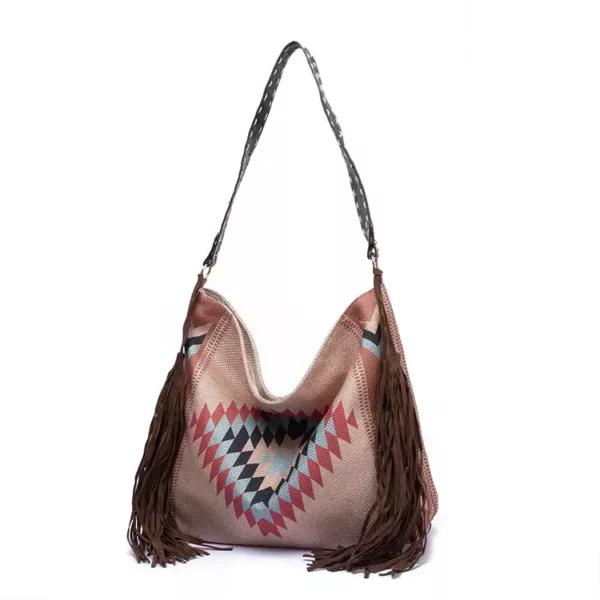
Handmade Woven Tassel Cotton and Linen Shoulder Bag
Bohemian jacquard-woven shoulder bag in cotton and linen with suede-touch tassels.
HB-4746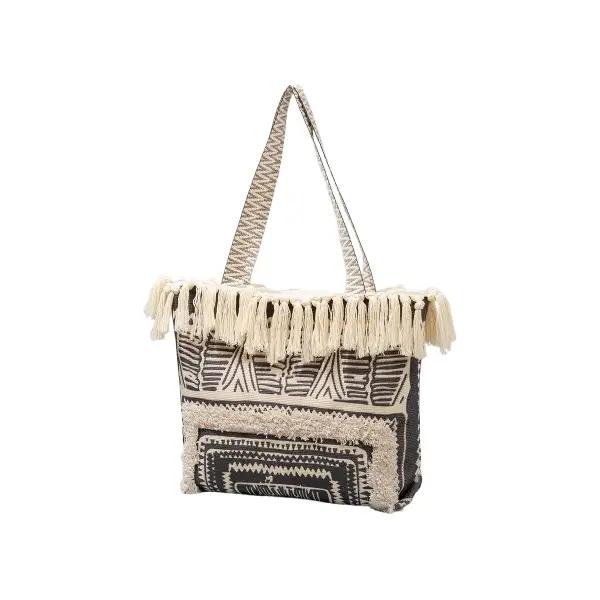
Bohemian Tassel Canvas Tote
Holiday tote in polyester cotton with woven jacquard pattern, tufting and a full tassel fringe.
HB-4786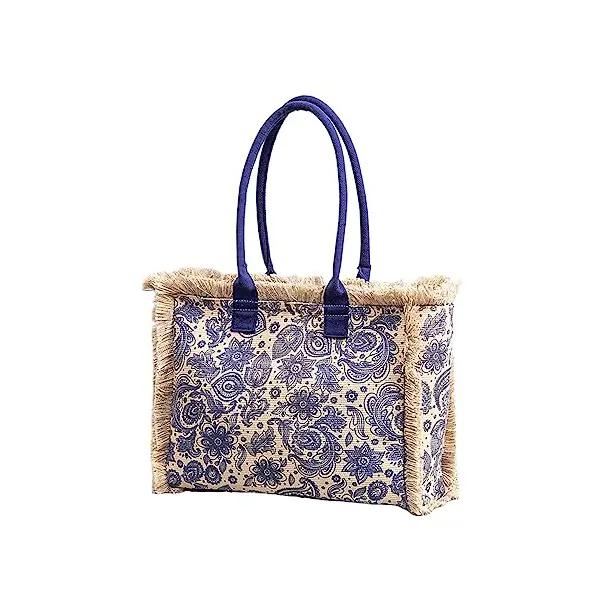
Fringed Canvas Shoulder Bag
Large-capacity zippered canvas shoulder bag with printed pattern and natural fringe trim.
HB-4777What the Aztec cotton and linen canvas jacquard bag is good at, and where it is the wrong choice
An aztec cotton and linen canvas jacquard bag built at 16″(W) x 14″(H) x 6″(D) reads as a mid-size everyday carry. That footprint gives you room for a tablet, a light layer, a water bottle and a pouch without turning into a beach duffel. The woven cotton face is the product's real story. Jacquard weaving puts the pattern into the cloth itself, so the stripe and geometric work will not crack, peel or fade like a print. Buyers who sell into boho, resort and festival assortments keep coming back to this because the texture photographs well and hides light scuffs.
But this is not a structured bag. Canvas and terylene at this size will slouch when half empty, and the 6″ depth means it will bulge if you try to carry a bulky lunchbox and a book together. It is also not a wet-weather bag. Cotton canvas absorbs moisture, and the jacquard face gives you no wipe-clean surface. A buyer who sells to commuters in rainy cities may find this SPU returns with damp-content complaints. Say a buyer asks whether it can replace a coated polyester shopper. The honest answer is no, unless you add a liner or a coating, and that changes the hand feel.
| Published spec | What it means in use | What to watch for |
|---|---|---|
| Material Canvas, Terylene | Soft drape, natural texture, limited water resistance | Confirm canvas weight and terylene ratio before sampling |
| Dimensions 16″(W) x 14″(H) x 6″(D) | Mid-size carry, fits tablet and daily essentials | Check bulge at full load and slouch at half load |
| Color Custom Cotton | Jacquard pattern is woven, not printed | Verify pattern alignment across the front panel |
| 1-500 pieces 25 days | Routine production window for this SPU | Confirm whether 25 days includes logo application |
You can read more about how cotton canvas behaves across seasons on our cotton canvas materials page. It is worth doing before you promise a customer that the bag will hold its shape on a shelf.
How buyers customize this SPU, and what each change does to tooling, cost or lead time
Most buyers start with color and pattern placement. Because the jacquard is woven, a new colorway means a new yarn-dye setup, not a quick print swap. That is routine but not instant. You should expect a longer sampling window than a solid-color canvas tote. The published copy mentions Bohemian jacquard-woven shoulder bag in cotton and linen with suede-touch tassels and a holiday tote with tufting and a full tassel fringe. Those trims are add-ons. Tassels, fringe and tufting are sewn or tied on after weaving, so they add labor but do not require new loom tooling.
Logo application is the simplest change. On in-stock styles, logo application takes 3-7 days, and the method matters. A woven label is the safest match for a jacquard face. A heat-pressed PVC patch can stiffen the area and fight the slouch, while laser engraving on cotton canvas tends to look weak unless the face is coated. Pantone matching on the woven ground is possible, but the ΔE≤2.0 tolerance applies to solid dyed panels, not to multi-color jacquard blends. Say a buyer wants a specific rust tone in the stripe. That is a yarn-dye match, not a Pantone print match, and it needs a lab dip before you approve anything.
Structural changes are where lead time moves. Adding a zipper top, a padded base, or a coated liner changes the cutting and sewing sequence and may push the order past the published 25 days. The 20-inch strap is fixed in the spec. Lengthening it or changing the attachment point means a new strap pattern and extra reinforcement testing. If you need help thinking through MOQ logic for woven and straw bags, our straw bag MOQ sourcing guide walks through the variables without inventing numbers.
What to confirm before you approve sampling on this product
The first thing to lock down is the canvas weight. The spec says Canvas, Terylene, but it does not give a weight, and that single number drives drape, durability and cost. Ask for the grams per square meter and the terylene blend ratio in writing. If the factory quotes a range, pin them to one value for the approved sample. Otherwise your sample and your bulk order can feel like two different bags.
Next, check the jacquard repeat. The pattern alignment across the front panel and the side gussets is the most common rework point on this SPU. A buyer who approves a photo sample with a centered diamond may receive bulk pieces where the pattern drifts half an inch. Write the alignment rule into the sample approval: define where the pattern must sit at the top seam and the zipper edge, and whether the side panels must mirror or continue the front repeat.
The interior zipper pocket is small, but it causes disproportionate returns. Confirm the pocket depth, the zipper length and the stitch line before sampling. A pocket that is too shallow will dump a phone into the main cavity, and a zipper that catches the canvas edge will tear within weeks. The strap attachment is the last check. The 20-inch strap carries as crossbody, messenger or shoulder bag, but the anchor points must be bar-tacked or box-X stitched. Ask for a close-up photo of the back side of each anchor. If you cannot see reinforcement, request it.
When you are ready to move, use the contact form to send your approved spec, or review our factory background before you commit to sampling.