Canvas Tote Bags: Styles, Finishes and Features
Canvas tote bags look simple on a catalog page. They are not. Two totes the same size, same color, same print can behave like different products once they're loaded, folded, rained on or handed to a customer. The difference sits in three decisions: the style, the finish and the hardware.
This guide covers those three. Fabric weights, cut sizes and print methods live in the wholesale canvas bags guide, so they're not repeated here.
Canvas Tote Styles and What Each One Is For
Style is not decoration. It decides how the bag carries a load, how it sits on a shelf and how it packs for shipping.
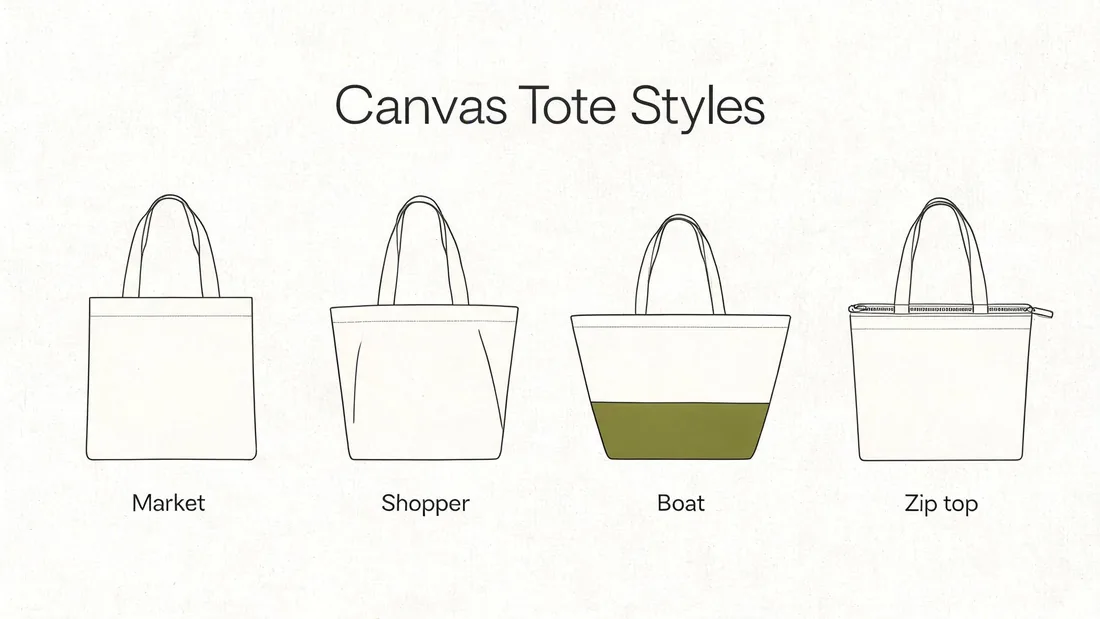
Flat market tote
A flat tote is two panels sewn together. No gusset, no base, no depth. It lies flat, folds flat and stacks flat. That makes it the cheapest to ship and the easiest to hand out at a conference. It also means it holds almost nothing of weight. Load it with a laptop and a water bottle and the bottom sags into a V.
Say a brewery orders flat totes for a launch event. Great choice. The bag carries a six-pack of cans to the car and looks good doing it.
Gusseted shopper
Add side and bottom depth and the same bag becomes a shopper. It stands up when full. Boxed goods fit. Groceries fit. It still folds down, just not as thin.
Most retail programs land here. A gusseted shopper reads as a real bag rather than a giveaway, and it survives repeated use, which is the whole point of a branded tote.
Boat-style tote
A boat tote has an open top and a wide mouth. Loading is fast because there's no zipper to fight. Beach towels, bulk produce, market haul: all easy in, easy out.
The trade-off is obvious. Nothing is contained. Tip it over in a car trunk and everything spills.
Zip-top tote and pocket tote
These aren't new fabrics. They're the same canvas with a different pattern. A zip-top tote adds a closure and a commuter or travel use case. A pocket tote adds organization. Both cost more to make because there's more sewing, more hardware and more chances for a defect.
Choose the closure before the sample, not after. It changes the opening length, the panel map and the seam allowance.
Finishes: Natural, Dyed, Washed, Waxed and Coated
Finish is where most buyers get surprised. The same canvas, treated five ways, gives five different bags.
Natural and dyed
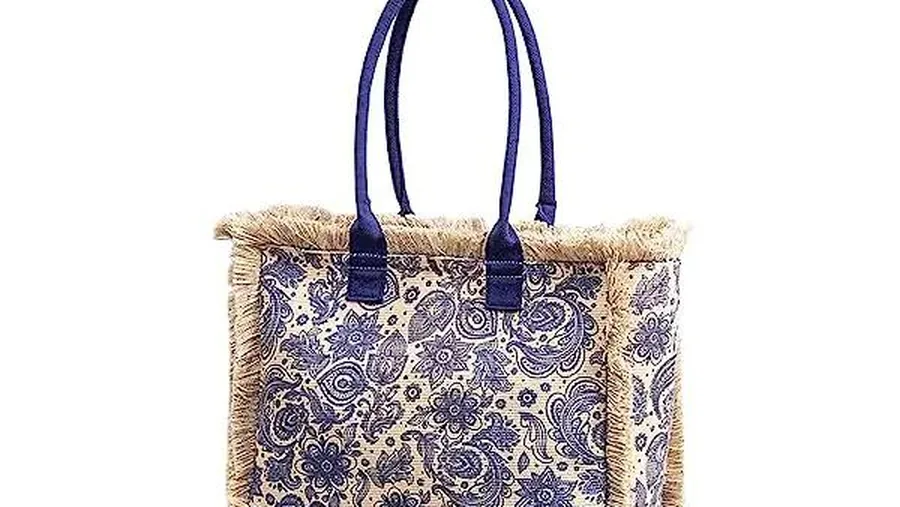
Natural canvas keeps the plain-weave texture and the drape. It's the reference point. Dyed canvas is the same cloth with color added, and the colorfastness expectation changes with the dye and the process. Ask any supplier how the color holds up to rubbing, washing and light, and ask for the test method in writing.
Washed
Washed canvas softens the hand feel and relaxes the structure. The bag slouches. Some buyers want exactly that, because it photographs like a vintage market bag. Others hate it, because a slouched tote won't stand on a counter. Neither reaction is wrong. It's a decision.
Waxed
Waxed cotton sheds water. It also marks, creases and needs re-waxing over time. That's not a defect. That's the finish. Tell the end user in the care instructions, or you'll get complaints about the creases.
Coated and laminated
PU or PVC coating and TPU lamination trade the canvas texture for water resistance and a wipe-clean surface. You lose the hand feel. You gain a bag that survives a wet market, a cooler or a messy kitchen. If the bag needs to hold a printed logo cleanly, check how the coating takes ink before you commit.
Closures: Open Top, Zip, Hook and Loop
Closure choice drives the pattern. Decide it early.
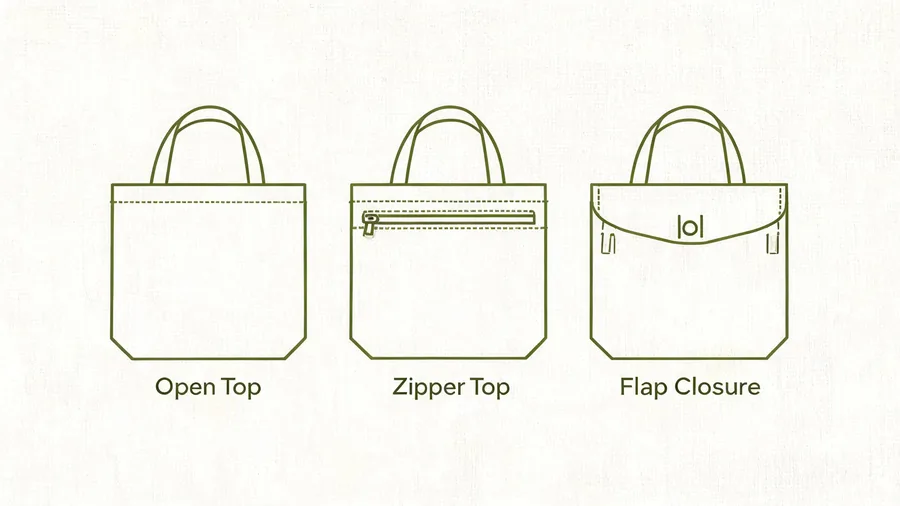
- Open top. Loads fastest. Best for high-turnover giveaway programs where speed of use matters more than security.
- Zip-top. Contains contents and signals a commuter or travel bag. More sewing, more hardware, higher cost.
- Hook-and-loop and snap. Sits between the two in cost and security. Good for a bag that's opened and closed constantly.
Imagine a grocery chain choosing between open top and zip. The open top wins on speed at the register. The zip wins on the drive home. Match the closure to the moment of use, not to the SKU list.
Inner Pockets and Linings
Lining is not just a cosmetic layer. It changes weight, fold behavior and how the bag prints.
Lining options
Unlined canvas is the lightest and cheapest. Nonwoven backing adds structure without much weight. Cleanable films such as PEVA suit wipe-down interiors, which matters for a lunch tote or a cooler-adjacent bag. Each option adds a layer, and every layer changes how the bag folds.
Pocket placement
A slip pocket holds a phone and cards. A zip pocket holds keys and keeps them from scratching the phone. A divider separates bottles from the rest of the load. Where the pocket sits matters more than how many there are. A pocket on the wrong panel is a pocket nobody uses.
Liner and pocket construction belong in the panel map and the bill of materials. A verbal note on a spec sheet becomes a guessing game on the factory floor.
Bottom Reinforcement and Base Shapers
A bag fails at the bottom and at the handle attachments. That's where the load concentrates.
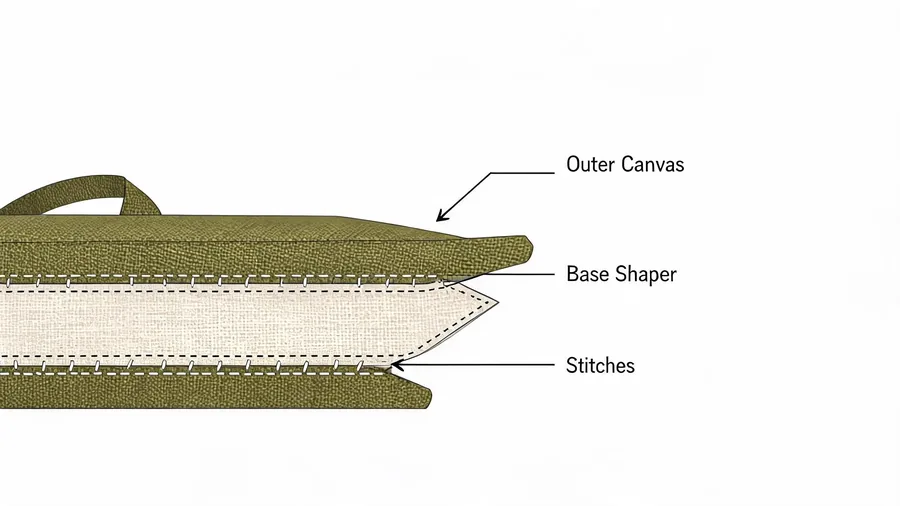
Reinforcement patches and heavier stitching at the handle attachment and the high-stress seams are the first line of defense. Then comes the base.
A plastic board or fiberboard base panel holds a rectangle and stops sag under bottles or cans. A removable base shaper keeps the bag foldable. A stitched-in base does not. That's the trade: stiffness versus packability.
Pair reinforced bases with gusseted styles, not flat totes. A flat tote with a stiff base is a contradiction. It won't fold, and it won't carry weight well either.
Style-to-Use and Finish Matching Table
Use this table to defend a choice in a meeting. Each cell explains why the pairing works.
| Style | Best use | Finish that suits it | Why |
|---|---|---|---|
| Flat market tote | Giveaways, light loads, events | Natural or dyed, unwashed | Keeps the bag flat and cheap to ship; no structure needed for light loads |
| Gusseted shopper | Groceries, boxed goods, retail programs | Dyed or coated | Depth holds shape; coating handles spills and wet produce |
| Boat-style tote | Beach, bulk items, market haul | Washed or waxed | Washed gives the relaxed look; waxed sheds water at the beach |
| Zip-top tote | Commuter, travel, daily carry | Dyed or coated | Closure plus a wipe-clean surface suits daily use |
| Pocket tote | Organization-heavy use, work bags | Dyed with a cleanable lining | Pockets need a lining that holds shape and wipes clean |
Specifying a Canvas Bag Without Guesswork
A spec sheet is a contract. Vague language on it becomes a defect on the line.
Hand over these items before sampling starts:
- Dimensions with tolerances, measured at stated reference points and product condition.
- Material and finish, with the coating or lamination weight defined in the specification.
- A panel map with seam types, seam allowances and stitch density.
- Closure type and opening length.
- Liner, pocket placement and reinforcement details.
- Packing method, carton quantity and shipping test requirements.
Describe hand feel, temper and colorfastness in words the factory can act on. "Soft but not floppy" means nothing. "Soft hand, holds a rectangle when empty" gives the pattern maker something to hit.
Record test methods, conditioning and acceptance limits before production, not after the first container ships.
For the fabric itself, the cotton canvas page covers the base cloth options. For the buying process, the wholesale tote bags buying guide walks through the steps.
Send a spec through the contact page and a quote comes back with the construction questions already answered.
Frequently Asked Questions
What is the difference between a canvas bag and a tote bag?
Canvas is the material. A tote is the shape. A canvas bag can be a tote, a backpack or a pouch. A tote bag can be made from canvas, nylon, rPET or woven polypropylene. The two words describe different things, so a spec sheet should always name both the material and the style.
How do you choose the right canvas tote style for a given use?
Start with the load and the moment of use. Light giveaway loads with no structure needed point to a flat market tote. Groceries and boxed goods need a gusseted shopper. Beach and bulk items suit a boat-style tote with an open top. Commuter and travel use needs a zip-top. Organization-heavy use needs pockets and a lining that holds shape.
Does a waxed or coated finish make a canvas tote waterproof?
No. Waxed cotton sheds water and coated canvas resists it, but neither makes the bag waterproof. Seams, zippers and the base are still entry points. If the bag must keep contents dry in sustained rain, the construction has to address seams and closures too, not just the finish.
Which canvas tote styles need a reinforced base?
Gusseted shoppers and any style that carries bottles, cans or boxed goods benefit most from a reinforced base. A plastic board or fiberboard panel stops sag and holds a rectangle. A removable base shaper keeps the bag foldable. Flat market totes do not need one, because a stiff base defeats the reason to choose a flat tote.
Sourcing woven bags?
Send your questions to the factory directly. We reply within 24 hours.
Request a Quote