Wholesale Polypropylene Bags: Woven vs Non-Woven PP Explained
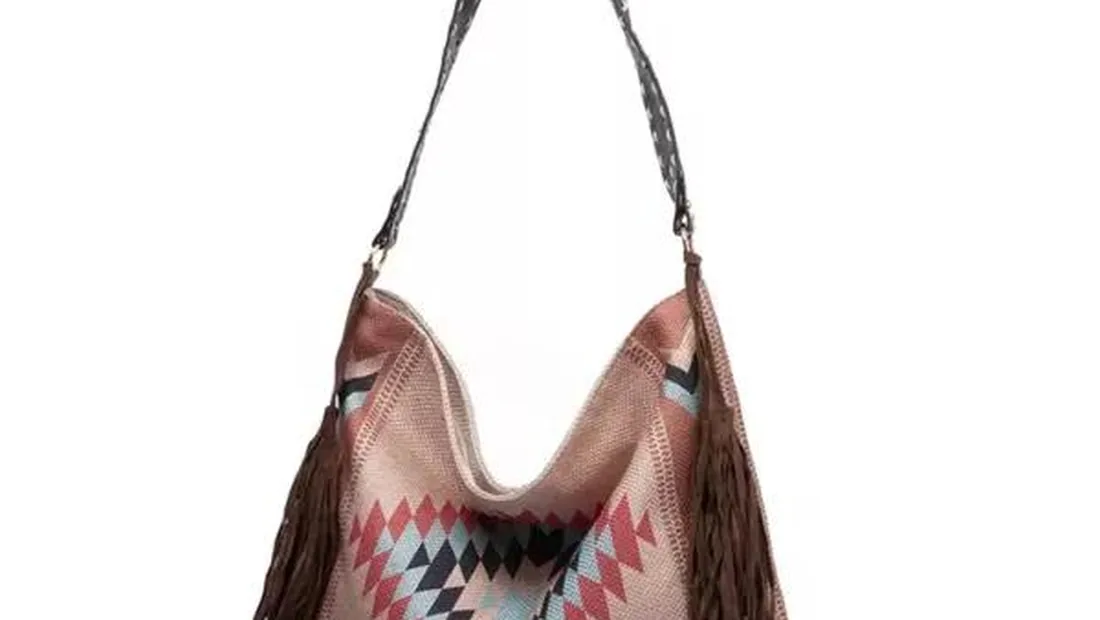
Wholesale polypropylene bags split into two families. Woven PP and non-woven PP. They behave differently. Buyers get quoted for both and sometimes can't tell which one they're paying for. You need to know the difference before you ask for a price.
Say you run a supermarket chain. You want a few hundred thousand reusable shopping bags. A supplier sends two samples. One feels like soft fabric, almost like cotton. The other feels like a plastic tarp with a grid. Same polymer. Same name on the invoice. Different machines made them.
Woven vs non-woven polypropylene: what to choose first
Woven PP starts as extruded tapes. Those tapes get woven into fabric on a loom, just like textile yarn. The result is strong, tear-resistant, and handles repeated heavy loads. Think feed sacks, grain bags, industrial packaging. Laminated woven PP gets a film on top, which gives you a smooth surface for full-colour print and some moisture protection.
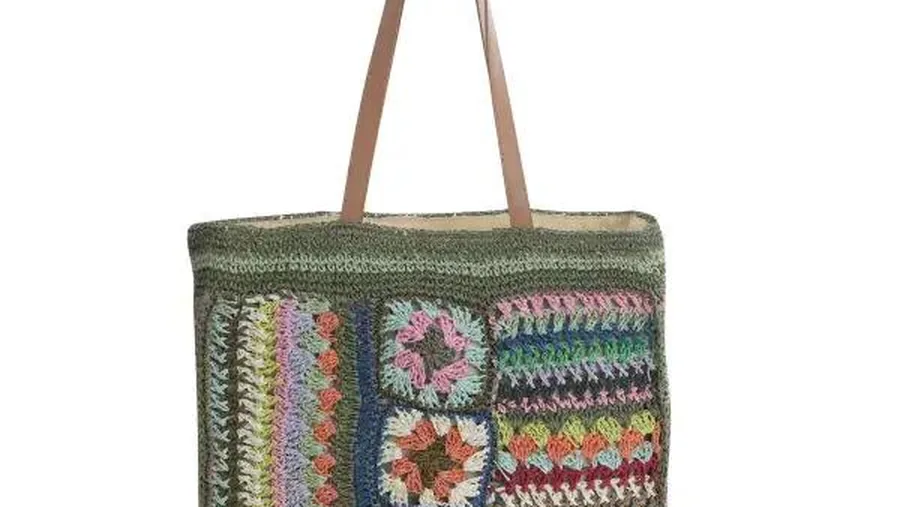
Non-woven PP skips the loom. Fibres get bonded into a sheet. No weaving. No knitting. It's specified by grammage, not weave. You'll see it in promotional totes and light shopping bags. It's cheaper per unit. Softer to the touch. Usually screen printed with one or two colours.
Here's the rule. Woven PP for load and durability. Non-woven PP for light promotional totes. Don't let a supplier blur the two. Ask, in writing, which one you're being quoted for. You can also review our PP woven material guide to see how the fabric behaves in finished bags.
How polypropylene bags are made
Woven PP begins with resin melted and extruded into flat tapes. Those tapes get stretched for strength, then woven. A circular loom makes a tube. A flat loom makes a sheet. After weaving, the fabric may be laminated with a film or paper layer. Lamination changes stiffness, print quality and water resistance.
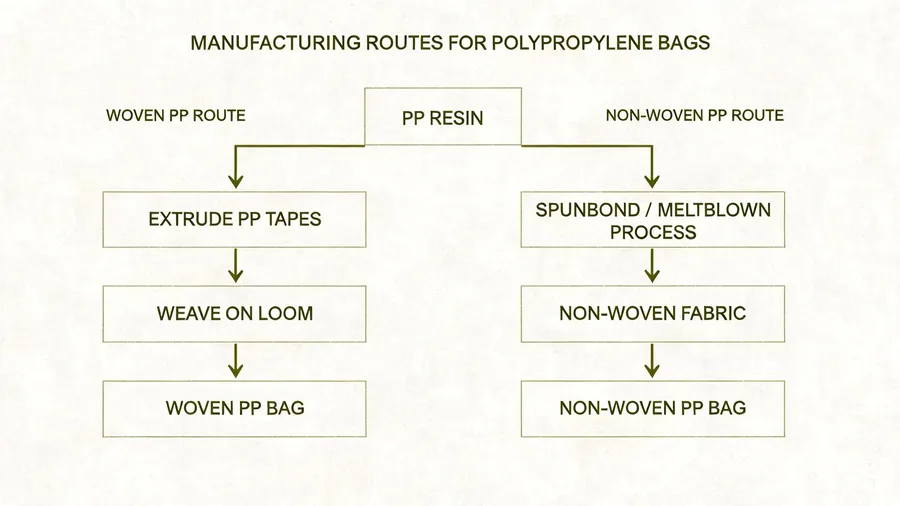
Non-woven PP uses spunbond. Polymer melts, goes through spinnerets, and lands as continuous filaments. Heat and pressure bond the fibres. No loom. The sheet is cut and sewn or heat-sealed into bag shapes.
Coating and lamination are not the same. Coating sits on the surface. Lamination bonds a separate layer. Both change feel and print quality. A laminated woven bag takes flexographic or digital full-colour work. An unlaminated woven bag is harder to print because the surface is textured.
Strength, grammage and reuse expectations
Grammage tells you mass per unit area. It does not tell you how strong the finished bag is. A high-grammage non-woven tote can still tear at the handle if the seam is weak. A lower-grammage woven PP bag can carry heavy loads because the weave distributes force differently.
Denier describes yarn linear density. It's a material term, not a direct strength claim. You can't compare denier on woven PP to grammage on non-woven PP. Different measurement systems. Different constructions.
Reuse expectations tie to construction, seam and handle reinforcement. A bag that survives one grocery trip is not the same as one that lasts a year of daily use. Ask what testing was done. Seam strength and strap-anchor strength are the tests that matter. The numbers depend on the spec you agreed.
Imagine a promo agency ordering 20,000 totes for a trade show. They'll be handed out once, maybe used twice. Light non-woven PP works fine. Now imagine a farm supply store selling bags for feed and grain. Woven PP is the only sensible choice. Same polymer. Totally different job.
Printing on woven and non-woven PP bags
Laminated woven PP accepts full-colour flexographic or digital print. The lamination gives you a smooth surface. Photographic images, gradients, fine text. All possible. That's why you see branded woven shopping bags with bright, detailed artwork. Our screen printing on woven bags guide covers what works on unlaminated fabric.
Non-woven PP suits screen print. Usually one-colour or limited-colour logos. The surface is fibrous and porous. Fine detail can bleed or go fuzzy. Screen printing works because the ink sits on top and the design stays simple.
Print area and colour count affect setup and unit cost. More colours means more screens or more press stations. A bigger print area uses more ink. Pantone matching is available for brand consistency. If your brand guide specifies a red, ask for the Pantone reference on the quote.
A buyer who wants a photographic logo on a non-woven tote will be disappointed. The material won't hold the detail. Put that design on a laminated woven bag instead. You'll pay more per unit. The print will look like the artwork you approved.
Handles, reinforcement and bag construction
Handle types include die-cut, sewn, loop and reinforced styles. Die-cut handles are cut into the bag body. Sewn handles are separate pieces attached at the top. Loop handles are fabric loops, common on promotional totes. Reinforced styles add extra material at the attachment point.
Reinforcement patches at high-stress seams and handle anchors improve durability. A patch is an extra material layer at the attachment or seam. Without it, the handle can tear out under load. With it, the bag survives much longer.
Handle choice should match the load and reuse frequency. A light promotional tote can use a simple die-cut handle. A bag meant to carry groceries every week needs sewn handles with reinforcement. Ask for a strap-anchor strength test if you're buying for repeated use. Compare handle options in our bag catalog to see what's standard.
Recyclability and what you can honestly claim
PP is technically recyclable. That's a material property. A finished bag is only recyclable where collection and reprocessing actually exist. Two different statements. Don't let anyone merge them on a spec sheet.
Reusable is a use claim. Recyclable is an end-of-life claim. They are not interchangeable. A bag can be reusable but not practically recyclable in your customer's region. A bag can be theoretically recyclable but never collected. Be precise about which one you're claiming.
Don't turn a material property into a finished-product environmental claim without evidence. If a supplier says their bag is recyclable, ask for the basis. Which reprocessing facility? Which collection stream? Which certification? If they can't answer, it's marketing.
Buyers should ask suppliers for the basis of any recycled-content or recyclability claim. A vague "eco-friendly" on a quote is not a spec. Get it in writing. If the supplier hesitates, that tells you something useful.
Spec fields to prepare for a wholesale quote
A good quotation request includes more than "I need bags." The more fields you fill in, the fewer surprises you'll get. Here's what a supplier needs from you.
- Bag style: woven or non-woven, laminated or unlaminated
- Grammage, size, handle type and reinforcement
- Print method, colours and imprint area
- Target quantity, packaging, delivery port and required date
Say you want 50,000 non-woven totes for a retail promotion. You specify grammage, size, handle type and a one-colour screen print. The quote comes back fast. Now say you want 5,000 laminated woven PP bags with full-colour print and reinforced sewn handles. Different factory line. Different lead time. Different cost driver. Same spec sheet. Different answers.
Comparison table: woven PP vs non-woven PP vs cotton canvas
| Factor | Woven PP | Non-woven PP | Cotton canvas |
|---|---|---|---|
| Weight per bag | Light for its strength | Lightest of the three | Heaviest |
| Print quality | Full-colour when laminated | Screen print, limited colours | Full-colour screen or digital |
| Cost driver | Lamination and print colours | Grammage and handle type | Fabric weight and finishing |
| Reuse expectation | High for heavy loads | Low to moderate | High, softens with washing |
| Typical use | Grocery, feed, industrial | Promotional totes, light retail | Premium retail, fashion |
Cotton canvas sits at the premium end. It feels better in the hand and takes full-colour print beautifully. But it costs more and weighs more. Woven PP wins on cost per use for heavy loads. Non-woven PP wins on unit price for mass giveaways. Your choice depends on what the bag has to do.
Send your spec for a quote. The more fields you fill in, the faster you'll get an accurate number. You can also read our jute, cotton and PP woven comparison for a broader material overview.
Frequently Asked Questions
How much do polypropylene bags cost?
The price depends on which family you're buying. Non-woven PP totes cost less per unit than laminated woven PP bags with full-colour print. Grammage, size, handle type and order quantity all move the number. Send a spec and ask for a quotation based on your exact requirements.
What is the difference between polyethylene and polypropylene bags?
Polyethylene is softer and stretchier, often used for film bags and liners. Polypropylene is stiffer and stronger per weight, which is why it's used for woven sacks and structured totes. PP also takes print better, especially when laminated.
How do I choose between woven and non-woven polypropylene bags?
Look at the load and the reuse frequency. Woven PP handles heavy or repeated loads and suits full-colour print when laminated. Non-woven PP is lighter and cheaper, ideal for promotional totes that will be used a few times. Match the construction to the job.
What specifications should I prepare for a wholesale polypropylene bag quote?
Prepare the bag style, grammage, size, handle type and reinforcement. Add the print method, colour count and imprint area. Include target quantity, packaging, delivery port and required date. A complete spec sheet gets you an accurate quote faster.
Sourcing woven bags?
Send your questions to the factory directly. We reply within 24 hours.
Request a Quote