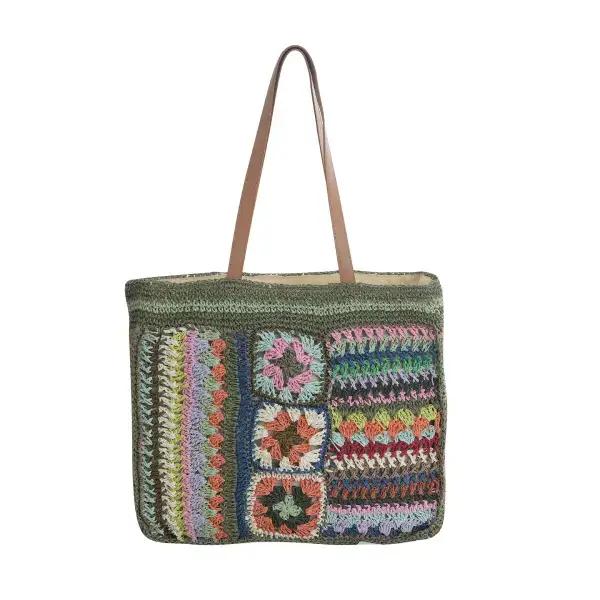
Straw-Woven and Crocheted Contrast-Color Shoulder Bag
| Material | Straw Plaited Article |
|---|---|
| Dimensions | 30(L)*10(W)*26(H) cm |
| Custom Logo | Accept Customized Logo |
Lead time
| 1-50 pieces | 25 days |
|---|---|
| > 50 pieces | To be negotiated |
Material guide: Raffia Bag Manufacturer: Straw, Wicker and Raffia Explained
Details
- Made from natural straw, each bag is meticulously handwoven by artisans, offering a natural, breathable and comfortable carry for summer and beach settings with a bohemian style.
- Soft polyester lining protects contents, with a small interior pocket for phone, cards or passport.
- Lined interior and zipper closure add privacy and security.
- Works as a shoulder bag, crossbody bag or handbag.
Samples are paid and ship in 1-10 days; one revision round takes 2-3 days. Logo application on in-stock styles takes 3-7 days.
Related styles
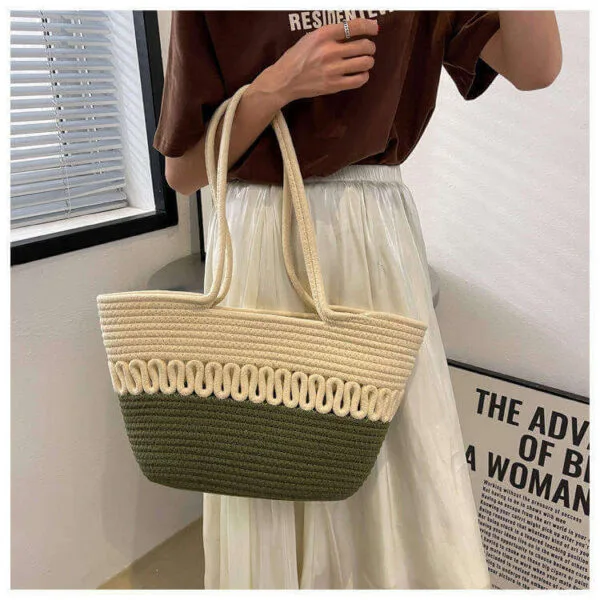
Hand-Woven Cotton Rope Tote Bag
Basket-style tote hand-woven from cotton rope, two-tone body with looped trim, colors made to order.
HB-6108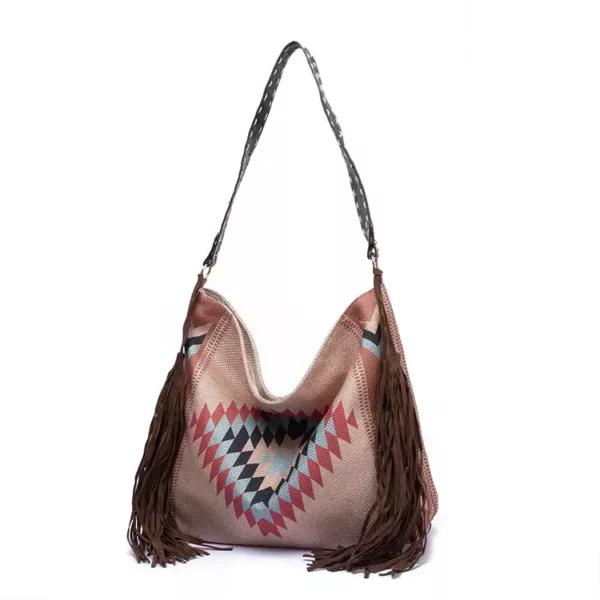
Handmade Woven Tassel Cotton and Linen Shoulder Bag
Bohemian jacquard-woven shoulder bag in cotton and linen with suede-touch tassels.
HB-4746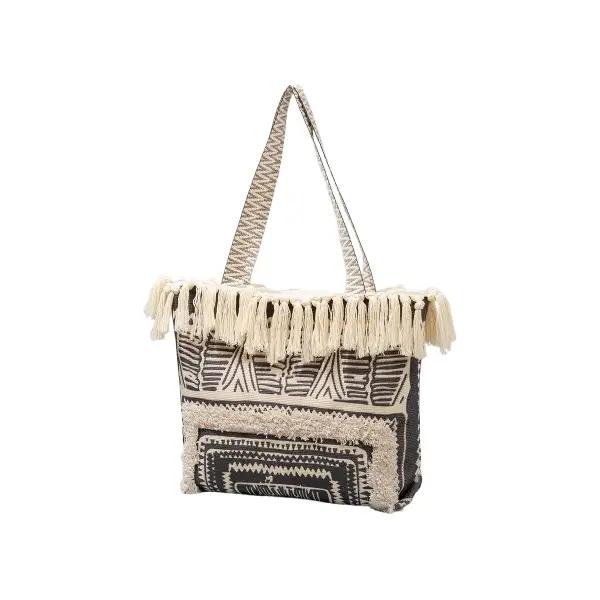
Bohemian Tassel Canvas Tote
Holiday tote in polyester cotton with woven jacquard pattern, tufting and a full tassel fringe.
HB-4786What the straw-woven and crocheted contrast-color shoulder bag is good at, and where it is the wrong choice
This SPU is a warm-weather carry piece built around a natural straw body. The straw plaited article gives you a breathable, textured shell that reads handmade. That is the whole point. A buyer who wants a machine-perfect, uniform surface will fight this material every step of the way. Straw varies. Fiber color shifts slightly between batches, and hand weaving leaves small irregularities. They're part of the look, not defects you can engineer out.
The 30(L)*10(W)*26(H) cm frame keeps the bag compact. It'll hold a phone, a slim wallet, sunglasses, and a small pouch without becoming a catch-all. The 10 cm width is the real constraint. It limits how much you can stuff inside before the zipper strains and the woven sides distort. If your program targets beach weekends or market days, that's fine. If your buyer expects a daily work tote, this is the wrong silhouette.
The zipper closure and soft polyester lining add privacy and a cleaner interior feel. The lining also protects contents from straw ends and helps the bag hold its shape a little longer. What it doesn't do is make the bag waterproof or abrasion-resistant. Straw is a natural fiber. It can snag, absorb moisture, and show wear at high-contact points like the base corners and the zipper ends.
| Published spec | What it means in use | What to watch for |
|---|---|---|
| Material Straw Plaited Article | Breathable, textured, hand-assembled shell with visible fiber variation. | Batch color shift, fiber ends, uneven weave density, snagging at edges. |
| Dimensions 30(L)*10(W)*26(H) cm | Compact carry for essentials; slim width limits bulk loading. | Zipper strain when overpacked, distortion of the woven side panels. |
| Soft polyester lining | Protects contents, adds a cleaner interior and some shape retention. | Lining shift or twisting at the seams, especially near the zipper. |
| Custom Logo Accept Customized Logo | Branding can be applied, but placement depends on the woven surface. | Logo legibility on an uneven straw field, thread matching on crochet trim. |
How buyers customize this SPU, and what each change does to tooling, cost or lead time
Routine changes are the ones that don't touch the weave structure. Lining color, zipper tape color, and the contrast crochet trim color fall into this group. You can also change the interior pocket size or add a second pocket without reworking the shell. These changes affect material sourcing and sewing time, not tooling. A buyer who wants a different two-tone body color should expect a longer sampling loop. The straw must be dyed or sourced to match.
Pantone matching on straw isn't the same as Pantone matching on polyester. The natural fiber takes dye unevenly. A single-color match is realistic only when the buyer accepts tonal variation. The ΔE≤2.0 standard applies to solid synthetic surfaces where color can be controlled tightly. On a plaited straw article, the same numeric target is hard to hit across an entire panel. Say a buyer wants a deep terracotta body with a cream crochet trim. The trim can hit the target. The straw body will land close, not exact.
Logo work splits into two groups. A woven label or a small metal plate sewn near the top edge is routine and fast. A logo applied directly onto the straw surface isn't routine. Heat-pressed PVC or a large embroidery patch needs a stable, flat base, and the plaited surface is neither flat nor stable. That kind of application may require a backing panel or a leather patch, which adds a new material and a new attachment step. Buyers who want a hidden logo or a removable system should plan for extra sampling time. The logo-method MOQs in our general guidelines apply to the method, not to this SPU specifically, so confirm the minimum with the sales team before quoting.
Lead time shifts with the customization depth. A stock-style body with a changed lining and a woven label stays close to the 1-50 pieces 25 days window. A full color change on the straw plus a new trim pattern pushes sampling out because the dye lot and the weave sample both need approval. If you're comparing this SPU against a PP woven alternative, the material behavior is different enough that the decision should come before sampling. See PP woven shopping bags and straw, wicker and raffia material notes for reference.
What to confirm before you approve sampling on this product
Three points cause most of the rework on this SPU. First, the straw color range. Ask for a physical straw plaque, not a photograph. Photos flatten the tonal variation. A buyer who approves a screen image will often reject the first sample because the real straw looks different in daylight. Second, the zipper behavior at the corners. The 10 cm width means the zipper follows a curved path around the top edge. If the zipper is too stiff, it will fight the curve and the bag will pucker. If it's too soft, the teeth will separate under load. Specify the zipper flexibility and test it with the bag fully packed.
Third, the crochet trim attachment. The contrast-color crochet is a visual signature, but it's also a stress point. If the trim is sewn too tightly, it pulls the straw weave out of shape. If it's sewn too loosely, it sags and catches on things. The approved sample should show the trim under tension with the bag lifted by the strap.
Write these checks into the sample approval: zipper opens and closes smoothly with the bag packed to the full 30(L)*10(W)*26(H) cm volume; lining doesn't twist or pull away from the top seam; straw ends are tucked or finished so they don't poke through the lining; the strap attachment points show no weave distortion when the bag is carried crossbody with a phone and wallet inside. If the buyer wants a logo on the straw surface, request a placement mockup on the actual straw plaque before cutting the sample. That one step saves a full revision round. For more on how straw bag programs are quoted, see the straw bag MOQ sourcing guide or contact us with your target retail price and order window.