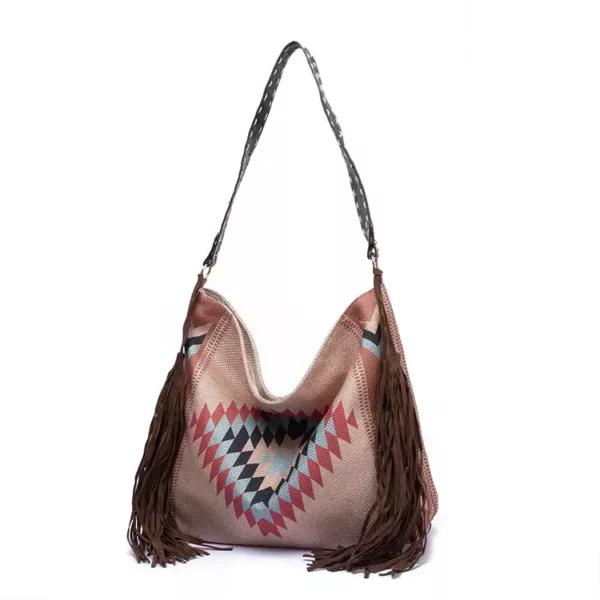
Handmade Woven Tassel Cotton and Linen Shoulder Bag
| Material | Terylene, Canvas |
|---|---|
| Dimensions | 16.9×11.8×5.7 inches |
| Pattern | Khaki, Dark green, Fuchsia, Sapphire blue |
Lead time
| 1-200 pieces | 25 days |
|---|---|
| > 200 pieces | To be negotiated |
Material guide: Cotton Canvas
Details
- High-quality dense-weave canvas, wear-resistant with a good hand feel.
- Fits an iPad, phone, books, wallet and makeup for everyday carry.
- Retro bohemian patterning that pairs easily with seasonal collections.
Samples are paid and ship in 1-10 days; one revision round takes 2-3 days. Logo application on in-stock styles takes 3-7 days.
Related styles
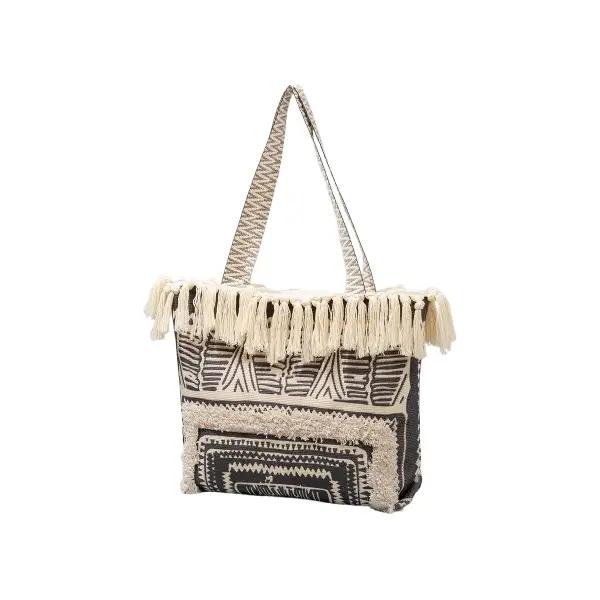
Bohemian Tassel Canvas Tote
Holiday tote in polyester cotton with woven jacquard pattern, tufting and a full tassel fringe.
HB-4786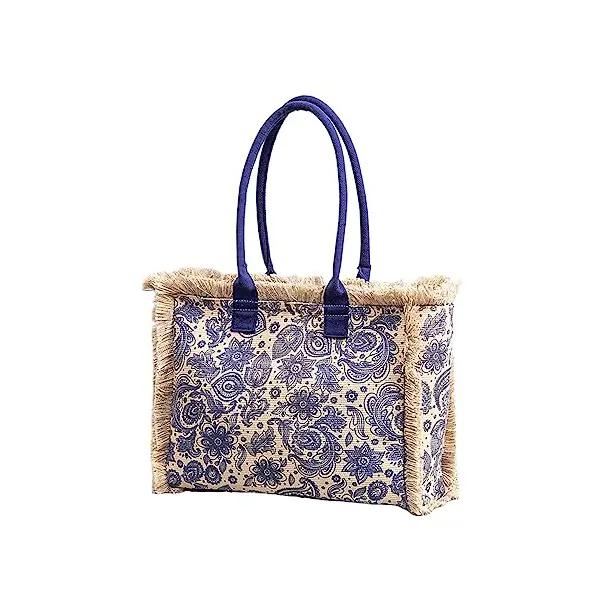
Fringed Canvas Shoulder Bag
Large-capacity zippered canvas shoulder bag with printed pattern and natural fringe trim.
HB-4777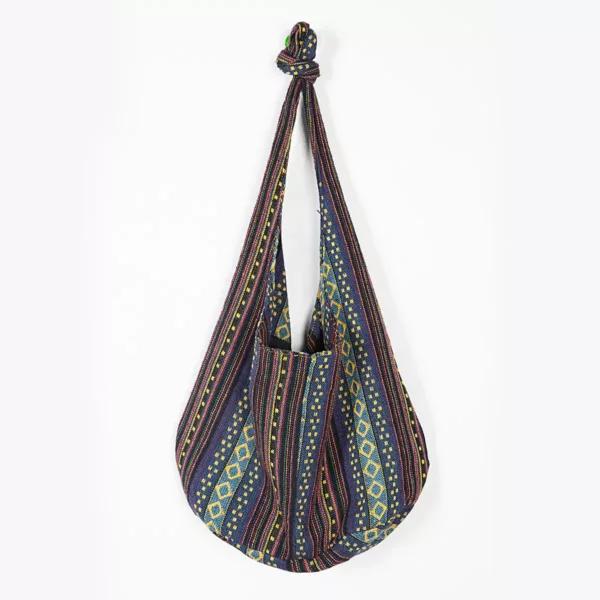
Aztec Cotton and Linen Canvas Jacquard Bag
Woven jacquard hobo bag in cotton and linen with retro geometric stripes and a knotted strap.
HB-4730What this construction is good at, and where it is the wrong choice
The handmade woven tassel cotton and linen shoulder bag is a soft, unstructured carry piece built from dense-weave canvas with a printed pattern and natural fringe trim. That construction favors daily, low-abrasion use. Think books, a wallet, a phone, an iPad, makeup. The material has a good hand feel, so it reads well in lifestyle photography and on a shop shelf. But the same softness that makes it pleasant to touch also limits what it can carry. This is not a load-bearing work bag. It is not a grocery hauler. The canvas is wear-resistant for its weight class, yet it will not shrug off sharp corners or heavy, shifting contents the way a structured backpack or a laminated utility tote would.
Size matters here too. At 16.9 inches wide and 11.8 inches tall, the bag swallows a tablet and a slim notebook. The 5.7 inch depth gives it a relaxed, slouchy profile. That depth is generous for flat items but too shallow for bulky lunch containers stacked two high. A buyer who plans to market this as an everyday carry piece will find the proportions right. A buyer who wants a beach or picnic tote should look elsewhere. The fringe and jacquard patterning put it in the bohemian and seasonal collection space. It pairs easily with spring and summer apparel lines, less so with minimalist tech or outdoor gear.
| Published spec | What it means in use | What a buyer should watch for |
|---|---|---|
| Terylene | A polyester fiber that adds dimensional stability and helps the bag hold its shape better than pure cotton. | Confirm the blend ratio in the approved sample. Terylene content affects wrinkle recovery and how the print sits on the face. |
| Canvas | A plain-woven, durable fabric with structure and texture. Dense weave improves abrasion resistance and gives the bag its hand feel. | Ask for a fabric count and weight reference in the sample. A loose weave will fuzz at the corners and along the zipper tape. |
| 16.9×11.8×5.7 inches | A medium-large shoulder bag with enough width for a tablet or slim folder, and a shallow depth that keeps the silhouette soft. | Check how the bag sits when empty. If the depth collapses too much, the fringe and pattern can look distorted in product photos. |
| Khaki | A warm neutral that hides light scuffs and pairs with earth-tone collections. | Dye lots vary. Approve a physical swatch, not a screen color. |
| Dark green | A deep, muted color that reads as fall and winter friendly despite the bohemian pattern. | Dark grounds can make printed fringe look muddy. Confirm contrast on the actual fringe yarn. |
| Fuchsia | A high-saturation accent color that draws attention in a retail display. | Bright colors on canvas can crock or fade faster. Ask for a colorfastness check on the printed face. |
| Sapphire blue | A jewel tone that photographs well and appeals to a broad casual market. | Blue dye can transfer onto light linings or clothing in humid conditions. Confirm colorfastness in the sample. |
You can read more about how cotton canvas behaves in different bag constructions on our cotton canvas material page. If your line leans toward beach or resort use, the beach bags category may fit better.
How buyers customize this SPU, and what each change does to tooling, cost or lead time
Most buyers start with a logo. That is routine. On this bag, a woven label, a heat-pressed PVC patch, or a laser-etched leather tag all work without changing the cut-and-sew process. A woven label typically needs a lower setup quantity, while a metal plate or reflective print pushes the logo MOQ higher. Pantone matching for solid-color logos is straightforward. The factory works to a ΔE of 2.0 or tighter, which means the printed logo should sit very close to your approved swatch under standard lighting. Expect the normal sampling window of 1 to 10 days for a paid sample, with one revision round taking 2 to 3 days.
Changing the material is a bigger decision. If you swap the canvas for a heavier cotton duck or a coated polyester, the bag’s drape and fringe behavior change. That can require a new cutting die or at least a re-tensioning of the sewing line. Lead time stretches. Same story if you change the dimensions. A deeper gusset, a longer drop, a wider base. All of that means new patterns. You are not just reprinting a logo. You are re-engineering the bag. Expect the production window to move from the published 25 days for up to 200 pieces into a negotiated range for larger or more complex orders.
The fringe and tassel trim are the most sensitive customization points. A buyer who wants a different fringe length or a denser tassel needs to approve a physical trim card before sampling. Fringe is cut and knotted by hand in many woven bag programs. That is time. It is also where color mismatch and uneven density show up first. If you want printed fringe instead of solid, the colorfastness risk rises. Ask for a wash or crock test on the printed fringe before you commit. The pattern itself is printed on the canvas face. Changing the pattern means new screens or a new digital print file. That is a tooling cost and a longer runway, not a simple color swap.
For more on how straw and woven bag MOQs are set, see our straw bag MOQ sourcing guide. If you are still exploring woven constructions, the PP woven material page covers a different family of woven bags.
What to confirm before you approve sampling on this product
Three things cause most rework on this SPU. First, the fringe. Confirm the exact fringe length, the tassel count per inch, and the attachment method. Is it sewn into the seam or glued? Sewn fringe survives longer. Glued fringe is faster and cheaper but fails at the edges after a few months of use. A buyer who skips this check will see loose tassels in the first customer review photos.
Second, the print placement. The pattern is printed on canvas. Canvas has a weave direction. If the print is not aligned to the grain, the bag twists when loaded. Ask for a sample with the pattern running straight across the face and the side gussets. Check the fringe line too. A pattern that drifts near the fringe makes the whole bag look off-register, even if the construction is sound.
Third, the zipper. The published spec does not name a zipper brand. That means you must specify it. Ask for a sample with the exact zipper you plan to use in production. Check the slider, the tape color, and how the zipper sits against the fringe. A metal slider on a soft canvas bag can wear through the fabric at the opening. A plastic slider feels cheaper but slides more smoothly. Decide before sampling, not after.
Write these checks into the approved sample: fringe attachment and density, print alignment on face and gussets, zipper operation with the bag loaded to its published dimensions, and colorfastness of the printed face and fringe. The sample is paid and ships in 1 to 10 days. One revision round takes 2 to 3 days. If you need to talk through these points before you commit, reach out on the contact page.