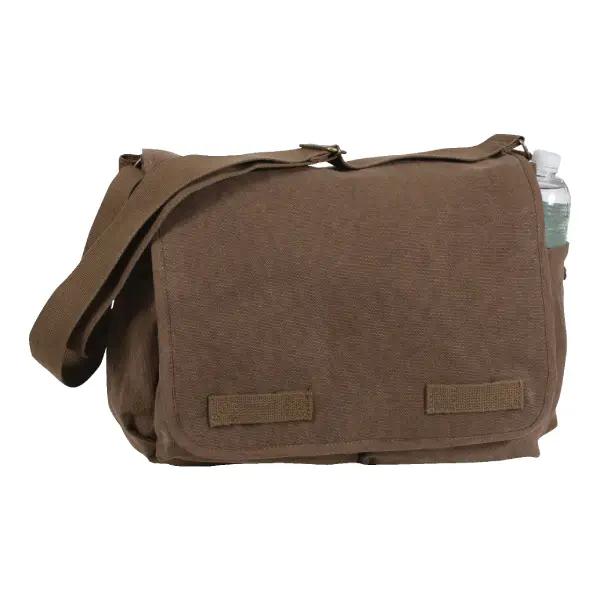
Canvas Messenger Crossbody Bag
| Material | 100 Cotton Canvas or Customized |
|---|---|
| Dimensions | 14.5″W x 11.5″L x 6″D with 19″ straps (Customized Made) |
| Color | (Customized Made) |
| Custom Logo | Accept Customized Logo |
Lead time
| 1-300 pieces | 20-35 days |
|---|---|
| > 300 pieces | To be negotiated |
Material guide: Cotton Canvas
Details
- Wax canvas option offers durability and water resistance.
- All Pantone colors available for personalized programs.
- Logo options include printing, woven labels, rubber logos and embossed logos.
- Sample production 5-7 working days; bulk production 25-30 days depending on quantity.
- Each bag individually packed in a poly bag.
Samples are paid and ship in 1-10 days; one revision round takes 2-3 days. Logo application on in-stock styles takes 3-7 days.
Related styles
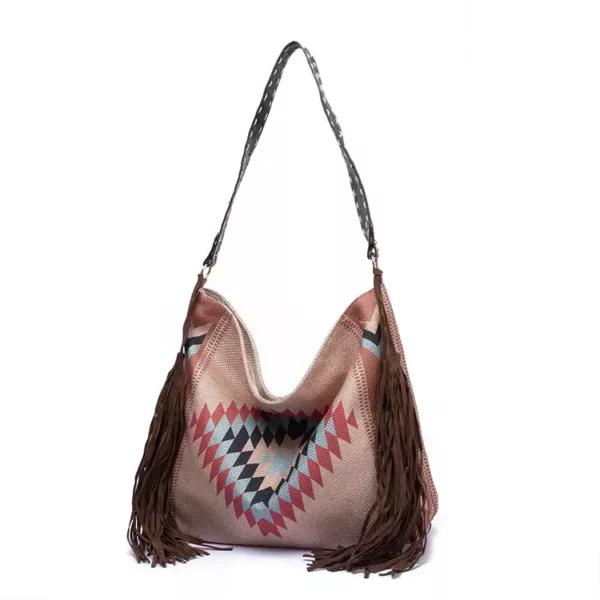
Handmade Woven Tassel Cotton and Linen Shoulder Bag
Bohemian jacquard-woven shoulder bag in cotton and linen with suede-touch tassels.
HB-4746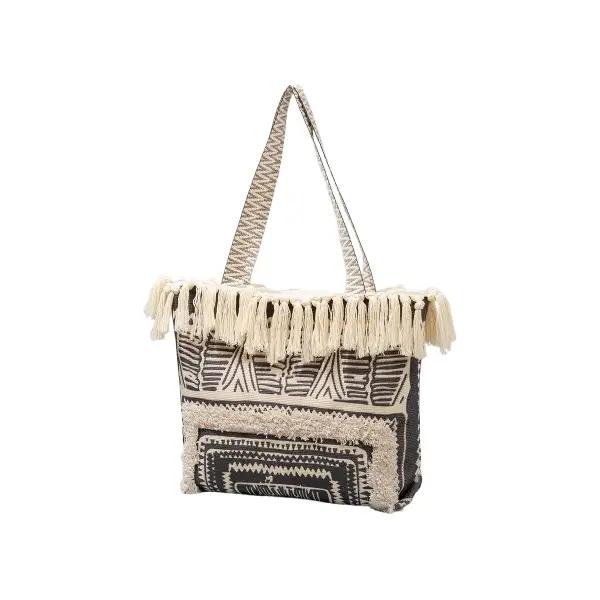
Bohemian Tassel Canvas Tote
Holiday tote in polyester cotton with woven jacquard pattern, tufting and a full tassel fringe.
HB-4786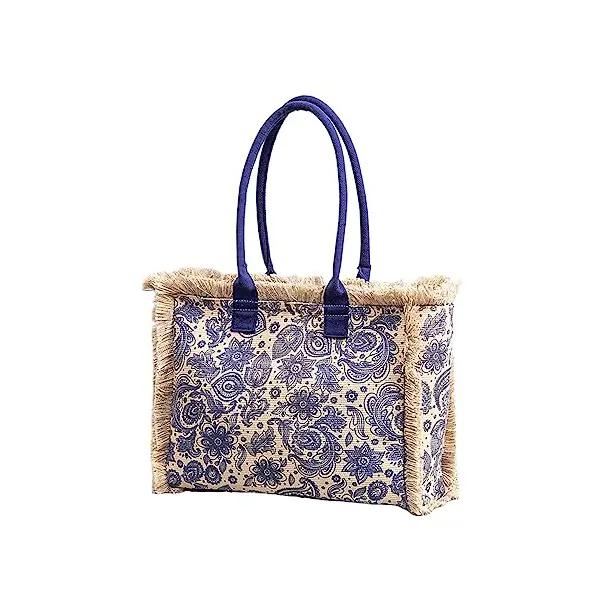
Fringed Canvas Shoulder Bag
Large-capacity zippered canvas shoulder bag with printed pattern and natural fringe trim.
HB-4777What this construction is good at, and where it is the wrong choice
A canvas messenger crossbody bag starts with a material that has real opinions. Cotton canvas is plain-woven and dense, so it holds its shape without a plastic frame. It also takes print beautifully, which matters when your program depends on pattern visibility. The published dimensions are 14.5″W x 11.5″L x 6″D with 19″ straps. That is a compact carry, not a document case. It suits a phone, a small wallet, sunglasses, and maybe a paperback. Buyers who want to fit a 13-inch laptop should look elsewhere. The 6-inch depth gives you some room, but the 14.5-inch width limits what can slide in flat.
Where does this SPU underperform? The cotton canvas shell is not a weatherproof membrane. If your customer sells commuter gear for wet climates, a waxed finish helps, but it changes hand feel and adds weight. The 19-inch strap length is fixed in the published spec, so a taller buyer may find the drop too short. You cannot fix that with a logo. You fix it with a new pattern, and that changes the product.
| Published spec value | What it means in use | What a buyer should watch for |
|---|---|---|
| 100 Cotton Canvas or Customized | A firm, structured body that prints cleanly and softens with use. | Customized fabric may shift weight, stiffness, or minimums. Confirm the exact canvas before sampling. |
| 14.5″W x 11.5″L x 6″D | A small to medium crossbody cavity with real depth for bulky items. | Check whether your intended contents fit the 14.5-inch width without forcing the zipper. |
| 19″ straps | A fixed shoulder drop that suits average builds. | Tall or broad users may need a longer strap. That is a pattern change, not a trim change. |
| Custom Logo | Your brand mark applied through printing, woven labels, rubber logos, or embossed logos. | Each method has different tooling and minimums. Confirm the method before you approve samples. |
| 1-300 pieces 20-35 days | A single lead-time window for small to mid runs. | Plan your calendar around this range. Do not assume a 300-piece order lands on day 20. |
| > 300 pieces To be negotiated | Larger programs require a separate conversation on timing. | Do not quote a delivery date to your customer until this is confirmed. |
One more thing about the material. Cotton canvas absorbs moisture unless it is coated or waxed. A buyer who sells beach bags or festival gear may love the look but should know that a damp canvas bag can feel heavy and take time to dry. That is not a defect. It is the material behaving like cotton.
How buyers customize this SPU, and what each change does to tooling, cost or lead time
Most customization on this canvas messenger crossbody bag is routine. You change the color, add a logo, and move on. The published spec lists 100 Cotton Canvas or Customized, and all Pantone colors are available for personalized programs. That means color matching is a standard step, not a special project. A buyer who says, "I want this exact green" can expect a lab dip or a Pantone reference before bulk fabric is cut.
Logo methods split into two groups. Printing and woven labels are the lighter lift. They usually require a digital proof and a small setup step, but they do not force a new mold or a new cutting die. Rubber logos and embossed logos are heavier. A rubber logo needs a mold, and an embossed logo needs a die that presses into the canvas. Both add tooling time before the first sample. The published spec does not state an MOQ for this product, so do not invent one. Say that logo minimums depend on the method and the factory will confirm them before sampling.
What about the fabric itself? If you switch from standard cotton canvas to a waxed canvas, you are changing the hand feel, the water resistance, and the sewing behavior. Waxed canvas is stiffer and can mark at fold lines. It also costs more and may require a different needle or thread tension. That is not a routine color swap. It is a material substitution, and it deserves a new sample round.
The published sample production time is 5-7 working days. Bulk production for 1-300 pieces runs 20-35 days, and orders over 300 pieces are negotiated case by case. A buyer who needs 500 pieces cannot assume the 20-35 day window still applies. The factory will confirm a separate timeline. Plan your sampling calendar around the 5-7 day sample window, then lock the bulk date only after the quantity is fixed.
One customization that buyers often overlook is the strap. The published spec says 19″ straps. If your customer wants an adjustable strap or a longer drop, that is a pattern change. It means new cutting lines, new hardware, and a new sample. It is not a logo tweak. Treat it as a development item, not a decoration item.
What to confirm before you approve sampling on this product
Three specification points cause the most rework on canvas crossbody bags. The first is the zipper opening. The published width is 14.5 inches, and the depth is 6 inches. If the zipper is too short or the gusset is too narrow, the bag looks fine in a flat photo but fights the user when they try to pull out a wallet. Ask for a sample that is packed with the intended contents, not an empty shell.
The second is the strap attachment. A 19-inch strap sewn directly to the top edge will pull differently than one anchored into a reinforced side panel. The published spec does not describe the attachment method, so you must ask. A buyer who approves a sample without checking the anchor point may find the strap tearing after a few weeks of use. That is a sewing failure, not a material failure.
The third is the logo placement on a structured canvas panel. Canvas is not a flat film. It has texture, and a woven label or embossed logo will sit differently on a seam than on a smooth center panel. Ask the factory to place the logo exactly where your customer expects it, and approve a physical sample before bulk. A digital mockup will not show you how the logo puckers around a curved seam.
Worth writing into the approved sample: the exact canvas weight and weave, the zipper length, the strap attachment method, the logo method and position, and the packing method. The published spec says each bag is individually packed in a poly bag. That matters for your customer's unboxing experience, but it also matters for freight. A poly bag adds almost no weight, but it protects the canvas from scuffing in transit. Confirm that the poly bag is sealed, not just slipped over the bag.
If you are sourcing for a brand that wants a natural, artisanal look, this SPU is a strong candidate. The cotton canvas takes color and print well, and the fixed dimensions keep the silhouette consistent. But consistency is only as good as your sample approval. Do not skip the physical sample. A canvas messenger crossbody bag that looks right on a screen can still arrive with a strap that is too short for your market or a zipper that binds at the corner. Ask the factory to send the sample packed the same way it will ship. That is the only way to see what your customer will actually receive. For more on how canvas behaves across different bag types, see our cotton canvas material guide. If you are comparing this SPU against other woven or straw styles, the straw bag MOQ sourcing guide is a useful reference. And when you are ready to talk through a program, contact us directly.