Custom Boat Tote Bags: A Wholesale Buyer Guide
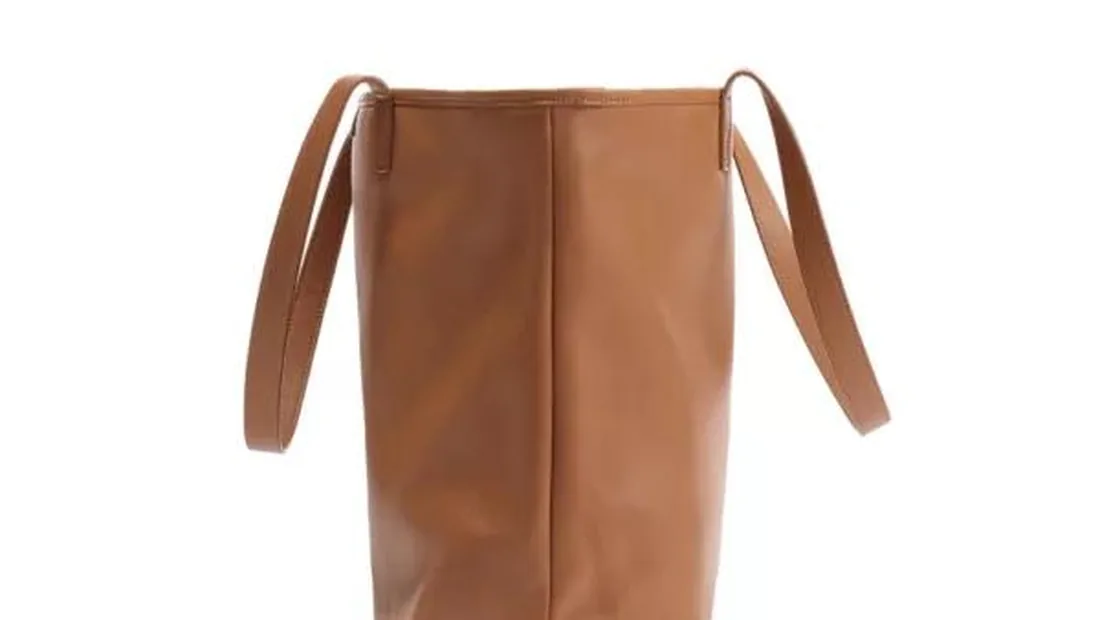
A custom boat tote is an open-top rectangular bag with a flat base and two carry handles, built to a buyer's spec rather than pulled off a retail shelf. That last part matters. Monogramming a finished bag is decoration. A custom boat tote is a made-to-spec product: you choose the canvas weight, the handle system, the grommet placement, the decoration method and the packaging, and the factory builds to those decisions.
Three buyer types tend to land here. Marine retailers and chandlers who want a store-brand carryall. Resort and marina shops that sell a logo bag next to the register. Brand merch teams and promotional distributors ordering heavy duty canvas bags wholesale for a campaign or a corporate gifting program. The questions are the same in all three cases, and they are mostly about structure, not color.
What Buyers Mean by a Custom Boat Tote
The classic silhouette is simple. A rectangular body, no top closure, a flat reinforced base, and two handles that either run over the top edge or wrap down the outside of the bag. Some versions add an interior pocket or a zip pocket on the face. Most do not.
Say a marina shop wants a bag that holds a folded rain shell, a water bottle and a paperback. That is a light-duty brief and almost any canvas weight will carry it. Now imagine the same buyer wants a bag that survives a dock cart, a wet swim towel and a season of sun. Same silhouette, completely different construction brief. The shape does not tell you what the bag is for. The spec does.
That is why a made-to-spec tote and a decorated retail tote diverge so fast. On a decorated retail bag, the body already exists and you are adding a mark. On a custom build, every load-bearing decision is still open, and the sample review is where you close them.
Choosing Canvas Weight and Fabric for a Boat Tote
Canvas is a durable plain-woven fabric, commonly cotton or a fiber blend, selected for structure, texture and abrasion performance. Cotton duck is the tighter relative: a closely woven cotton canvas with a smooth, firm face and closely packed yarns. Duck takes embroidery cleanly and holds a crisp shape, which is why it dominates this category.
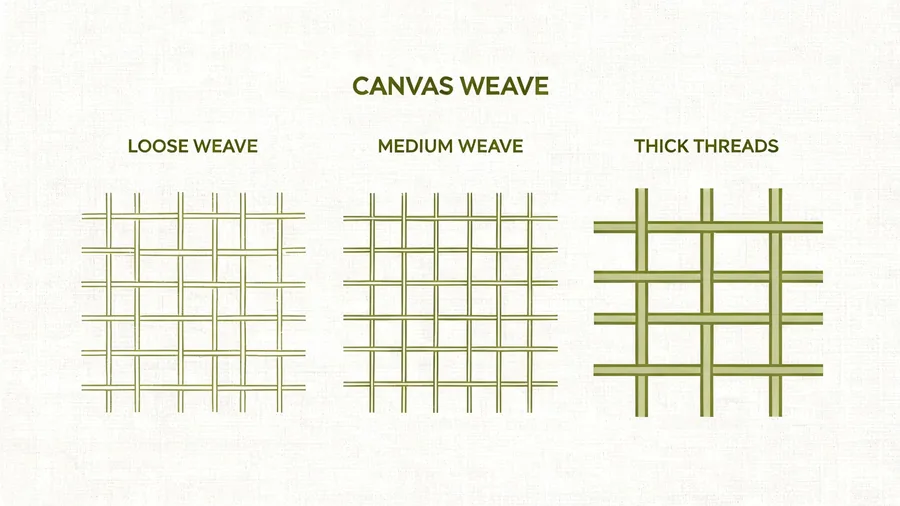
Canvas is available in 8, 10, 12 and 15 oz. The number changes three things at once, and buyers usually only think about the first one.
- Structure. Heavier canvas stands up on its own and holds a flat base without extra stiffening. Lighter canvas drapes and folds, which some buyers prefer for packing flat.
- Handle attachment. A heavier body carries more load before the fabric distorts at the anchor point, so the handle system can be simpler.
- Decoration behaviour. Heavier canvas takes denser embroidery without puckering. Lighter canvas can distort around a large stitch block unless the backing and stitch density are controlled.
One caution. GSM and fabric count describe construction. They do not, by themselves, state finished-bag strength. Two 12 oz ducks from different mills can behave differently in the same pattern, which is exactly why an approved pre-production sample carries more weight than a number on a spec sheet.
Nylon, polyester and rPET are the alternative shells when a buyer wants lower weight, faster drying or recycled content. Nylon brings high strength-to-weight and good abrasion resistance. Polyester is dimensionally stable and widely printable. rPET lets a brand merch team talk about recycled content without changing the silhouette. None of them feel like canvas, and buyers who want the canvas look should stay with canvas.
Handles, Grommets and Load-Bearing Details
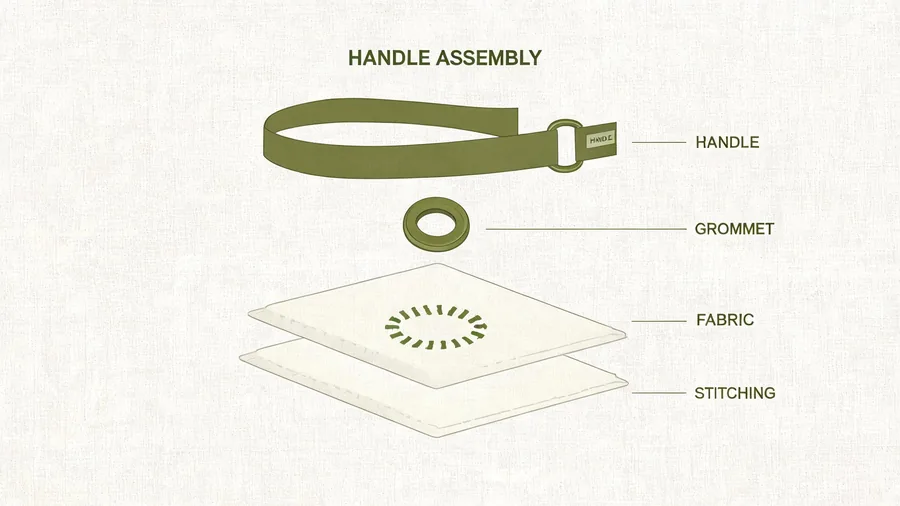
Handle attachment is the first place a heavy-load tote fails. Not the fabric. Not the base. The anchor. So it belongs in the spec and in the sample review, not in a follow-up email after the first container ships.
| Handle system | How it attaches | Best fit |
|---|---|---|
| Rope | Passed through grommets or stitched into a reinforced channel at the top edge | Classic marine look, resort and marina retail |
| Webbing | Stitched flat to the face, often running the full height of the bag | High-load carry, promotional and utility programs |
| Leather | Stitched or riveted over a reinforcement patch | Premium brand merch, gifting |
Rope handles read as traditional and they are comfortable in the hand, but the rope itself is not what carries the load. The grommet or the stitched channel is. If the grommet is undersized or set into unreinforced canvas, the bag will fail there, usually by tearing the fabric outward from the hole.
Webbing spreads load along a seam line instead of concentrating it at a hole. That is why utility totes and heavy duty canvas bags wholesale programs so often specify webbing. It is less decorative and more forgiving.
Leather handles sit between the two. They look expensive and they wear in, but leather needs thickness, temper and edge treatment controlled, and a leather handle stitched straight to light canvas will pull the panel out of shape.
Whichever system you choose, a reinforcement patch at the attachment point and at the seam is standard practice. So is a base panel. A plastic board insert turns a soft base into a flat, semi-rigid platform, which changes how the bag stands and how it folds. If the bag needs to fold flat for shipping or storage, a board insert works against you. Decide that early.
Personalization Methods: Embroidery, Print and Labels
Embroidery is thread stitched into the material to create a durable raised design. On canvas it is the default for logos and monograms, and it is the method most likely to distort a panel if it is not controlled. Backing selection, needle choice and stitch density all have to be set for the specific canvas weight. A dense logo on a light canvas puckers. The same logo on a heavier duck sits flat.
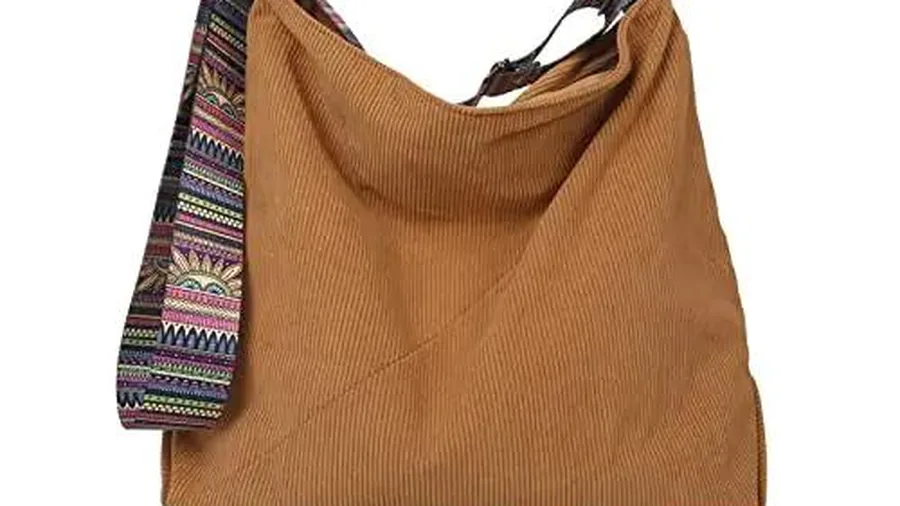
Screen printing forces ink through a prepared screen onto the material. It suits solid colors and repeat production, and it is the cheaper route once a design is locked and volumes are steady. Digital textile printing deposits ink by controlled inkjet, which supports detailed graphics and shorter runs, with ink chemistry selected for the fiber type. If your artwork has gradients or fine type, digital is the realistic option.
For identification rather than decoration, you have woven labels, printed labels and heat-transfer graphics. A woven label is a textile label where the design is created by interlacing yarns. A printed label carries care, composition, origin or size information. Heat-transfer graphics are applied with heat and pressure, and their adhesion, stretch, wash and abrasion performance must be validated on the actual substrate before bulk.
MOQ, Samples and Lead Time: What Bulk Ordering Involves
MOQ is the minimum order quantity for a material, a component, a color or a finished product. That definition is deliberately plural, because a single low MOQ figure is misleading.
Here is the trap. A supplier quotes an MOQ for the finished bag, and the buyer assumes that covers everything. It does not. The fabric may have its own minimum. The grommet finish may have its own minimum. A second colorway may have its own minimum. A woven label may have its own minimum. Add a monogram and the embroidery program may have one too. Four colors on one tote can push the real minimum well above the number you were quoted.
So ask the question properly: what is the minimum per material, per color and per decoration method? Woven-bag MOQs differ by material for exactly this reason, and the same logic applies to canvas. Any supplier who answers with one number has not understood the question.
Sampling runs 1 to 10 days, with one revision round of 2 to 3 days. The sequence is worth knowing:
- Proto sample. Evaluates concept, shape, construction and initial dimensions.
- Fit sample. Evaluates access, strap geometry and how the bag sits against the user.
- Pre-production sample. Made with the intended bulk materials and approved methods.
- Golden sample. The approved physical reference kept for comparing production workmanship and appearance.
Lead time is the elapsed time to complete a defined sourcing or production activity. It depends on materials and complexity, and it is not the same thing as the number of days on the sewing floor. For a deeper process walkthrough, the wholesale tote bags buying guide covers the order flow, and the canvas tote bag styles page covers silhouette options.
The Tech Pack and Spec Sheet a Factory Needs
You cannot get an accurate quote from a photo. You get one from a tech pack: the controlled product specification containing dimensions, materials, construction details, artwork, labels, packaging and test requirements.
Alongside it sits the bill of materials, the structured list of all materials, components, quantities, colors and supplier references required for one product. A tote BOM is longer than most buyers expect. Body fabric, lining, webbing or rope, grommets, reinforcement patches, base board, thread, labels, packaging. Each line has a color and a supplier reference.
Two terms decide whether the bag comes back right. Tolerance is the permitted variation from a specified nominal value. A critical dimension is a measurement that directly affects fit, function, component compatibility or safety. On a boat tote, base length, handle drop and gusset depth are critical dimensions. Get the handle drop wrong and the bag drags on the ground or will not go over a shoulder. Get the base length wrong and the board insert will not fit.
Color needs its own step. A color standard is the approved physical or digital reference used to evaluate production color, and a lab dip is a small dyed material sample submitted for approval before bulk production. Approve the lab dip, not a screen preview.
Quality Control and What to Check Before Bulk Release
AQL is the acceptance quality limit, used with a sampling plan to determine inspection sample size and acceptance numbers. It is not a promise that zero defects exist. It is a defined rule for deciding whether a lot passes.
Defects get classified by severity: critical, major or minor, based on risk and product impact. A torn handle anchor on a load-bearing tote is not the same class of problem as a loose thread end, and the classification should be written down before inspection, not argued about after.
The workmanship standard is the documented acceptance criteria for sewing, trimming, cleanliness, symmetry and assembly. This is the document that settles the debate about whether a stitch line is off or just different.
Finally, change control: the documented approval process for revisions to materials, patterns, construction, artwork, tests or packaging. If the canvas mill substitutes a lot, or the grommet finish changes, that is a change. It gets approved in writing before it ships.
A buyer checklist for the pre-production sample
- Measure base length, handle drop and gusset depth against the spec.
- Load the bag and lift it by one handle. Watch the anchor points.
- Check grommet seating and reinforcement patch coverage.
- Confirm the embroidery or print against the approved artwork and color standard.
- Test the base board for fit and for folding behaviour.
- Confirm labels, packaging and hang tags match the approved versions.
If you are sourcing a lighter summer carryall alongside a canvas program, the eco-friendly tote bags guide and the wholesale straw bags range cover the woven side of the catalog. Blank tote bags bulk pricing follows the same MOQ logic described above: per material, per color, per decoration.
Send a spec and the linked pages will get you a quote.
Frequently Asked Questions
How much does a boat tote cost?
Cost depends on canvas weight, handle system, decoration method, packaging and order quantity, and it is quoted per project rather than published as a list price. The biggest cost drivers are fabric weight and whether the decoration is embroidery, screen print or digital print. Ask any supplier to break the quote into material, labor and decoration so you can compare like for like.
How much is a custom tote?
A custom tote is priced from the spec, not from a catalog. Canvas weight, grommet or webbing hardware, reinforcement, base board, label type and packaging all move the number. A single-color screen print on standard canvas sits at one end; a heavier duck body with leather handles, a board insert and multi-position embroidery sits at the other. Request a quote against a written tech pack.
Why are boat totes so popular?
The shape does one job well. An open top means fast access, a flat base means the bag stands and carries a stable load, and two handles mean it moves easily between car, dock and boat. Canvas takes embroidery and print cleanly, so it doubles as a branding surface. That combination keeps the silhouette in demand across marine, resort and promotional channels.
Is there a custom boat tote wholesale option with no minimum?
Realistically, no. MOQ is set per material, per component, per color and per finished product, so a second colorway or a woven label can carry its own minimum even when the bag itself has a low one. Some stock styles with a single logo position come closest to a low-entry order. The honest answer is to ask for the minimum at each input and add them up.
Sourcing woven bags?
Send your questions to the factory directly. We reply within 24 hours.
Request a Quote