Custom Reusable Grocery Bags: Bulk Sourcing Guide
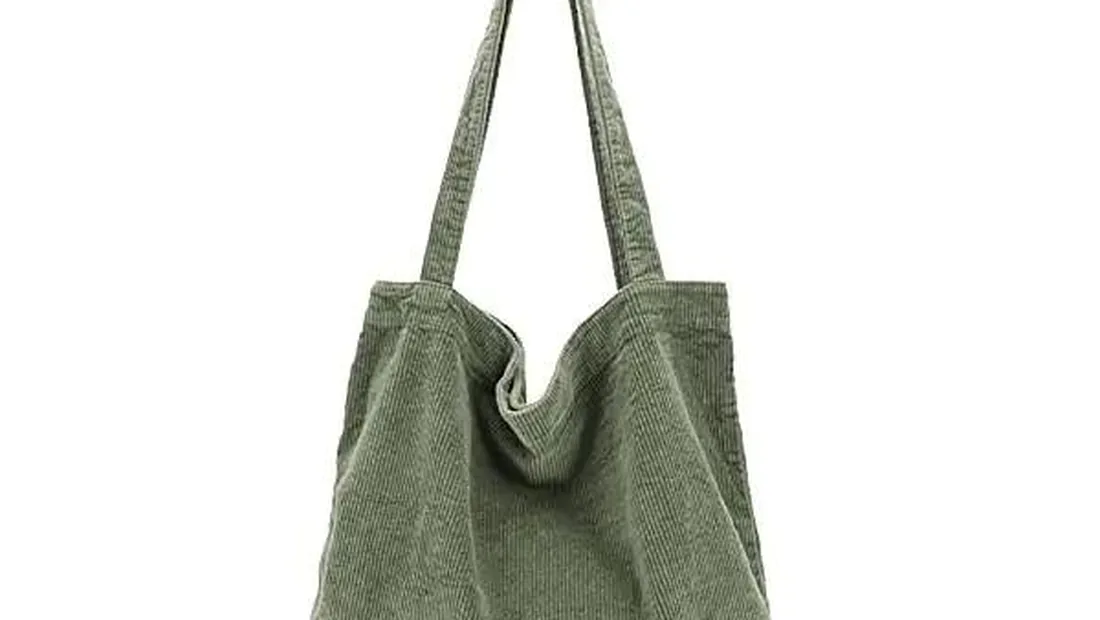
Custom reusable grocery bags are a specification problem before they are a printing problem. Get the fabric, gusset and handle drop right and the bag survives a year of weekly shopping. Get them wrong and it fails at the handle anchor in month two, usually with a full load inside it.
This guide walks through the decisions in the order they actually get made: store format, dimensions, load path, decoration, artwork, then minimums and timing. Nothing here is a price list. Prices move with fabric, print and freight, so the only honest answer is a quote against a written spec.
Start With the Shopper, Not the Bag: Matching Fabric to the Store Format
Say a grocery chain is rolling out reusable grocery bags bulk across a few hundred stores. The shopper walks in, buys a week of food, and expects the bag to hold shape on the walk home. That is a structure requirement, and it pushes toward woven or non-woven construction rather than a soft cotton shell.
Now imagine a boutique ordering two hundred units for a launch. Volume is low. The bag sits on a counter and gets photographed. Canvas wins here because the texture reads as considered, and the surface takes a clean screen print or embroidery without fighting the weave.
Three families cover most briefs:
- PP woven is dimensionally stable and printable across large panels. It holds a boxy gusset well, which is why it dominates supermarket programmes.
- Canvas is a plain-woven fabric, usually cotton or a blend, chosen for structure, texture and abrasion performance. It softens with use and takes embroidery cleanly.
- rPET is available as a body fabric. Recycled content lets a retailer tell a sustainability story without changing the construction, the pattern or the print method.
That last point matters more than it sounds. A recycled-content fabric can drop into the same panel map as a virgin one, so the switch is a material substitution, not a redesign. Buyers who plan for it early avoid re-cutting patterns later. More on woven construction sits in the PP woven shopping bag notes.
Sizing, Gusset and Handle Drop: The Dimensions That Decide Whether the Bag Works
Height, width and depth are finished measurements, taken at stated reference points on a stated product condition. Depth is the one buyers underestimate. It is controlled by the gusset, and the gusset decides whether the bag stands open on a counter or collapses every time the shopper lets go.
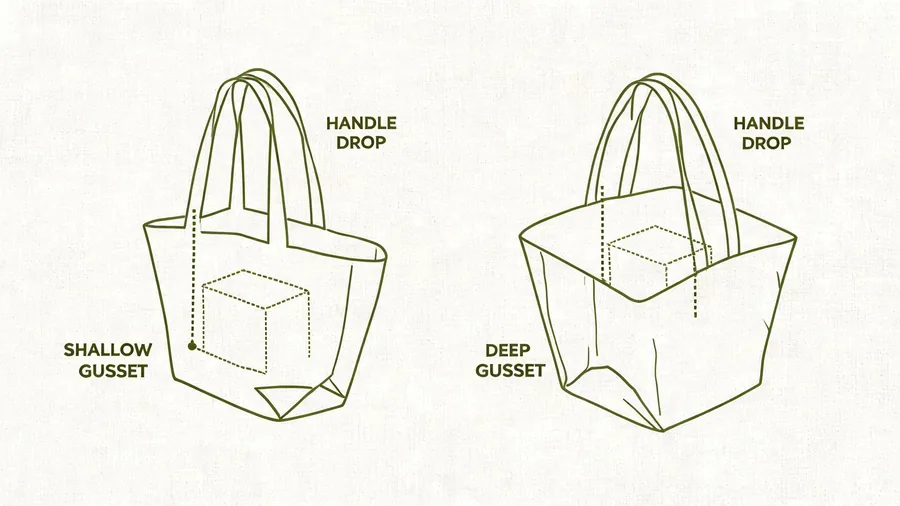
Handle drop is the vertical distance from the top of the bag to the inside top of the grip. Too short and the bag digs into a forearm when loaded. Too long and it swings against a leg. There is no universal right number, because it depends on how the bag is carried and how full it gets. What you can do is fix the range in the spec and check it on the first sample.
Two suppliers building from a verbal brief will build two different bags. A dimension diagram with measurement points, nominal values and tolerances prevents that. Ask for it in writing before sampling starts.
| Spec item | What it controls | Where it belongs |
|---|---|---|
| Height, width, depth | Capacity and whether the bag stands open | Dimension diagram with tolerances |
| Gusset depth | Internal volume and box shape | Panel map and pattern revision |
| Handle drop | Carry comfort under load | Dimension diagram |
| Handle attachment | Whether the bag survives a heavy load | Panel map and seam detail |
| Maximum recommended load | What the buyer can safely promise | Product spec, first page |
| Fabric weight and finish | Structure, hand feel, print behaviour | Bill of materials |
Load Ratings and Reinforcement: Where a Reusable Grocery Bag Actually Fails
Almost nothing fails in the middle of a panel. Bags fail at the handle anchor. The upper strap takes the pull when the bag is lifted, and the lower anchor takes more force than most buyers expect, especially when someone grabs one strap and swings the bag into a car boot.
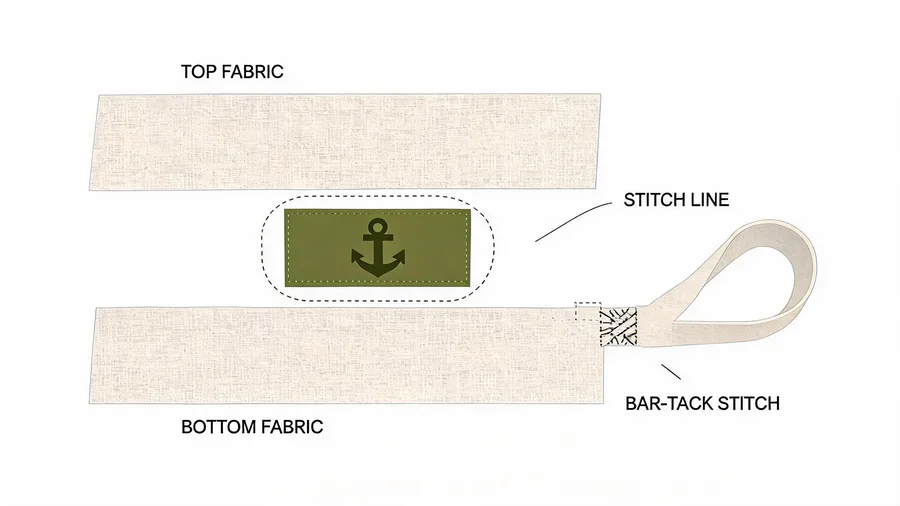
So put a maximum recommended load in the spec. State it as a figure the buyer is willing to stand behind, and let the supplier build to it. Leave it blank and the supplier builds to a default that nobody has agreed to.
Reinforcement is how the load rating gets met. A reinforcement patch is an additional material layer placed at a high-stress attachment or seam. Box-X stitching at the anchor spreads force across the panel instead of concentrating it on one line of stitches. Seam type, seam allowance, stitch density and reinforcement details all belong in the panel map and the pattern revision, not in a conversation.
Here is the part that catches people out. Denier is a yarn linear-density unit. It describes the yarn, not the finished fabric's strength. A higher denier number does not by itself guarantee a stronger bag, because weave, coating and seam construction all sit between the yarn and the load. Specify the finished construction, then test it.
What to ask any supplier for
Ask for the performance test method, the conditioning state, the sample size, the acceptance limits and the report format. If a supplier cannot name the test method, that is your answer. Test method and limits are set in the approved specification, so agree them in writing rather than assuming a default.
Print Methods for a Logo: Screen, Digital, Sublimation, Transfer or Embroidery
Decoration choice follows the artwork and the substrate, in that order.
- Screen printing forces ink through a prepared screen. It suits solid colours and repeat production when the substrate and ink system are compatible. Fewer colours keeps the setup simpler.
- Digital textile printing deposits inkjet ink under control. It supports detailed graphics and shorter runs, with ink chemistry selected for the fibre type.
- Dye sublimation turns disperse dye into gas that bonds with suitable polyester surfaces under heat and pressure. Fibre type decides whether it is even an option.
- Heat-transfer graphics apply a prepared graphic with heat and pressure. Adhesion, stretch, wash and abrasion performance must be validated, not assumed.
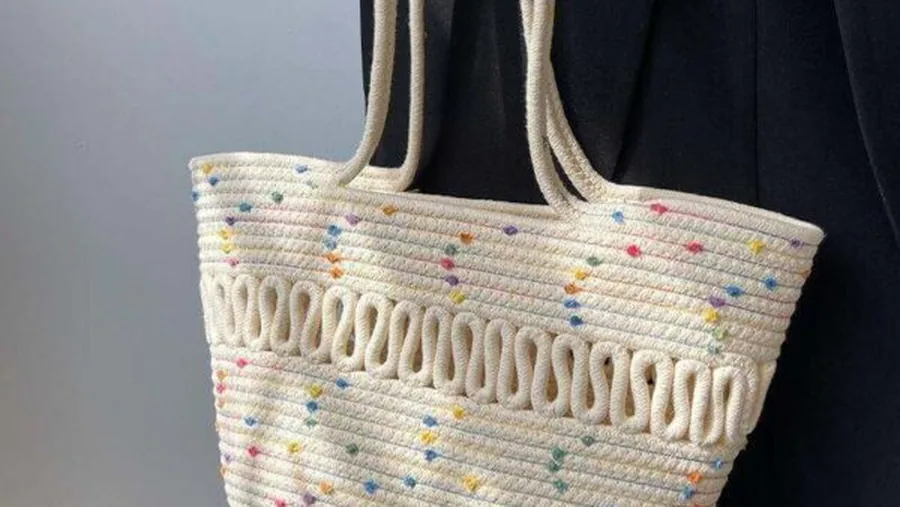
- Embroidery stitches thread into the material for a raised, durable mark. Backing, needle selection, stitch density and panel distortion all need control, because a dense design can pull a panel out of shape.
Screen printing on woven substrates has its own quirks, covered in the screen printing on woven bags piece. Read it before you approve a colour count.
Artwork Setup: Colour Count, Pantone Matching and Placement
Artwork dimensions, placement coordinates, process, colours and durability requirements all belong in the spec. Vague placement is the single most common cause of a rejected first sample. "Centred on the front" means something different to every person who reads it.
Pantone references keep colour consistent between the proof and the production run. Give a Pantone number, not a screenshot. On woven and canvas surfaces, ink sits on a textured face, so the printed colour will not match a coated-paper proof exactly. What you can control is the tolerance, agreed up front.
Colourfastness should be stated against the four things that actually happen to a shopping bag: rubbing, washing, light exposure and moisture contact. A bag that lives in a car boot sees all four. State the requirement in the spec and let the supplier confirm the method.
A short artwork checklist
- Vector artwork at final size, with the print area marked.
- Colour count and Pantone reference for each colour.
- Placement coordinates tied to the dimension diagram.
- Durability requirement, stated against rub, wash, light and moisture.
- Label content and placement, if the bag carries care or origin information.
Minimums, Sampling and Lead Time: How to Plan a Bulk Rollout
Minimums follow the spec, not a single site-wide number. Woven PP and cotton canvas carry different minimums, and a special fabric or a special finish moves the number again. That is why a flat published MOQ is close to meaningless for a custom programme.
To compare suppliers honestly, send every one of them the same specification. Same fabric, same gusset, same handle drop, same print method, same packing. Quotes against different briefs cannot be compared, and the cheapest-looking number usually hides a lighter fabric or a simpler handle anchor.
Sampling and bulk production are separate stages. Schedule them as separate milestones with separate approvals. Sampling is a paid stage and typically runs about one to ten days, with one revision round taking roughly two to three more days. Budget for at least one revision. Almost nobody gets it right on the first pull.
Then settle Incoterms, carton quantity and carton marks before the order is placed. Those three change the landed cost more than most buyers expect, and they are painful to renegotiate once production has started. Packing method, shape-control inserts and polybag requirements belong in the spec too, since a crushed bag is a damaged bag on a retail shelf.
The Spec Sheet to Send: A Buyer Checklist for Custom Reusable Shopping Bags
Copy this list into a document and fill it in. A supplier who receives it can quote the same bag as the next supplier, which is the whole point.
- Product name, intended use, target user, size, capacity and maximum recommended load.
- Dimension diagram with measurement points, nominal values and tolerances.
- Material composition, construction, weight, thickness, coating, finish and approved colour.
- Complete bill of materials with hardware sizes, finishes and colour references.
- Panel map, pattern revision, seam types, seam allowances, stitch density and reinforcement details.
- Pocket, divider, liner and closure construction.
- Artwork dimensions, placement coordinates, process, colours and durability requirements.
- Label content, placement, care instructions and traceability code.
- Performance test method, conditioning, sample size, acceptance limits and report format.
- Packing method, shape-control inserts, polybag requirements, carton quantity and carton marks.
Buyers running a multi-store rollout should also read the eco-friendly tote bag guide for the recycled-content angle, and the wholesale canvas bag guide if the brief leans toward a boutique finish. Both cover material trade-offs this page only touches.
One more thing worth saying plainly: no supplier should claim a certification it does not hold, and no buyer should accept one without seeing the document. Ask for the certificate, check the scope, and check the expiry date. If a claim cannot be evidenced, treat it as marketing.
When the spec is written, send it across through the contact page and ask for a quote against that exact document. A quote against a written spec is the only quote worth comparing.
Frequently Asked Questions
Where can I find custom reusable shopping bags?
Start with suppliers who make bags rather than suppliers who resell them, and ask for the same written spec from each. A factory-side supplier can quote fabric, gusset, handle construction and print method against one document, which is what makes the quotes comparable. Trade shows, sourcing platforms and specialist manufacturer sites all work, but the filter is the same everywhere: can they answer a technical question about seam construction, or do they only send a catalogue?
How much does it cost to make a reusable grocery bag?
There is no honest single figure. Unit cost moves with fabric weight and type, gusset depth, handle construction, print method and colour count, order quantity, packing and freight terms. A lighter woven bag with a one-colour print and a heavy canvas bag with embroidery are different products. The practical approach is to fix the specification first, then ask several suppliers to quote that exact spec so the numbers mean something.
How can I make my own reusable grocery bag?
For a personal project, a plain-woven fabric with some body works better than a soft knit, because the bag needs to hold shape under a load. Cut a rectangle for the body, add a gusset panel for depth, and attach handles with a reinforced box-X stitch rather than a straight line of stitching. For a retail programme, the same logic scales up: the pattern, seam allowance and reinforcement details get written down as a panel map so every unit matches.
What is the minimum order for custom reusable grocery bags?
It depends on the material and construction. Woven PP and cotton canvas carry different minimums, and special fabrics, special finishes or complex print setups move the number again. That is why the minimum should be quoted against a written spec rather than taken from a website. Send the specification and ask for the minimum for that exact build.
Sourcing woven bags?
Send your questions to the factory directly. We reply within 24 hours.
Request a Quote