Mini Tote Bags Bulk: Wholesale Sourcing Guide
Mini tote bags bulk orders are usually bought for one of three reasons: a gift-with-purchase, a conference giveaway, or a counter display that sells on impulse. The bag is small, the order is often large, and the buyer has to brief a size, a fabric and a print area before anyone can quote. That is where most projects stall. This guide covers the sizing, decoration and specification questions that decide whether a small tote works.
What Counts as a Mini Tote in Bulk Buying
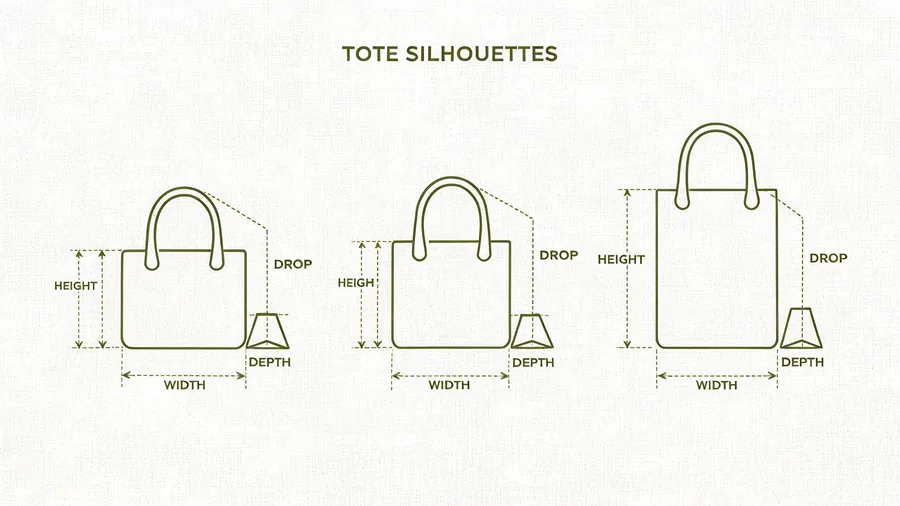
"Mini" is a marketing word, not a measurement. A supplier can call almost anything mini. For a bulk order you need four numbers instead: finished height, finished width, finished depth, and handle drop.
Height is the vertical finished dimension, measured between agreed reference points on the finished bag. Width runs across the stated panel or opening. Depth is front to back, and on a small tote it is usually controlled by a gusset or side panel. Handle drop is the vertical distance from the top of the bag to the inside top of the handle grip. Get those four on paper and the argument about "mini" disappears.
Capacity in litres matters more than any single dimension once the bag gets small. Two totes can share a height and width and still hold very different loads, because depth and gusset shape change the internal volume. A flat panel and a lightly gusseted panel are not the same product, even when they measure the same on a table.
That flat construction also changes retail. A mini tote is normally a flat or lightly gusseted panel, so it folds down to almost nothing. It can sit in a display basket, hang on a peg, or drop into a gift box without a shape insert. A deeper gusset gives you more volume and a better fold line, but it eats shelf space. Say a buyer orders 2,000 units for a counter display: the flat version usually wins, because the retailer can stack them.
Mini Tote Size Ranges for Gifting, Events and Impulse Displays
Three buyer scenarios drive three different size bands. The bands below are working ranges, not fixed standards. Treat them as a starting point for the size you brief, then confirm the final dimensions against your own sample.
| Scenario | Typical size band | What it must hold | Main constraint |
|---|---|---|---|
| Gift-with-purchase | Small flat panel, shallow depth | A single small product plus tissue | Must fit the standard gift box |
| Conference giveaway | Medium small, light gusset | Phone, keys, wallet, a notebook | Must survive a full day of handling |
| Counter display | Small, flat, stackable | Impulse items at the till | Must fold flat and stack |
The trade-off is always the same. Shrink the panel and you lose the ability to hold a phone, keys and a wallet at the same time. Buyers who want all three usually need a light gusset, not a flat bag. Buyers who want the smallest possible footprint accept that the bag carries one item well and three items badly.
One warning that gets missed: a bag too small for a standard gift box limits what can be bundled inside. If the tote is meant to wrap a product, the box dimensions come first and the bag is designed around them. Reverse that order and you end up with a bag that fits nothing.
Fabric Weight and Structure for Small-Format Totes
Canvas is sold by weight in ounces, and the commonly available range runs from 8 oz up to 15 oz. That is a general industry range, not a promise about any one product. On a small panel, weight behaves differently than it does on a full-size tote.
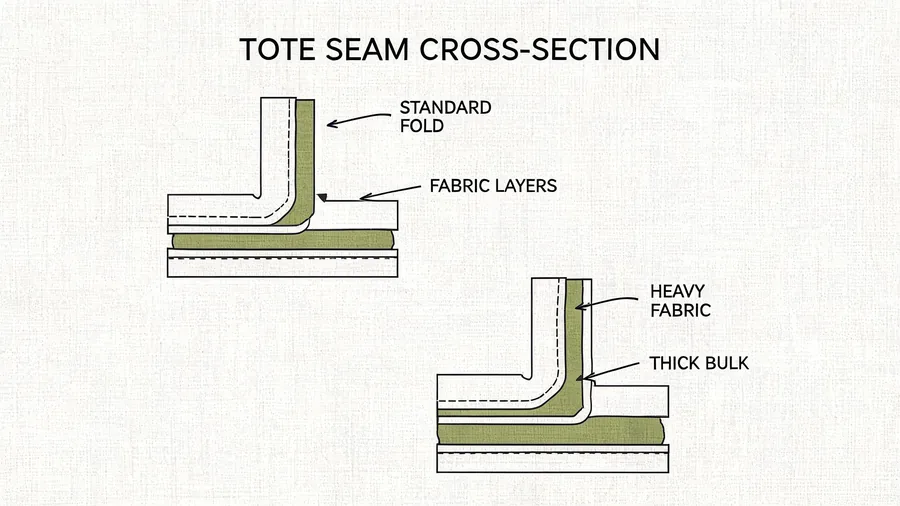
Light canvas slumps. A 8 oz or 10 oz body on a mini tote can fold in on itself when the bag is empty, which looks cheap on a display hook. Heavy canvas stiffens the handle and holds the shape, but it also makes the bag harder to fold flat and heavier to ship in volume. The middle of the range is where most small-format totes land, and the final choice depends on whether the bag needs to stand up or pack down.
Non-woven and recycled options change the calculation. Non-woven polypropylene is light, prints well and folds flat, which suits high-volume giveaways. Recycled polyester, including rPET, is available and behaves more like a woven fabric. For a buyer under pressure to show a recycled content story, rPET is the usual route, but confirm the material and the claim with the supplier before it goes on a label.
Coating and lamination matter more on a small bag than buyers expect. A coated panel resists water and dirt, which helps a bag that gets handled at a till. It also changes how the bag folds and how ink sits on the surface. A laminated panel can be stiffer, and that stiffness shows up as a fold that will not sit flat.
Decoration Limits on a Small Print Area
Decoration is where small totes get difficult. Artwork scale, colour count and stitch density all shrink with the panel. A design that works on a full-size tote can turn into an unreadable mark on a mini.
Screen printing suits solid colours and repeat production when the substrate and ink system are compatible. On a small panel, each colour needs its own screen and its own registration, and registration gets tighter as the print area shrinks. Heat transfer handles detailed graphics and shorter runs, with the graphic transferred under heat and pressure. The adhesion, stretch, wash and abrasion performance of that transfer has to be validated on the actual fabric, not assumed.
Embroidery gives a durable raised design, but stitch density and backing have to be controlled or the small panel distorts. Woven labels and printed labels are often the better answer on a mini tote, because a label carries fine detail that a small print area cannot. A woven label is made by interlacing yarns, so the design is built into the label rather than printed onto the bag.
For example, a supplier's material library might list polyester from 190T through 1200D and nylon from about 110 to 280 g/㎡, but those are illustrative ranges from a fabric catalogue. What matters for your bag is the one fabric you approve. A strike-off is how a buyer validates a print before bulk. It is a printed sample used to approve artwork, colour, scale, registration and print quality. Approve the strike-off, then approve a pre-production sample made with the intended bulk materials.
MOQ and What Drives It for Mini Totes in Bulk
There is no single minimum for a mini tote. Minimums are set per material, per colour and per decoration method. Some suppliers set cotton canvas woven bags at around 200 pieces as a general example, and decoration minimums vary by method, with woven labels and metal plates often sitting higher than a simple print. Confirm every number in writing against a named material and a named process.
Colour is the multiplier. A single-colour run on one fabric is the simplest order a factory can schedule. A mixed-colour order splits the same quantity across several dye lots and several setups, which changes the calculation. Say a buyer wants 1,200 units in four colours: that is four smaller runs, not one large one, and the minimum applies to each colour, not to the total.
Decoration adds a second layer. Screen printing, embroidery, heat transfer and labels each carry their own setup and their own minimum. A buyer who wants a printed bag and a woven label is running two processes, and both have to clear their own threshold.
So the honest answer to "what is your MOQ" is a question back: which material, which colour, which decoration? Send the spec, not the question.
Personalized Tote Bags Bulk: What to Put in the Spec
A tech pack is the controlled product specification. It holds dimensions, materials, construction details, artwork, labels, packaging and test requirements. For a mini tote, that document is the difference between a repeat order and a rebuild.
Start with dimensions and tolerances. Tolerance is the permitted variation from a specified nominal value, and on a small bag a loose tolerance is visible. Mark the critical dimensions, the ones that affect fit, function or component compatibility. Then add the material composition, construction, weight, thickness, coating, finish and approved colour.
The panel map comes next. It shows pattern revision, seam types, seam allowances, stitch density and reinforcement points. On a mini tote, the handle attachment is the part that fails first, so the reinforcement detail belongs in the pack, not in a conversation.
Artwork placement needs coordinates, process and colours. Label content, label placement, care instructions and any traceability code belong there too. Finish with packing method, carton quantity, carton marks and shipping tests.
Two documents protect the repeat order: the specification sheet and the golden sample. The specification sheet defines dimensions, tolerances, materials, workmanship, performance and packaging. The golden sample is the approved physical reference used to compare production workmanship and appearance. Once artwork or material is approved, change control applies. Change control is the documented approval process for revisions to materials, patterns, construction, artwork, tests or packaging. Skip it and the next run drifts.
Plain Canvas Bags Bulk: Checking Quality Before You Commit
Inspection is a sampling exercise, not a full count. AQL stands for acceptance quality limit, and it is used with a sampling plan to determine inspection sample size and acceptance numbers. Defect classification sorts findings into critical, major or minor severity based on risk and product impact. The exact sampling values depend on the agreed specification, so ask any supplier what plan they use before the goods are made.
On a small tote, inspect four things closely. Seam allowance consistency, because a narrow allowance on a small panel opens under load. Handle attachment, because the upper anchor takes the pull when the bag is lifted. Symmetry, because a mini tote shows an off-centre print instantly. Trimming and cleanliness, because loose thread on a small panel is the first thing a retail buyer sees.
Workmanship standards are the documented acceptance criteria for sewing, trimming, cleanliness, symmetry and assembly quality. Ask for them in writing. Ask what the supplier uses as the reference for inspection. The answer should be a pre-production sample made with bulk materials, not a photo.
For a broader look at construction options, the canvas tote styles guide covers panel and handle builds, and the wholesale tote buying guide walks through the RFQ stage. If the project leans toward recycled content, the eco-friendly tote guide covers material choices, and the woven and straw range shows how natural fibres behave on small formats.
Ready to move? Send the spec, the size band, the fabric and the decoration method through the contact page, and a quote can be built against a named material and process.
Frequently Asked Questions
Where can I buy mini bags in bulk?
You buy them from a manufacturer or a wholesaler who can quote against a named material, colour and decoration method. The useful first step is a spec: finished dimensions with tolerances, handle drop, fabric, panel map and artwork placement. Send that to a supplier and ask for a quote and a pre-production sample made with bulk materials. Suppliers who quote from a photo alone will not hold the specification on a repeat order.
Where can I buy the cheapest tote bags?
Chasing the lowest unit price usually moves cost somewhere else: thinner fabric, a narrower seam allowance, a lighter handle attachment or a print that fades. A better question is which specification delivers the life the bag needs. Compare quotes on the same spec sheet, same fabric, same decoration method and same packing. Ask what sampling plan the supplier uses for inspection, because a cheap run with a high defect rate is not cheap.
Where can I find tote bags at a low price?
Low price comes from order structure more than from a supplier's price list. One fabric, one colour and one decoration method is the simplest run a factory can schedule. Splitting the same quantity across several colours adds dye lots and setups, which raises the effective cost per bag. Standard sizes and stock fabrics also reduce tooling and material waste. Confirm the minimum per material, per colour and per process in writing before you commit.
What fabric weight should a mini tote bag be?
It depends on whether the bag needs to stand up or pack down. Light canvas folds flat and ships cheaply but can slump when empty. Heavier canvas holds shape and stiffens the handle, but folds less well and adds shipping weight. Non-woven and recycled options sit at the light end. The right weight is the one that passes a pre-production sample in the intended bulk material, so approve that sample before the run starts.
Sourcing woven bags?
Send your questions to the factory directly. We reply within 24 hours.
Request a Quote